
Conflict in the Middle East, higher gas prices in the U.S., full ramifications of AI still unknown—it’s enough to make cynics out of the most hopeful. Not Chris Nassetta, the president & CEO of Hilton, who seems afflicted by congenital optimism. Just don’t mistake him for a Pollyanna; rather, recognize him for being a critical believer.
Despite global commotion, Hilton delivered first-quarter numbers that reached the high end of its guidance, with global RevPAR increasing 3.6% compared to the same time a year ago. Net income hit $383 million. Full-year 2026, system-wide RevPAR is projected to increase between 2% and 3%.
A rosy, voluble Nassetta lorded over a call with analysts and shared his enthusiasm for the days ahead.
“I want be thoughtful and don’t want to overcook it, but I love it when we’re sitting around, talking about performance, and every time we talk, it’s getting better, right?” Nassetta said during Hilton’s Q1 call with analysts. “That’s what’s been happening for a while. For weeks, it’s [been] getting better. As we look further out, with the visibility we have, it feels better and better.”
Better is a degree: The trajectory is still pockmarked with uncertainty over a conflict in the Middle East that is now going into its third month. Nassetta opened his remarks alluding to its impact on team members in the region. “We remain hopeful for a swift resolution,” he said, noting that anticipated Middle East headwinds could sour overall 2026 performance, but only slightly: The region accounts for around 3% of Hilton’s total business. “I suspect there will be an off ramp in the not-too-distant future,” Nassetta said. “Things have already settled down a bit.” He said that certain Middle East markets are already starting to stabilize and move up.
K to C
At the same time, he is seeing a shift in demand trends benefitting lower chain scales, in what Nassetta refers to as the C-shaped economy, or convergence economy, something he pointed out earlier this month at a conference in Washington, D.C. “We expect improving performance in the lower and mid-chain scales, with RevPAR strength continuing to move downstream from luxury and upper-upscale toward a more balanced convergence demand shape,” he said. The trend, he said, should be most evident in the U.S., based on supportive tax and regulatory policy and expected-to-come lower interest rates.
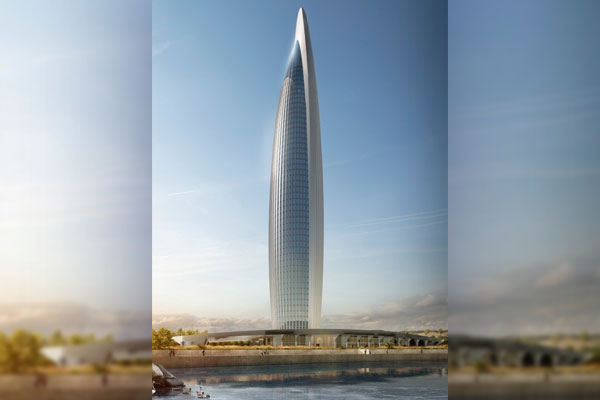
Though Nassetta foresees a C-shaped economy at least buffering against the up-to-now K-shaped economy, one where different parts of the economy diverge sharply, with wealthier households trending upward and lower-income households trending downward, a large portion of Hilton’s openings are in the luxury and lifestyle segments, accounting for 20% of total openings in the first quarter. This included the opening of Waldorf Astoria Rabat Salé in Morocco. Further openings this year include Waldorf Astoria Admiralty Arch in London and Waldorf Astoria Kuala Lumpur in Malaysia.
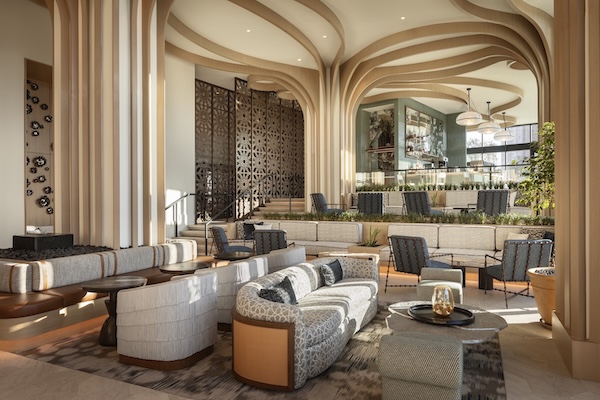
Within lifestyle, Hilton’s Curio Collection surpassed 200 hotels, with notable openings in the quarter including the new-build Monarch San Antonio.
A Developing Situation
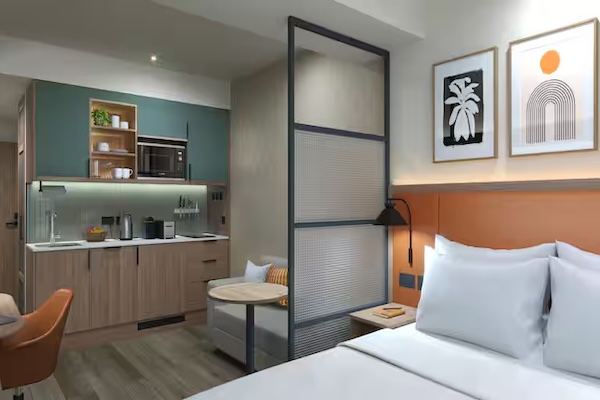
During the first quarter, Hilton opened 131 hotels totaling more than 16,000 rooms, its second-strongest first quarter for hotel openings in its history. In Dublin, Ireland this week, Hilton is opening its first Home2 Suites property in Europe. The brand has more than 800 hotels open and over 750 in development.
Hilton said it expects net-unit growth of between 6% to 7% for the full year. Nassetta noted that while ground-up construction is an increasing vehicle for development, conversions, he said, continue to be a large driver of unit growth, and will continue to be: They represented 36% of openings for the quarter across multiple brands. “I don’t think you’re going to see a big drop off in conversions as a percentage of net-unit growth,” he said. “It [will] moderate over time, but that’s because you’ve been in a world where construction starts haven’t gotten back to pre-Covid levels. That will happen, and is happening. But now we’ve got a dozen brands or more that are really good candidates for conversions. You’re probably sort of permanently in the 30% to 40% range.
Expectations are for new global construction starts to be up over 20% for the year, with the strongest growth in the U.S. and EMEA.
Tech Time
Hilton said it’s tackling current geopolitical uncertainty via innovation and deployment of new technology, leveraging AI to, as Nassetta put it, “embrace the new ways customers are discovering and engaging with our brands.” Hilton said it is working with Google, ChatGPT and Anthropic and remaining focused on strengthening direct business. Earlier this year, Hilton deployed an Anthropic-powered platform for customers to “dream and shop” called the Hilton AI planner now in beta testing on Hilton.com. The LLM-powered tool combines property content with information about local venues and activities to allow customers to search for and tailor an experience that is unique to their interests, Hilton said.
“AI allows us to be more efficient and more effective,” Nassetta said. “That is code for continuing to build more direct lines to our customers.” It is also code for new players in the mix that could further democratize hotel distribution and further enervate travel intermediaries. (Eighty percent of Hilton’s business is direct.) “It is a more competitive environment where there isn’t just one winner in search when it’s all said and done,” he said. “That puts us in an advantage relative to what we’ve had to continuing to build more direct business.”
Hilton also unveiled a new brand platform in Q1 called Select by Hilton, essentially a franchise home for small, but unique hotel brands with loyal followings. The first addition was Yotel, with more to come, promised Nassetta, but only if they meet the criteria. “The first step is quality: Is it a brand our customers want,” Nassetta said, adding that dozens of opportunities have been turned down. “We’re super stringent on what we would do.”
