
PHOENIX — Hotel brands are entering a development environment in which simply putting a flag on a property is no longer enough. Rising construction and operating costs, higher interest rates and more demanding owners are forcing brands to demonstrate that they can improve both sides of the profitability equation: generating revenue while reducing the friction and expense of operating a hotel.
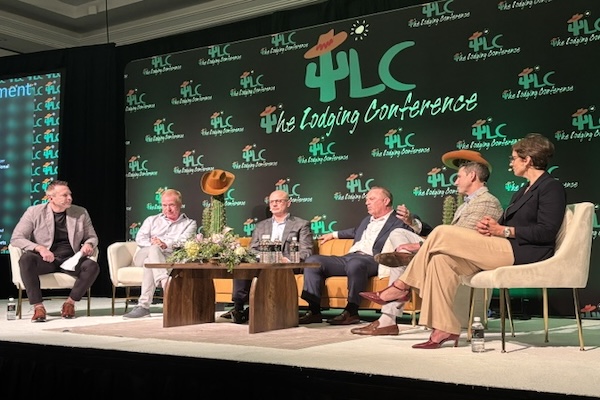
“Brands and companies have a responsibility to look at both sides profitability—not just driving revenue, but also trying to take the friction and the cost out of operations in order to drive profit,” said David Wilner, CDO of Wyndham Hotels & Resorts, speaking on a panel at The Lodging Conference here at the JW Marriott Desert Ridge, focused on brand development. .
That focus is increasingly shaping how brands approach development. Owners are looking beyond the name on the building and asking a more fundamental question: Will the brand produce an acceptable return on my investment?
“The economics have to pass. If it doesn’t, people are more concerned about keeping their equity,” said Matt Hostetler, CDO of Red Roof. “They want to go into a deal and keep their equity, making sure that it stays in place so they can continue to grow their portfolios.”
Built or Convert?
The challenge is particularly evident in new construction. U.S. hotel supply growth is expected to remain well below its historical average, while conversions are accounting for an increasing share of development activity. For brands, that has created an intense competition for existing hotels that can be repositioned and brought into a franchise system.
The appeal is straightforward. Acquiring or converting an existing asset can offer a lower cost basis than ground-up construction, particularly when construction costs make it difficult for a new project to pencil.
“Conversions will always outweigh your construction until the cost of construction is aligned with the cost of acquisition,” said Wilner. “Until you see that happening, you’re going to see more conversions out there.”
But panelists cautioned against pursuing conversions simply to add rooms to a system. The brand still has to make sense for the property, the market and the customer. “If you’re chasing conversions just for the sake of chasing net room growth,” Wilner added.
That same discipline is increasingly being applied to the use of key money, which is an important component of the competition among brands for development and conversion deals. While financial incentives can help close a deal or fund a conversion, panelists warned that they should not substitute for a fundamentally sound project. “Key money can be the most expensive mistake a developer makes if they make it a priority decision,” said
The better approach, according to the panel, is to establish the strategic rationale first: Does a market make sense from a demand perspective? Is the brand appropriate? Does the loyalty base already include customers who want the brand in that location? Only then should incentives be layered into the deal.
Panelists described key money as a tool that has effectively become an expectation in today’s development environment. The risk, however, is that brands become commoditized, with developers choosing a flag based primarily on the size of the check rather than the long-term value of the relationship.
“You are in a 20-year marriage or longer, so is this the right fit? Do I have the right brand for this location for the long term?” said Julienne Smith, head of Americas growth for Hyatt Hotels Corporation.
Brand Proliferation
That emphasis on long-term value is also influencing how brands think about their portfolios. The proliferation of brands in recent years has raised questions about whether the industry has too many flags. Executives argued that the expansion reflects a broader effort to build brand ecosystems capable of retaining customers across different travel occasions and price points.
“That’s why we kind of create these brands; to make sure that we have a brand for each one of our ecosystems,” said David Pepper, CDO of Choice Hotels International. Last month, Choice announced it was acquiring Harvest Hosts, an RV travel membership company, for $130 million in an all-cash deal. “We’re going after the mid-scale traveler, and we’re trying to get the most share of wallet from them. That’s why we bought Harvest. We know two million of our loyalty program members own an RV.”
The strategy is evident: lodging companies are increasingly extending beyond traditional hotel categories. Brands are adding concepts designed to capture customers in different circumstances, from extended-stay accommodations to alternative lodging products, such as Hilton’s 2024 partnership with AutoCamp. The objective is to keep customers within the same loyalty ecosystem rather than allowing them to migrate to a competitor.
Still, executives acknowledged that not every new brand will succeed. The ultimate test is whether owners and developers continue to sign franchise agreements. “You can launch a brand, but the people in this room will really dictate whether that brand is successful,” said Wilner.
Extended stay is one segment where owner demand and customer travel continues to be particularly strong and fruitful. Panelists pointed to continued development opportunities driven by construction and infrastructure workers, emerging industries and longer-term travelers, while noting that extended-stay customers are becoming increasingly diverse.
The economics are also attractive. A lower labor model and relatively modest operating costs can produce compelling returns for owners, provided the product is genuinely designed and operated for extended stays rather than simply being a transient hotel with kitchenettes.
The upshot is that hotel brands are entering a more disciplined phase of development. Growth remains a priority, but owners are demanding a clearer value proposition, brands are competing aggressively for conversions and loyalty ecosystems are becoming increasingly important.
The winning brands may not necessarily be those that offer the most money or launch the most concepts. They will be the ones that can demonstrate that their flag delivers sustainable commercial performance, fits the market and creates value for owners long after the development deal is signed.