
Luxury hotel brands are increasingly selling more than a place to stay. They are selling private residences that combine real estate ownership with hotel services, amenities and brand prestige.
That’s why new-construction luxury projects are no longer just a hotel alone. Nowadays, a branded residential component isn’t just a bonus; it’s compensatory toward making the overall development viable. Selling branded residences even before a shovel hits dirt is a crucial element of filling out the capital stack.
But the products and the prices buyers are willing to pay for them vary dramatically by destination. So, too, do the costs to build them.
GOING BIG IN TEXAS
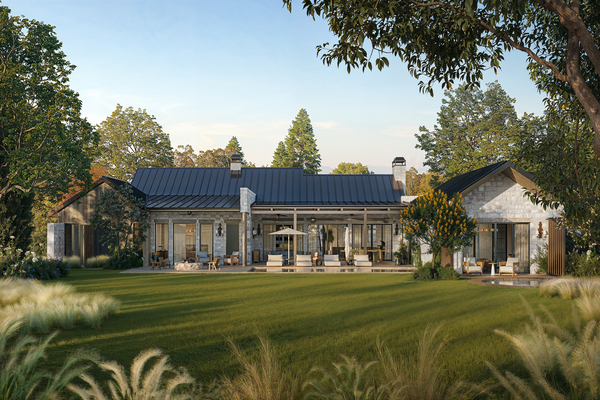
Last March, Mark Harmon, the founder and former CEO of Auberge Resorts, along with his partners Robert Radovan and Tim Sparapani, announced the signing of Waldorf Astoria Texas Hill Country and Waldorf Astoria Residences Texas Hill Country, slated to open in 2029. The project is planned across 106 acres near Fredericksburg, introducing the Hilton luxury brand to the Texas wine country destination. The residential offering includes 42 multi-bedroom resort villas and 50 private residences, alongside 60 hotel rooms and suites.
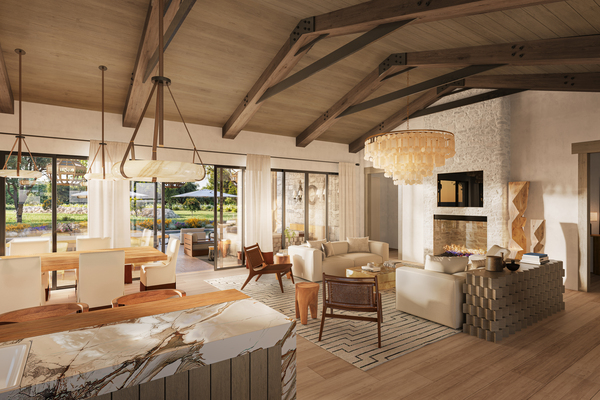
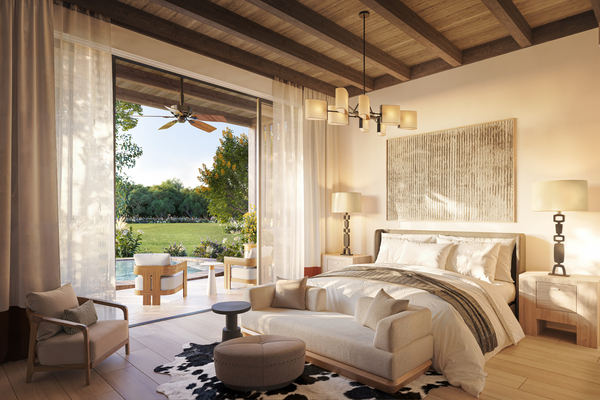
The luxury development features two primary paths for ownership. The branded private residences start at $3.5 million and range up to $6 million, according to public figures, while the multi-bedroom resort villas (eligible for the property’s managed hotel rental program) are priced from around $3.5 million to $4 million. The three- and four-bedroom homes include private pools, furnished interiors and quarter-acre lots. Buyers, in this example, are primarily purchasing second homes, with the residences designed to be turnkey.
Based on published figures, the villas cost approximately $1,143 to $1,250 per square foot at asking prices. The model is different from a conventional condominium development: residences are spread across a large property, with single-story architecture and private outdoor spaces helping establish a residential neighborhood atmosphere.
Though these residences are priced in the millions, they might be the best value going in hospitality real estate. “Buyers here benefit from this property being a first mover, but other ultra-luxe hotels are following suit, so as we have seen in other markets, prices will inherently rise significantly in short order,” said Jackie Brown, founder of Akoya Hospitality, an asset manager focused on the ultra-luxury hotel and residential assets segment.
There is no discounting the first-mover ideal. Fredericksburg is a burgeoning luxury destination that is currently devoid of big-name luxury brands. That’s all changing, and while the Waldorf Astoria might be the first out of the gate, others are following, including Aman, which announced Amansanu earlier this year, its ultra-luxury project among Texas Hill Country.
FIRST IN
Harmon is a hospitality pioneer. He and his father, Bob, founded Auberge Resorts and basically created the Napa Valley hospitality market in 1981 when they opened Auberge du Soleil. It was a first-of-its-kind resort in the wine destination. As Brown points out, similar levels of luxury exist now in Napa Valley/Sonoma, such as Four Seasons Resort and Residences Napa Valley and Montage Healdsburg, where residence pricing per square foot ranges from $2,000 to $2,530.
Other comps include Blackberry Farm and Blackberry Mountain in the Smoky Mountains of Tennessee, where residences go for up to over $4,500 per square foot. Meanwhile, more mature markets, such as Deer Valley, Utah, command premium pricing. The newest residential offering at The St. Regis Deer Valley comprises 12 two-, three- and four-bedroom residences in a five-story building near the base of Deer Valley Resort. The residences were initially marketed at prices starting around $4.7 million, with floor plans ranging from approximately 2,241 to 4,754 square feet.
Four Seasons Private Residences Deer Valley provides another benchmark. Its published availability includes private residences ranging from approximately 1,196 to 2,060 square feet at prices between $2.995 million and $6.5 million. That equates to roughly $2,500 to $3,155 per square foot for the cited examples. Its hotel residences command higher prices: published offerings include a 3,343-square-foot residence for $13.15 million and a 3,732-square-foot residence for $14.5 million, approximately $3,930 and $3,890 per square foot, respectively.
“These prices are significantly higher than Waldorf Astoria Texas Hill Country because either the markets are well established luxury destinations or, in the case of Blackberry Farm and Blackberry Mountain, the resort was already well established at time of sales,” Brown said. “In the case of Waldorf Astoria Texas Hill Country, you benefit by not having those premiums because, in theory, it is a new market and new property.”
The key, she continued, is buyer security; in other words, having the Waldorf Astoria brand name attached to the project and, as important, the pedigree of Harmon as a developer of luxury projects, having developed in Napa Valley in the same way. Harmon is somewhat of an oracle when it comes to identifying the next hospitality honey hole—where the next big thing is going to hit. “This is a market with explosive upside potential,” Harmon said of Fredericksburg. The resort is set in the rolling hills and oak woodlands of Hill Country next door to Fredericksburg, what he calls “one of the most charming small towns in America” amidst the burgeoning wine country. “It is just waiting to be discovered by the world,” he said.
Harmon noted that in comparison to other U.S. resort locales, where prices can be two to three times or more than its branded home villas, Waldorf Astoria Texas Hill Country offers tremendous upside—just like Napa did 45 years ago. “We were developing in Napa early on. We are very familiar with the story of the growth of wine country as a most favored destination for people seeking a beautiful getaway for family and friends,” he said.
BUDGET, VALUE FRIENDLY
Brown and Harmon are not alone in their analysis. Katy Black is a managing director and leader of the Mountain West Consulting & Valuation practice at HVS. She notes that on a price-per-square-foot basis, the gap between Waldorf Astoria Texas Hill Country and Four Seasons Deer Valley, for example, is significant, with Four Seasons Deer Valley priced at roughly three times what the Waldorf Astoria Texas Hill Country is asking. “Put another way, the same budget buys a modestly sized ski-in/ ski-out condo in Deer Valley or a substantially larger, furnished multi-bedroom home in Fredericksburg,” she said.
Some of the difference comes from product type rather than geography alone. Deer Valley is a high-rise, podium-style mountain build with heavy amenity and infrastructure costs, while the Waldorf Astoria is a low-rise, horizontal resort spread across a large site. Mountain development also carries costs that are easy to overlook, including a shortened construction season, higher labor and logistics costs, and an entitlement process tied to a much larger master planned village, all of which extend timelines and add carry, Black said. Meanwhile, the development of Waldorf Astoria Texas Hill Country essentially allows for year round construction due to climate and weather, and while a spread-out resort carries its own infrastructure and site costs, “the overall cost structure is meaningfully lighter,” Black continued. “Ultimately, buyers are paying for very different things: Deer Valley prices in established ski-resort land value and scarcity, while Fredericksburg offers space and value in an emerging wine country market still building its luxury track record.”
WHAT THE NUMBERS REVEAL
Waldorf Astoria Texas Hill Country is a story of discovery: a first-of-its-kind luxury resort being developed in an up-and-coming luxury destination, a test case proving the viability of an area being dubbed the next Napa Valley. Unlike Deer Valley, it’s not a mature luxury destination yet, and its pricing is evidence.
For developers, the central lesson is that branded residential is not one uniform business model. Fredericksburg is selling a spacious, turnkey Texas retreat and the brand provides a common promise of luxury. The real estate underneath that promise—and the market’s willingness to pay for it—is what ultimately shapes the economics.
