
Detroit goes by many names: Motown, Motor City, the 313, the latter an area code pushed to prominence by one of the city’s famous native sons, rapper Eminem. In recent years, Detroit has picked up another label, Renaissance City, a nod to its urban revitalization efforts after years of neglect and financial mismanagement.
Detroit navigated through a rough patch just over a decade ago. Stark times. In 2013, the city filed for Chapter 9 bankruptcy in what was the largest municipal bankruptcy filing in U.S. history by debt. Despite the grimness, it served as an inflection point: a moment for the city that birthed the American auto industry to have a rebirth of its own.
Downtown led the way. Long neglected, numerous new developments sprouted through public-private partnerships, many of which were adaptive reuses of neglected or underused landmark buildings. At the vanguard was Mario Tricoci. A trained-attorney-turned hotelier, Tricoci was no stranger to hotels having co-developed one of Chicago’s standout luxury hotels, The Elysian, which opened in 2009 and which now operates as Waldorf Astoria Chicago.
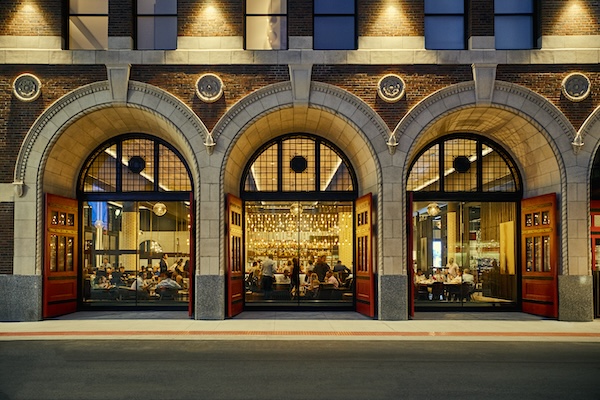
In 2012, Tricoci founded Aparium Hotel Group with an ethos to create hotels that are at once for travelers and locals—what the company affectionately refers to as “trans-local.” Shortly after launch, the company acquired Detroit Firehouse Number One, a five-story neoclassical building that was completed in 1929 by architect Hans Gehrke. In 2017, Detroit Foundation Hotel opened as one of Aparium’s first properties and remains part of its portfolio today. It’s a hallmark example of an Aparium project: independent, hyperlocal, embedded within a trendy neighborhood and radiating a style that can only be described as storied and hip.
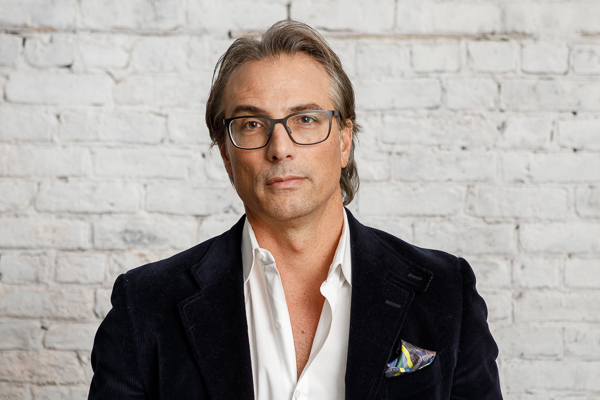
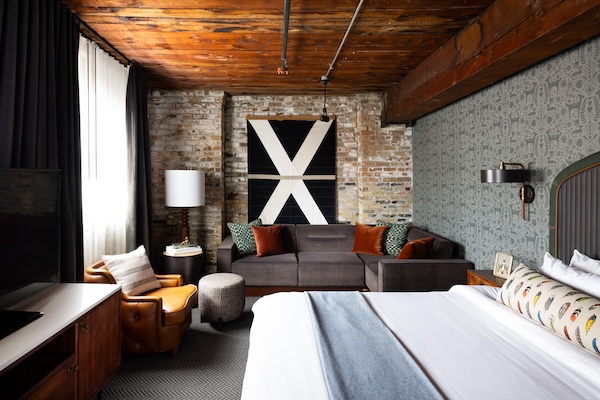
Tricoci is more to the point: “It’s the cool-kids neighborhood,” he said. Submarkets within larger markets, the Lower Garden District to New Orleans or Tribeca to Manhattan, where Aparium doesn’t yet have hotels, but the distinction is clear. What it does have is Crossroads Hotel in Kansas City’s Crossroads Arts District, where coffee bars and art galleries are speckled against a raw, industrial landscape, or the North Loop in Minneapolis, where sits Hewing Hotel, an adaptive-reuse project of timber beams and red brick out of what was once a 19th-century warehouse.
Soon, Aparium will open a 150-key hotel in Wedgewood-Houston, known colloquially as WeHo, neighborhood of Nashville, where you might find more hipsters than honky tonk. Coffee roasters and distilleries abound, Sony Music and William Morris have headquarters there. In 2022, the Academy of Country Music moved from California to Wedgewood-Houston and The Truth, a new 4,400-capacity live music venue, is opening there this fall. The Soho House in Nashville is in Wedgewood-Houston.
By 2027, Aparium is slated to add hotels in Louisville’s East Market District, referred to as NuLu, and in Omaha’s Millwork Commons, a now vibrant, mixed-use neighborhood, where 100-year-old gritty warehouses have given way to a thriving hub for tech, design and art.
Have warehouse will develop a hotel could be Aparium’s unofficial pitch, but there’s a truth to it that comes through in Aparium’s current portfolio of nine hotels with the three more to come. “There’s soulfulness, there’s grit—I love the juxtaposition of old and new,” said Tricoci. It’s not just for show. “You story tell around it; it gives you a running start in terms of creating something new and interesting,” he said.
Location Scout
A noticeable geographic pattern is evident in Aparium’s hotels. Some are in so-called flyover states, like Surety Hotel in Iowa, or Jasper Hotel in North Dakota. Most of the portfolio is sandwiched between New York and Los Angeles. The mapping makes more sense when you consider Tricoci’s upbringing: A tried-and-true Midwesterner from Chicago, he went to undergrad under the beatific gaze of “Touchdown Jesus” at Notre Dame and received a law degree from the University of Illinois Chicago School of Law. In a twist, google his name and his father, not him, commands the first page. Mario Tricoci, the elder, is a renowned hairstylist and founder of Tricoci Salon & Spa with 13 locations throughout Illinois.
“I haven’t really spread my wings,” Tricoci, who lives in Chicago, said. The idea when he started Aparium was simple. “We needed to be able to drive within five hours or fly within one hour to create as much efficiency as possible,” Tricoci described the early days. Aparium’s first property was The Iron Horse Hotel in Milwaukee.
It wasn’t just about miles on an odometer. As Tricoci tells it, the Midwest had a dearth of, call them, quality, boutique hotels—it was a pu pu platter of Hilton this or Marriott that. “There were a lot of great and important soulful cities that lacked interesting hospitality products,” he said.
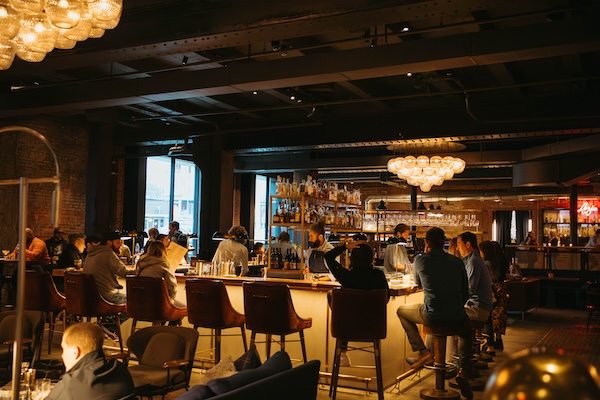
Tricoci sold his majority stake in The Elysian in 2011 to Sam Zell. A year later, he got Aparium off the ground, setting out on smaller markets, such as Milwaukee, Cleveland, St. Louis, searching for development opportunities in the $20- to $30-million range. “We had a limited budget. We had to be really thoughtful about partnerships,” he said. What they did have was a unique perspective that they honed at The Elysian, one built on a grass-roots, almost guerrilla effort in pursuits like sales and marketing and culinary. “We thought about F&B completely differently. We thought about the local market,” he said. “What we celebrated at The Elysian, I brought that as foundational elements to Aparium.”
Indie, Indeed
The Midwest focus was as much their idea as their customers. Guests would remark upon leaving The Elysian that they wished there was something similar around the region. “People would say, ‘God, I wish we had something that felt relevant.’” Something symbolic of the city that’s not a Hilton Garden Inn or Courtyard by Marriott.”
The vision was independent from the jump with a trans-local business model of developing adaptive reuse lifestyle projects in secondary markets. “It was easy access, low-hanging fruit, where there was white space,” Tricoci told HOTELS Magazine back in 2020.
They raised money from friends and family, carried equity in projects and hit a stride in managing. “I took the time to educate myself and our team about the city. That’s how we felt like we could differentiate ourselves,” he said.
Aparium had success out of the gate on its first few projects. As it grew, it began to tap into alternative sources of financing; for instance, Starwood Capital became a CMBS lender, buying into Aparium’s independent breed of hotels that generated as much as half its revenue from F&B and before it even employed a proper reservations system, as Tricoci told it.
Momentum built. Investors took notice. Aparium was inundated with calls. But it was no free-for-all: Despite its successes, Aparium had no intention of growing for the sake of growth. “We wanted to be very thoughtful and steadfast: ‘Is it the right market? Is it the right partner? Is it the right time?’” Tricoci said.
For More
Aparium is a management company that thinks like an owner. It third-party operates about half of the portfolio. “We’re a very good match for an owner that wants to play in the lifestyle space, wants something unique and takes significant pride in their community,” Tricoci said, positioning Aparium like an atelier that wades in deep on design and programming.
Earlier this year, Aparium launched Aparium For, a third-party management platform to specifically support soft-branded lifestyle hotels. It complements the core Aparium Collection and currently includes Heron Hotel, part of Hilton’s Curio Collection, in Alexandria, Va., and Surety Hotel Des Moines in Iowa, part of Marriott’s Autograph Collection. “Autographs, Curios, Unbounds—they operate inconsistently across the country,” Tricoci said.
Tricoci considers Aparium Collection a brand, akin to an Auberge Collection, but for the urban independent lifestyle hotel. In Aparium For, Tricoci said he sees a “special white space,” a solution for certain owners and, “frankly, for the brands themselves.”
One gets the sense that though Tricoci doesn’t have any vendetta against the big brands, he insinuates is a whiff of guile, but also brilliance, which has allowed them to prosper wildly, sometimes at the expense of the asset owner. He describes an almost waterfall of events, from owning real estate, to going asset light and managing hotels, to pivoting almost exclusively to franchise deals. He called it “genius,” adding that the soft brands are essentially a response to companies like his.
Tricoci isn’t shutting Aparium off from managing hard brands, either. He envisions picking up branded lifestyle assets in time. “Lifestyle is tricky,” he said. “You must have a particular expertise, patience and viewpoint because you’re operating intensely and delivering service, especially around things like F&B,” he said. “Expectations are higher and the brands are now being a little bit more intentional.”
Though Aparium doesn’t specifically operate hard brands yet, two of its hotels go by the same name—Populus—with one in Denver and one in Seattle. The Denver property turned heads from the start when it opened in late 2024, dazzling guests and critics alike with its biophilic design by Studio Gang. It’s widely recognized as the nation’s first carbon-positive hotel. Last year, Esquire voted it the Hotel of the Year for 2025 in its annual “Best New Hotels in the World” and Time slotted it into its “World’s Greatest Places of 2025.”
Aparium manages both hotels via a partnership with Urban Villages, whose own ethos jibes symmetrically with Aparium’s. “They absolutely and unequivocally walk the walk as it relates to ecological, [sustainable] responsibility,” Tricoci said. “There’s belief that Populus can scale and grow.”
Some say that you haven’t hit the big time until you hit the Big Apple. For Aparium, Broadway-bound was never a strategic goal. It doesn’t mean that New York isn’t in its sights. “Will we eventually be there?” Tricoci pondered. “I think so.”
Until that time, Aparium is hard at work finding opportunities in emergent and hip slivers of a city’s whole—where the cool kids roam. “There’s still plenty of unique opportunities in markets that are underserved,” Tricoci said. “Now, those are becoming served.”
