
Josef Starýchfojtů never met a problem he didn’t think he could figure out. Growing up in the Czech Republic, he was fascinated by challenges and the satisfaction that comes from overcoming it. The more difficult, the better.
He’s never lost that passion. “I’ve been curious about solving hard problems my entire life,” he said.
Starýchfojtů, like the distinguished and fellow countryman, the Czech composer Antonín Dvořák, was a bit of a wunderkind: He made his first dollar at the age of 12 from coding. Forbes placed him on its “30 under 30” list in the Czech Republic.
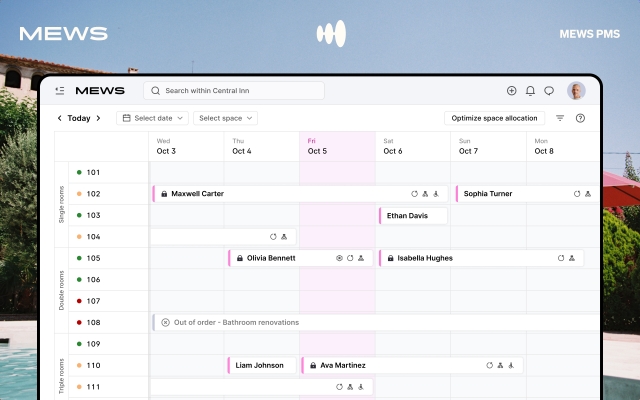
Today, he is chief product and technology officer at Mews, a hospitality operating system that is valued at around $2.5 billion after it raised $300 million in a Series D round this past January. He has been with Mews for eight years, having started there as a software engineer. Embracing technology as a career, he said, comes from its fast feedback loop, where actions are measured immediately and results are used to adjust the next steps. “Building something from scratch and then iterating is addictive,” he said.
Applying technology to the hospitality space— that’s a different test case altogether. “The hospitality industry surprised me. It’s an industry built entirely around human experience, and yet the technology underneath it was built for something else: for counting rooms, not understanding guests,” he said, which stirred his curiosity and innate desire to overcome a problem. “The gap between what hotels wanted to deliver and what their systems let them do was an interesting engineering problem.”
HUMAN NATURE
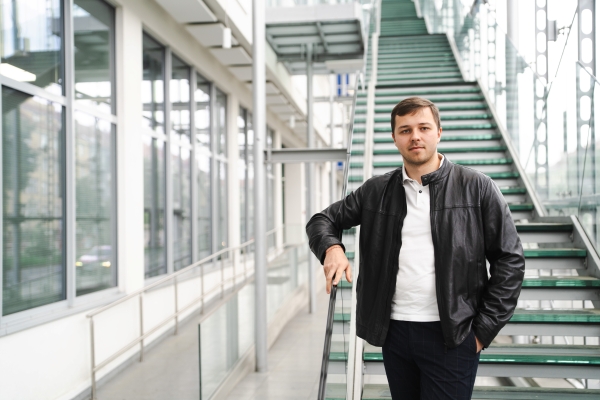
Starýchfojtů always has the end-user in mind when developing a product: the customer. “When you improve how a hotel operates, you improve the experience of millions of guests and hoteliers. That connection between technical work and human outcome isn’t something you find everywhere,” he said. Mews never delivers anything to a wider audience without it first going through a customer.
In that vein, Starýchfojtů often steps out of the lab to gain inputs and signals. He visits hotels frequently and talks to customers regularly. “I’m a huge believer in first-hand experience,” he said. “Staying close to how hotels operate is what keeps our product decisions honest and it’s where a lot of our best ideas come from.”
Being in charge of product and technology for a company that has more than 15,000 customers across 85 countries should make even the bravest tense up. Starýchfojtů takes it in stride. “The pressure is real, but I [don’t] bear it alone,” he said, alluding to his team. “There is no greater force than that.”
AI, SURE
External recognition came early and often for Starýchfojtů, but it doesn’t drive him. Yes, it creates visibility for Mews, but the real feedback that drives and motivates him comes when a hotelier tells him how much a product he created made their job easier and made the hotel money. “When a hotel tells us that something we built changed how they work; that a GM generated more revenue; that a front-desk team can be present with guests instead of staring at a screen… those are the measures that matter to me,” he said.
No hospitality technology discussion is complete without broaching artificial intelligence and its attendant ramifications. Uniquely, for someone as cutting-edge and futuristic as Starýchfojtů is, he isn’t necessarily a fan of omnipresent AI—at least in the hospitality space. “I hope we end up with less visible technology in hospitality, not more,” he said. “The best case for AI is that it takes the work that has always gotten in the way—the manual reconciliations, the routine guest communications—and handles it in the background, so the people on the ground can focus on what no system can do: make a guest feel looked after.”
There is a scabrous side of AI, Starýchfojtů insists. “The worst case is that the industry mistakes automation for experience, and every experience starts to feel the same,” he said. “The risk is that AI gets deployed in ways that make the product cheaper to run without making it better to experience.”
The technology field is one of futurism— Elon Musk, not Ned Ludd. Starýchfojtů is that; he is also a thinker in the mold of a philosopher. “I care about the quality of the thinking as much as the quality of the output,” he said. “When someone brings me a proposal, I want to understand how they got there, not just what they’re proposing. That creates better decisions and, over time, it builds a team that makes better decisions without me in the room.”
