There is no place in the world like Monaco. The prosperous principality, independent for most of the past 600 years, squeezes 125 nationalities on 487 acres between France and the Côte d’Azur. It is a real-life movie set for the cosmopolitan and the ultra-rich.
The 126-room Hotel Metropole Monte-Carlo is the only such freehold property in Monaco. Inside its 19th-century walls, names at the pinnacle of luxury — Givenchy, Lagerfeld, Robuchon — have created one-of-a-kind spaces, services and experiences. If it were a movie, Audrey Hepburn would be the star. There is no place like it in the world.
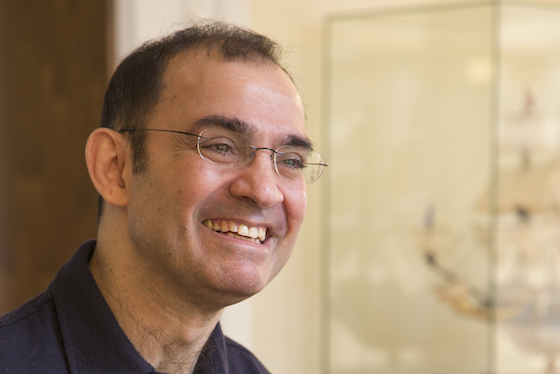
That’s exactly how Fadi Boustany wants it.
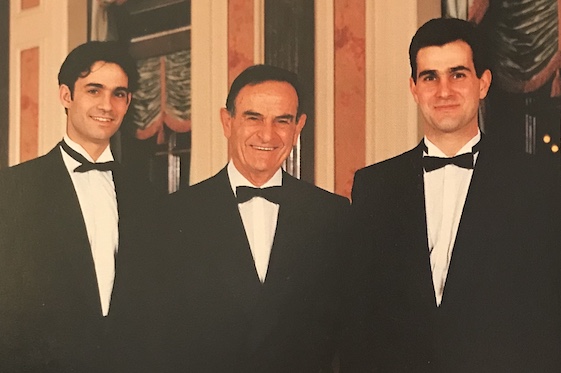
His father, Nabil Boustany, built his fortune in luxury real estate in Lebanon, Canada and the Middle East, purchasing the hotel in 1980. Boustany himself was born in Lebanon but raised mostly in Switzerland, and he was in his 20s when he and his brother, Magid, took over the Metropole. His only previous hotel experience was as a guest.
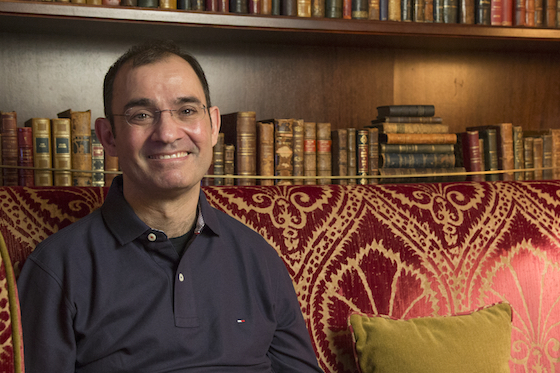
However, if the name doesn’t sound familiar, Boustany prefers it that way, too. “It’s a very discreet family, extremely smart, wise, with a clear vision of what they want to achieve,” says hotel GM Serge Ethuin.
Intention and results
“Everything is so intentional,” says luxury experience consultant David Richey, a longtime friend of Boustany’s. “The hotel as it exists today is entirely Fadi.”
Meeting in offices next to the hotel, Boustany is casually dressed and seated in a conference room flanked by historic photos and two scale models under glass: one of the hotel, in gold, and another of the Couronne, a 16th-century French warship — a gift to his father from Mr. Onassis, he explains. Now CEO and majority stakeholder of Metropole Group, he never assumed he would work for his father, who died in 2009. “He was quite extraordinary, this man,” says Boustany, who describes their relationship as close.
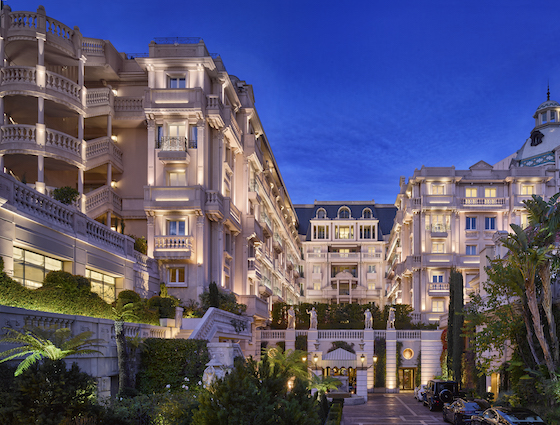
Nabil Boustany purchased the hotel (for “a lot of money”) from British owner Grand Metropolitan. The original hotel was built in the late 1800s to attract gamblers from the glittering casino nearby; Boustany père spent US$140 million, according to reports, gutting it and excavating three floors for a shopping mall.
Boustany fils, meantime, did a stint at U.S. construction giant Bechtel and earned an MBA from Cambridge University before joining the business, but his father’s?management style, “sit down and listen,” didn’t resonate. His father eventually agreed to give him some responsibilities — and shortly afterward announced he was joining Lebanon’s government to reconstruct the country after its civil war.
A contract with Conrad Hotels ended in 1993, and “I was managing not just the hotel but the group, starting in 1994,” Boustany says, laughing. “It was…” He pauses. “How can I say … it was a very average hotel.” He adds, “I wouldn’t say that at 27 I transformed the hotel, to be honest. But it allowed me to look at deficiencies and problems.”
Transformation
“I was basically there on the day that Fadi said, let’s create a luxury hotel,” says Jean-Claude Messant, now managing director of the Royal Mansour in Marrakech, Morocco. As GM, Messant was key in the development of the new vision. He describes Boustany as warm and friendly, lacking egotism but a tough manager. “A lot of companies want to make money on day one. Fadi understood that … he will make money eventually, in year two, in year three. What he achieved is not for him but for his kids.”
A concept document describes the soul of the hotel: timeless, glamorous, with sophisticated and demanding clientele. The litmus test employed a muse of sorts: “In whatever we did, we thought, would Audrey Hepburn be happy seeing this? It worked,” says Boustany, 50, who is married with three young children.
“In many ways Fadi considered what he was doing to be … the non-corporate approach to luxury,” says Richey, managing director of Richey International and co-founder of Metis, which provides marketing and behavioral research. “In that regard he was quite a bit ahead of his time.”
Despite distribution and marketing challenges, Boustany says he prefers the flexibility and personalization of independence. “You have to create the club environment,” he says. “You have to feel part of the club — an exceptional club.”
French designer Jacques Garcia, behind New York’s NoMad, Paris’ Hôtel Costes and others, signed on in 2001. His prescient design cut the huge lobby area into more intimate gathering spaces. The hotel closed for a year and reopened in 2004, but his father didn’t visit until it was finished. “He liked it,” says Boustany, declining to discuss costs.

Chef Joël Robuchon joined to lead F&B, including room service, in 2003, opening Joël Robuchon Monte-Carlo and eventually Yoshi, his only Japanese restaurant.
“We didn’t want to restrict (Robuchon) too much on what to do, just leave him free to think and do what he wanted,” Boustany says.
When he met Boustany in 2004, “I immediately understood that there was a real potential, a hotel with a soul in a strategic place,” Robuchon says. “We have cordial relationships based on respect and trust, we really enjoy working together, sharing ideas and planning for future projects. Our relationship was set up like this from the very beginning.”
Giving creativity free rein is part of Boustany’s management style, with people at the center. “It’s nice to have a nice hotel,” he says. “If the service and the people are not there, it’s useless. Especially in the luxury business, most of what you give to clients is people’s interaction and service.”
He continues, “Of course it’s very important to recruit the right people… but once you recruit them, you have to let them be.”
Robuchon adds, “I choose my suppliers, my tableware, my team members, and I am working as I wish. I do not need to comply with standards of another organization, which can be the case in other hotels.”

Karl Lagerfeld was an unlikely but inspired choice to redesign the Metropole’s pool area and restaurant, Odyssey, which opened in 2013. Boustany hired Givenchy to manage the spa space redesigned by Didier Gomez, set to open in May.
At the time, Givenchy had a single spa — “nothing wow,” Boustany says. Why did he choose them? “They had the right approach when I met them,” he says. “They wanted to create a spa system that works, not only selling the perfumes and products, but also good treatments.”
But still, he tweaks: In-room dining, for instance, is not “wow.” With Robuchon’s food on the cart, what is there to improve? “The presentation, the plates… It’s fine now, it’s OK, but it could be better.”

Adapting to change
Boustany’s own strategy centers around adaptation, professionally and personally: A diagnosis of multiple sclerosis in 2005 has limited his mobility. He doesn’t define himself by it. “Most people who complain about their state, it won’t move them?further… It does affect a little bit how you do things. But just a little bit.”
Adaptation also means finding new ways to differentiate from competitors such as the Société des Bains de Mer’s Hotel de Paris and Hermitage Hotel. But “our real competition, and their real completion, is not Monaco. It’s other destinations,” Boustany says. “In some ways, I see them as partners.”
While he pursues other real estate projects, he is a “maybe” on developing another hotel. He prefers to focus on upping the wow factor at the Metropole, including refreshing and updating the public spaces, restaurants and guest rooms.
But he remains discreet.
“I prefer to put my money into doing something amazing and then letting people publicize it,” he says. “It takes more time, but when it works, it works.”