
Nobu deftly crossed over from a singular restaurant name into a hotel brand, with the likes of actor Robert De Niro as a backer. There are 18 hotels now, including the recently opened Nobu Hotel San Sebastián in Spain.
Others have taken note and are looking to capitalize on their own brand recognition by licensing their names.
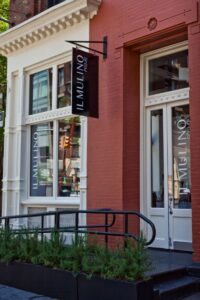
One of those is Il Mulino, which originally opened in 1981 in New York’s Greenwich Village and quickly became a downtown hot spot for those seeking out authentic Abruzzo Italian cuisine. The brand has since grown and in July announced it was opening licensing opportunities for hotel owners and brand partners. Currently, Il Mulino has three licensing partners at hotels including Swan & Dolphin Hotel in Orlando; Hilton Nashville Downtown; and Mt. Airy Lodge in Mt. Airy, Pa. Beyond its other standalone outposts, it also has restaurants at the Acqualina Resort & Spa in Sunny Isles Beach, Fla., and the Hard Rock Hotel Atlantic City.
“It’s a healthy way for us to fiscally expand,” said Brian Galligan, president of Il Mulino. “Hotels have the infrastructure already in place and picking the right brand is key for us. We’ve had great success with hotels and it’s why we want to continually try to expand in that direction.”
In this case, the hotel operator runs the day to day of the restaurant, but Il Mulino still has control over the menu, the décor and the staff training.
“It’s all about our recipes and about protecting the brand and growing the brand,” Galligan said. “This is our life; what we live and breathe every day. And that is what hotel [owners] and operators want: passion.”
MORE IN THE MARKET
Il Mulino is a prime example of expanding an individual brand name; it’s not the only one. At the uber-famous Rao’s, in New York’s Harlem neighborhood, it is almost impossible to get a reservation. It’s former owner, Frank Pelligrino, who died in 2017, carried the nickname “Frankie No,” because if you called to try and snag a table, you’d receive a curt response: “no, no.” For 15 years, Rao’s had a restaurant inside Caesar’s Palace in Las Vegas. It closed in 2021.
Another New York legend, Grimaldi’s, often mentioned in the same breath as best pizza in the city, which means some of the best pizza in the world, had its first location in Brooklyn, but has now expanded the brand through franchising. There is even one at Palazzo in Las Vegas. Meanwhile, the iconic Peter Luger Steak House in Brooklyn will open an outpost at Caesars Palace in Las Vegas this fall.
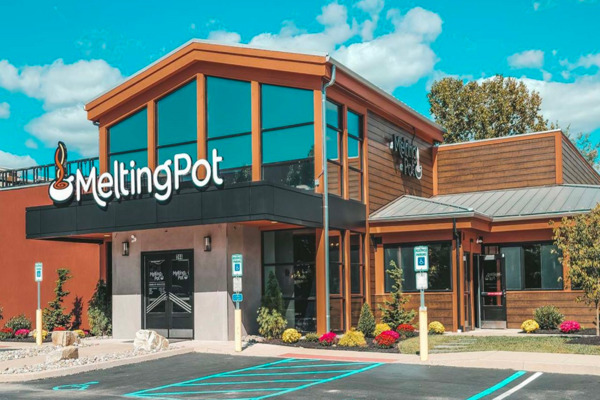
On the other end are restaurant chains that are now looking to get into hotels. Consider The Melting Pot, a chain of franchised fondue restaurants with some 100 locations in the U.S. and Canada. Its first entry into hotels came through the Hyatt House Philadelphia/King of Prussia in Pennsylvania, which CEO Bob Johnston calls wildly successful. “As a result of that,” he said, “we are looking for other opportunities believe that the brand can be a very good solution for hotels.”
He called hotel food service “not very unique” or “cutting edge,” adding, “I don’t know a lot of people that think about going to restaurants that are associated with a hotel unless they live in that hotel or are visiting that hotel.”
He said that The Melting Pot not only attracts the hotel travelers, but also the local crowd.
Johnston said one of the advantages of brands like The Melting Pot is that they can fit in easily with the existing property’s infrastructure. “We don’t have specialized needs in the kitchen. Converting a restaurant to a Melting Pot is quite easy.”

“From a brand perspective, the first thing to look at is if the restaurant brand fits the hotel concept and that the two align seamlessly with their expansion goals,” said Scot Turner, founder and managing director of Auden Hospitality, a hospitality and restaurant consultancy. “The alignment with the hotel is key.”
Trouble can start when the original concept is changed, like if a buffet is worked in because that is what the “brand standard” is. “All of a sudden it starts diluting what your brand is,” Turner said.
The second thing would be brand positioning and marketing. License deals give hotels some freedom in terms of how they do local marketing, but it has to be within brand guidelines. In crafting marketing strategies and positioning the brand in ways that align with its identity, versatility in marketing techniques and a customized approach to cater to diverse markets will arise.
However, it’s not only about choosing the right hotel brand but also the right location and the right pace for openings. When restaurants focus too quickly on expansion, it can dilute the name.
“The challenge then is when you start doing too many of these openings that don’t make sense or might not be quite the right fit just because the opportunity is there,” Turner said. “That’s when it feels like it’s just about money grabbing.”