
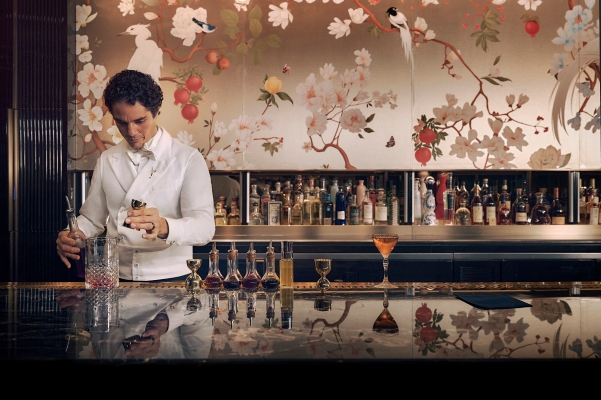
A hotel bar has the potential to turn a good stay into an extraordinary one. Success comes from a clearly defined concept that’s executed with intention, said Allison Kafalas, director of beverage & operations support, Americas at Hilton. “A bar’s identity isn’t just the menu; it’s the total experience,” she said. Everything, from glassware and plateware to cocktail garnishes and lighting, and, of course, staff, “working together to create a cohesive concept,” Kafalas said.
Consider the newly opened and renovated Waldorf Astoria New York. It was essential for Hilton to reintroduce the famous Peacock Alley bar while ushering it into a new era. Every element of the experience was reimagined, getting a boost via a partnership with renowned mixologist Jeff Bell. “We paid close attention to the details that shape the atmosphere,” Kafalas said, including uniforms and evening entertainment: a Cole Porter piano is now back in the Peacock Alley lounge.
How a bar feels should mirror the hotel. For Marcus Hotels & Resorts, whose portfolio spans historic landmarks and lifestyle properties, that alignment is critical.
At the Pfister Hotel in Milwaukee, guests find an elegant, traditional vibe that matches the property’s legacy. At lifestyle-driven hotels like Saint Kate, also in Milwaukee, or The Lofton Hotel in Minneapolis, the bar scene skews more eclectic and trend-forward.
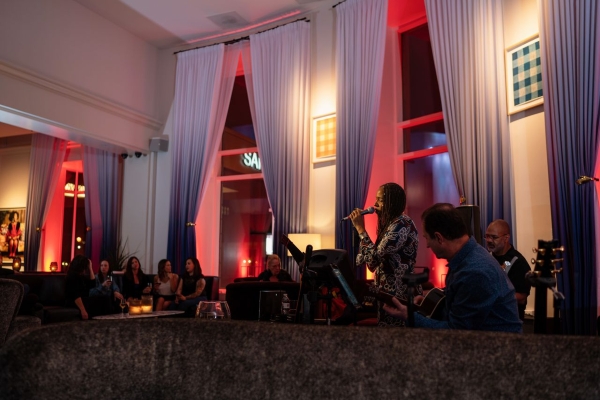
Successful bars, noted John Wise, VP of food & beverage at Marcus Hotels & Resorts, feature live entertainment and high-quality, elevated food, from sushi to made-from-scratch pizzas. “These all complement an intelligent, seasonal beverage menu,” he said.
FOLLOWING THE MONEY
Beverage margins not only outperform food margins, but alcohol is also less perishable. It’s a reality that shapes strategy.
“Beverage margins are always significantly higher than food margins,” said Tony Mosca, managing director of Rosewood Washington, D.C.’s CUT + CUT Above bars. “The bottle of alcohol on the shelf can remain there until you sell it, whereas with food, you’re dealing with day-to-day reservations and walk-ins.”
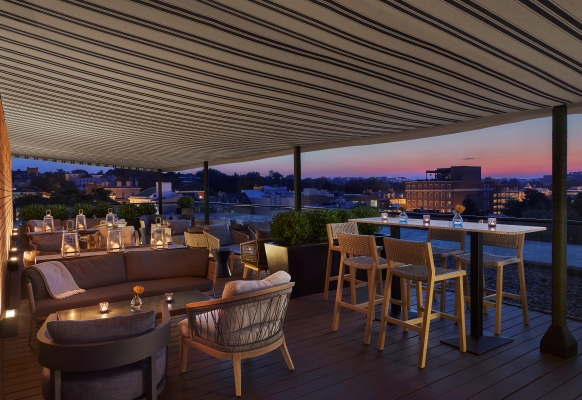
Cocktail pricing often carries more weight than food increases. “If people are drinking one, two or three drinks, it will balance out that way,” Mosca said. “The key is the right product mix.” At CUT, beer represents less than 2% of sales. Programming, instead, focuses on spirits and wine. “When people are sitting and dining in the main restaurant, we’re heavy on the wine side,” he said. “In the lounge, it’s more cocktail-driven. On the rooftop, it’s more weighted toward cocktails.”
CHANGING DRINKING CULTURE
As wellness continues to reshape drinking behavior, hotel companies are adapting bar menus that feature healthier options. “The trend over the last few years is elevated zero-proof menus and low-ABV programs,” said Mosca. Guests, for instance, might start with a full-strength martini and back it up with a lower-alcohol or alcohol-free option. “They feel like they’re still participating in the ritual of drinking and being at a bar, but they’re not feeling alienated because they are having alcohol-free beverages,” Mosca said.
Several brands across the Hilton portfolio are elevating wellness as a core pillar, said Kafalas. Tempo by Hilton, for one. The brand offers a signature “Spirited” and “Free-Spirited” cocktail program and recently partnered with author, wellness coach and no- and low-alcohol expert Derek Brown to debut a reimagined lineup of cocktails. “Our goal remains to deliver the full experience of a well-crafted drink, with or without alcohol,” said Kafalas.
Monthly beverage inventory, point-of-sale analysis and scheduling systems that review pacing, same-period-last-year data and reservation trends help ensure staffing levels align with demand. “It enables us to schedule staff accordingly, so we don’t have too little or too many at the time,” Mosca said.
Creativity also plays a role during slower periods. “When I was working at the Playboy Club in New York, we created a ‘Statue of Liverty’ made out of chopped liver for a 4th of July event. It was silly, fun, tasty and we got a few TV stations to show up,” said Marcus Hotels’ Wise.
LESSONS LEARNED
Relying on perception rather than data is one of the most common mistakes teams make when engineering bar menus, according to Kafalas. “When asked about top sellers, bartenders may often name the drinks they personally like or think are trendy—not the ones actually driving sales. Menu development must be grounded in real data and built for the guest, not the bartender.”
Another common mistake is a lack of balance. “A well-designed menu should offer a mix of spirit types, brands, cocktail styles and flavor profiles,” said Kafalas. At Leonessa, the Italian apéritif rooftop bar at Conrad New York Downtown, the bar menu was created in partnership with tastemaker Ariel Arce and designed to celebrate the best of Italian cocktail culture with a balanced selection of spritzes, bitters, martinis, non-alcoholic options and wine and beer.
For Wise, relying on too few suppliers for products is another misstep. “To get the best products, you need to do the research and utilize a larger supply of vendors,” he said. It’s also important to not put an artificial cap on what the guest spends. “Be competitive and offer fair-priced value, but understand there are always guests willing to spend more for an amazing glass of wine or a high-quality bourbon or tequila,” he said.
Beyond concept, margins and programming, there is one element that helps define a great hotel bar: storytelling. “People want to feel connected to the place that they’re drinking in, staying in and dining in,” said Mosca.