
But for some guests, waiting 45 minutes for a server to arrive with a rolling table is less appealing than having food delivered quickly in packaging that is easy to handle.
One thing is clear: It has long been one of the more labor-intensive offerings in a hotel. Over the past five years, hotels have been rethinking what in-room dining should look like as guests become accustomed to faster delivery, mobile ordering, transparent pricing and real-time tracking. At the same time, labor shortages and rising operating costs have forced hotels to reconsider whether the traditional room service model makes sense.
“Today’s guest is looking for something that is quicker, easier and more affordable,” said John Beck, regional director at Crowne Plaza HY36 Midtown Manhattan. “Room service can still be profitable, but hotels have to rethink the old cost structure.”
At Crowne Plaza HY36, that has meant moving away from a traditional room service setup and treating in-room dining more like the food delivery experience guests already know. Through its Burgerology restaurant, the hotel’s food is packaged for easy transport and delivery, allowing guests to order from their phones and choose between delivery to their rooms or pickup from the restaurant.
A Different Kind of Room Service
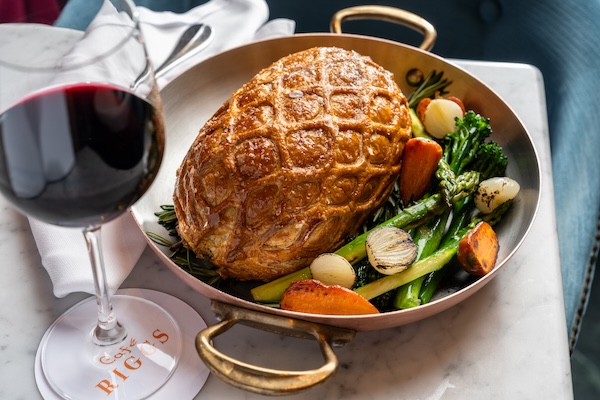
At Riggs Washington DC, Addison Hall, director of food & beverage, describes the change as a reimagining rather than an abandonment of the service. “Since the pandemic, the emphasis has shifted toward convenience, speed and an elevated guest experience,” she said. “Each delivery offers a moment of hospitality, not just a food delivery.”
But profitability remains a challenge. While room service has evolved significantly, it remains, for most hotels, a guest amenity rather than a major profit center. “In many cases, the service continues to operate at a net loss when labor, delivery and operating costs are considered,” said James Bonner, director of food and beverage at Rosewood Washington D.C.
Tough Competition
Uber Eats, DoorDash and similar services have changed what consumers expect from food delivery. Guests are used to opening their phone, seeing the menu, knowing exactly what something costs, placing an order in a few clicks and having it arrive relatively quickly.
Hotels, however, have one built-in advantage: Their restaurant is already in the building. But that advantage can be undermined by high delivery fees. “If a guest can order from a restaurant down the street for a $5 or $7 delivery fee, it becomes difficult to justify charging them a 25% room service delivery fee simply because the restaurant happens to be downstairs,” Beck commented. The challenge, he said, is to make hotel dining “the easiest choice: great food, reasonable pricing, quick delivery and no surprises when the check arrives.”
At Rosewood, Bonner said third-party delivery has had less impact among shorter-stay guests, while longer-stay guests are more likely to turn to outside platforms when they want greater variety.
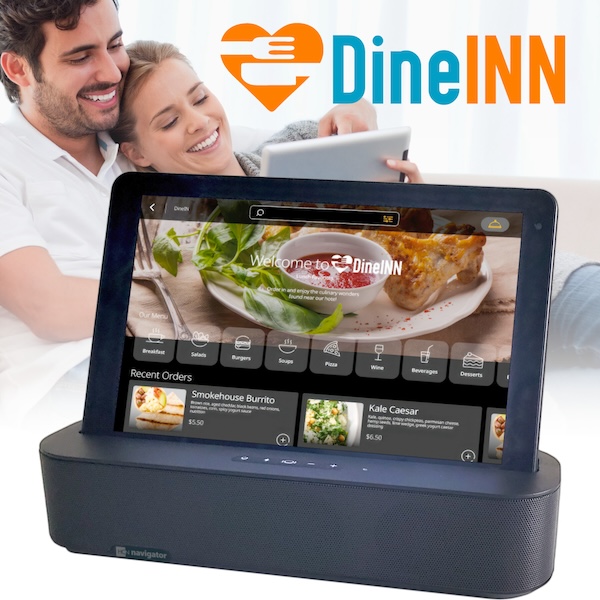
Kevin Bidner, president and CEO of The Hotel Communication Network, sees an opportunity in bringing outside restaurants into the hotel’s own delivery ecosystem. Hotel Communication Network previously piloted Dine Inn, a service through which outside restaurants deliver directly to hotel rooms and guests could have the charges billed like room service. “We contracted six restaurants to deliver food to our hotels, and the delivery was right up to the room. We were also able to bill the food like a room service order,” he said.
Less Labor, More Flexibility
Crowne Plaza HY36 simplified the lengthy process through packaging and a streamlined delivery model, allowing its restaurant team to handle in-room orders without maintaining a separate room service operation. “If a guest orders a burger and fries, they will generally rather have a great burger delivered hot in 20 or 25 minutes than wait 45 minutes because we are trying to recreate a formal restaurant table inside their guestroom,” Beck said.
At Riggs, Hall said cross-training and flexibility have become central to managing the operation. “Room service is a study of coordination and communication between the kitchen, service teams and front-of-the-house, all moving in sync,” she said.
The goal is not simply to reduce labor, but to remove unnecessary steps while maintaining the elements guests value.
Tech Takes the Order
Café Riggs uses Tray Away to track tray deliveries and retrievals, providing greater visibility into response times and helping the team staff more effectively.
At Rosewood Washington D.C., Bonner said mobile ordering, in-room tablets and digital platforms have helped streamline ordering, reduce errors and improve response times, while traditional phone ordering remains important for guests who prefer personal interaction.
Guest-room tablets can also create new revenue opportunities. Bidner said Hotel Communication Network’s platform allows hotels to suggest additional purchases based on what guests are ordering. “We see that you’re ordering a steak. How about a nice bottle of wine with that steak? And it’ll pop up on screen for selection,” he commented.
Bidner also said the company has measured an increase in order size when guests order through tablets rather than by phone, describing “a confirmed 20% uptick in order size.”
Where Hospitality Shines Brightest
The emerging model puts more emphasis on choice. But hotels still have something delivery apps cannot easily replicate.
“Third-party apps have moved the goalposts regarding convenience, speed and order tracking,” Hall said. “What keeps in-room dining relevant is everything an app cannot deliver: a well-thought presentation, genuine hospitality and a personal touch that turns a meal into an experience rather than a transaction.”
For Beck, technology should ultimately disappear into the background. “The best room service experience is one the guest barely has to think about,” he said. “They should be able to see the menu, order exactly what they want, understand the total cost upfront and choose how they want to receive it.”
Room service, then, is not necessarily disappearing. It is becoming less about recreating a restaurant in the guestroom and more about delivering food in a way that fits how guests already live, order and eat.
