
Record numbers of international tourists funneled into Australia this year, with Asian visitors at the head of the pack.
Chinese, Korean and Japanese tourists alone were worth a combined A$12.3 billion (US$9 billion) to Australia’s economy, out of the A$38.8 billion (US$30 billion) tourism dollars funneled into the country in 2016, according to Tourism Research Australia. In December, all six Chinese airlines operating direct routes between Australia and mainland China pledged to expand direct flights between the two countries.
Not surprisingly, the tourism-related investment pipeline reflects that, standing at A$29 billion (US$22 billion), up from A$17 billion (US$13 billion) three years ago, with two-thirds of the investment in accommodation, according to Deloitte Tourism and Hotel Market Outlook.
Further reflecting the growth is performance data, with room rates expected to grow at an average of 2.5% for the next three years to A$170 (US$131) per night, chasing the 10-year historical average growth rate of 2.6%, while RevPAR is expected to grow by 3.1% to a national average of A$123 (US$94) by 2019, according to Deloitte.
Regional Report SIDEBAR: Developer Jerry Schwartz on long-term plans
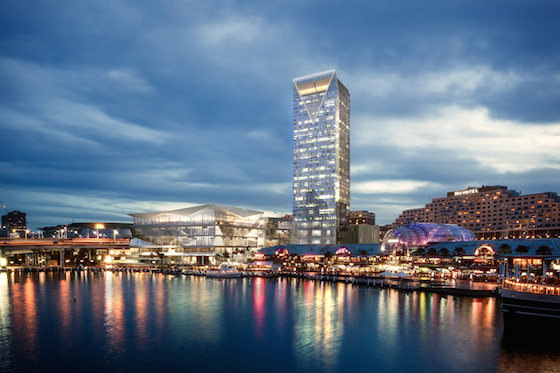
It’s a boom that hasn’t gone unnoticed by Chinese developers, who have homed in on Sydney’s luxury market. The largest mixed-use development transaction of the year was the A$700 million (US$538 million) Ribbon development site, an acquisition by Chinese Zhengtang Group (now Greaton) in Darling Harbour, which will include a 400-room W hotel. Then there’s the yet-to-open Wanda Vista in Circular Quay from Chinese-based Dalian Wanda – billionaire Wang Jianlin’s A$1 billion (US$772 million) mixed-use development with a 179-room hotel.
These two deals are indicative of the kind of Australian properties Chinese developers have gravitated toward thus far: prime location, high stock and, in some cases, office conversions – not easy to do in Sydney.
“In our market, it’s still very challenging to transition from office to hotel. Certainly, anyone who has run the numbers on that usually doesn’t proceed,” says Bob East, CEO of Mantra, the country’s largest brand operator and third-largest franchise company (second to Marriott International and TFE Hotels). Currently, Mantra has eight projects and 1,160 rooms in the pipeline.
“With some of the Asian investors, there’s a lot of family money coming into this market, and often what doesn’t work for institutional investors may indeed be something that a family fund will entertain if there’s other motivation for the development,” East continues.
That family money may well end up grabbing up Mantra. At the end of March, speculation surfaced that the Australian company was being targeted for a potential takeover by either an Asian party or InterContinental Hotel Group. Mantra wouldn’t comment on the rumor, calling it “utterly fabricated.”
While East says he still sees plenty of opportunity in the country’s upper luxury market, he points to a real need in the middle sector, partly as a result of that influx of tourism.
“We have a burgeoning Asian visitation in Australia, and a lot of this is more suited to that mid-market hotel – that is where there’s an absolute strain in that sector, particularly in Sydney and Melbourne,” East says. “We think that’s probably the greatest potential for hoteliers such as ourselves.”
Sydney on fire
Both Sydney and Melbourne are trading at levels not seen before, as solid tourist numbers continue to boost occupancy and RevPAR. In development, Sydney dominates with 19 projects and 3,567 rooms in its pipeline – which equates to some A$2.3 billion worth of hotel projects already approved and a further A$1.9 billion (US$1 billion) of projects proposed and in advanced stages of planning, according to data from Tourism Accommodation Australia.
In December, Sydney also saw the opening of its new International Convention Center, a A$1.5 billion (US$1.2 billion) exhibition development in Darling Harbour. Even though the ICC only just opened, Sydney-based Horwath HTL consultant Stefan Muff says there’s a general fear that the center will take away demand from the more events-driven Melbourne and stop hoteliers from pushing rate.
Regional Report SIDEBAR: Ovolo finds niche near Sydney’s ICC
“Melbourne is a smaller hotel market, so the impact of that supply will likely be larger than in Sydney, meaning occupancy may drop more in Melbourne in the coming years,” says Muff, adding that he thinks hoteliers may be apprehensive of future supply additions in the city.
Leisure holding its own
In the back half of 2015 and 2016, high asset pricing in Sydney and Melbourne led investors to look at second-tier markets for potential expansion, according to Rob Cross, national director, CBRE Hotels. Leisure markets, like Cairns and the Gold Coast, have piqued investor interest with double-digit growth in hotel market indicators. In 2018, the Gold Coast will host Australia’s Commonwealth Games, which could also mean a significant boost to the region.
“Investors are looking to capitalize on this and the substantial increase in overseas visitors, particularly from China,” says Cross.
It’s growth that comes off a low base, however, as both markets had been underperforming for the past several years. Though neither city has significant pipelines, recent development announcements in Cairns mean supply should remain stable in the medium to long term, with record tourist levels meaning further growth in occupancy and room rates, CBRE says.
One local player getting in on the Cairns action is Event Hospitality & Entertainment, parent company of the Atura, Eventhouse, Rydges and QT brands.
“We think the outlook for Cairns is strong in that there’s a proximity to some of the biggest growth markets in the world, particularly out of China,” says David Seargeant, Event Hospitality’s CEO and managing director who is stepping down this year after 28 years with the company.
“It’s very well-serviced with flights, great time zone, and we’re also seeing some growth out of the Japanese market and out of Asia,” Seargeant continues. “The Cairns market, with its appeal of Great Barrier Reef and great natural attractions, has very strong appeal.”
While Seargeant says Sydney and Melbourne are still most attractive in terms of proposed new development, he also remains confident in Perth, which lacks the oversupply of Brisbane and is beginning to see demand grow again.
Perth, the country’s third top market with 12 projects and 2,552 rooms in its pipeline, saw the opening in December of Australia’s most expensive hotel development the 500-room Crown Towers Perth, built at a cost of A$650 million (US$498 million). Additionally in May, the 224-rooom Aloft Perth will be the first in Australia to open under Starwood’s millennial-focused brand.
Despite having some notable openings, Perth’s ADR for 2016 was A$194 (US$149), just four dollars more than it was in 2010. That’s due to fallout from 2013’s mining boom and subsequent bust in both Perth and Brisbane – the two have experienced significant supply increases over the past few years, which, CBRE says, makes new developments in the medium term for those markets unlikely.