
Utility costs are wreaking havoc on hotel P&Ls. Hilton is banking on a new design to assuage owner angst.
The lodging company has unveiled a new clean-energy prototype for its extended-stay Home2 Suites brand. The “Hilton Clean Energy Prototype” is an an optional, turnkey offering for U.S. hotel owners and developers designed to lower operational energy costs and reduce carbon emissions.
The move comes to combat the meteoric rise in utility costs that are squeezing margins. According to the American Hotel & Lodging Association, U.S. hotel utility costs have risen 28% over the past five years. Part of the increase can be traced to the rise in oil prices due to the war in Iran, as well as growing energy costs due to electricity demand from AI data centers.
Hilton said the Home2 Suites by Hilton Clean Energy Prototype was developed in response to evolving energy markets and growing industry demand for scalable, practical sustainability solutions. This new offering is Hilton’s first prototype designed with zero operational emissions to be made widely available to hotel owners and developers.
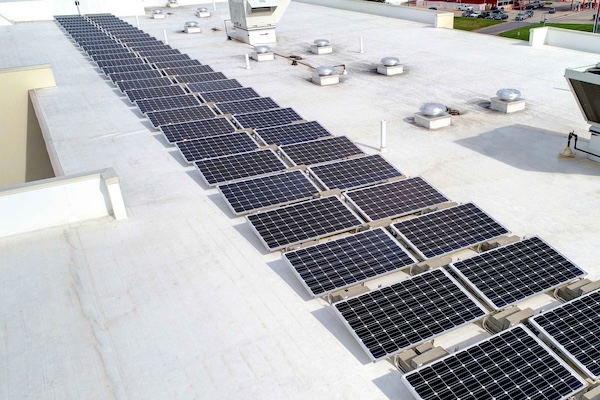
The Home2 Suites Clean Energy Prototype is Hilton’s most energy-efficient hotel design package that combines all-electric systems, on-site and off-site renewable energy and an enhanced building envelope to reduce operational energy costs for owners while creating a stronger return on investment over the life of the property compared with a traditional Home2 Suites prototype, Hilton noted.
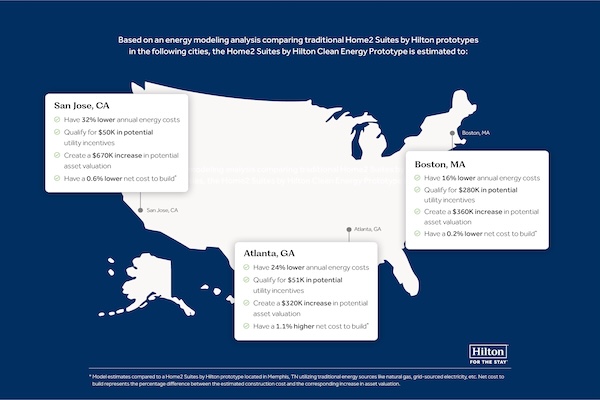
Based on a modeling analysis conducted across 13 U.S. cities, Hilton said the design is expected to:
- increase energy efficiency by 30%;
- support increased property valuation;
- reduce annual energy costs by 18–40%;
- reduce operational carbon emissions by 440 metric tons (dependent on market conditions and compared to a traditional Home2 Suites prototype).
“We know that sustainability solutions are most impactful when they are scalable, practical and make strong business sense to help power the future of responsible travel,” said Jean Garris Hand, VP and global head, sustainability & responsible business, Hilton. “Our owners, many of whom operate small businesses, are facing rising energy costs and are looking for a turnkey option to lower operating expenses, improve energy efficiency and reduce emissions.
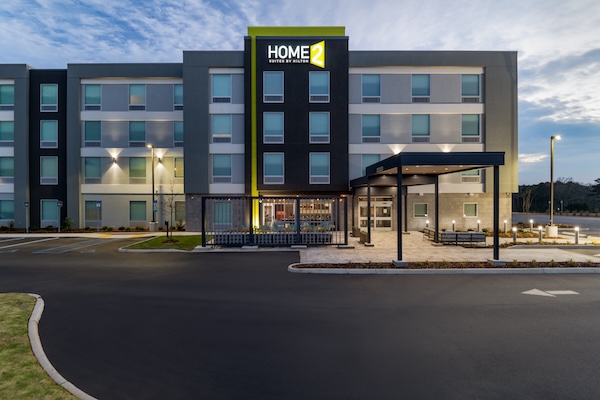
Hilton launched Home2 Suites in 2009 to enter the mid-tier, extended-stay market segment and target value-conscious travelers. Hilton said the brand provides owners with sustainable options by integrating intentional prototype designs made to reduce energy use, conserve water and support more efficient operations. These include energy-efficient building design and roofing materials, water-conscious landscaping, ENERGY STAR-rated appliances, saline pools, reusable dishware, LED lighting and other features.
“Since its launch, Home2 Suites has been built on a foundation of innovation, efficient solutions and flexible design. That innovative spirit remains at the core of the brand today, shaping everything from our flexible prototype and operational efficiencies to the amenities and experiences designed for extended stay travelers. This optional prototype represents the natural next step in that commitment,” said Talene Staab, brand leader, Home2 Suites by Hilton. “As the brand continues to grow across the country, Home2 Suites gives Hilton a powerful platform and opportunity to lead a forward-looking solution that can help owners reduce energy use and operating costs at scale, while continuing to deliver the reliable, extended stay experience guests know and love.”
The Home2 Suites Clean Energy Prototype is only the tip of the spear, Hilton said. Hilton’s procurement arm, Hilton Supply Management, continues to expand its energy procurement program that helps hotels manage energy costs, improve budget predictability and evaluate renewable and lower-carbon energy options where available. In 2025, the program helped participating owners save approximately 17% on their energy costs and avoided more than 102,130 metric tons of CO2 while supporting more sustainable operations and lower energy costs.
