
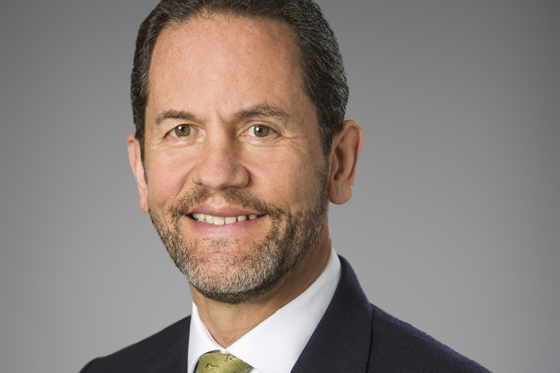
James Riley, group chief executive of Mandarin Oriental Hotel Group since April 2016, is not one to mince words. In fact, he calls himself somewhat cynical when it comes to things like overzealous pipeline boasts by industry giants. But the former senior financial executive of Mandarin’s Hong Kong-based parent company Jardine Matheson Group has also developed quite a passion for the hotel business and enormous respect for the dedication of his colleagues. “If anything, I’ve grown even more in love with what Mandarin and, in particular, my Mandarin colleagues do and are able to deliver, which I find very special,” he told HOTELS in an October 24 interview.
That said, Mandarin and Riley have a lot of work ahead and more to prove, as the company has not opened a new hotel since September 2015 (it reflagged a Caribbean property as Mandarin Oriental, Canouan in July 2018) and is still recovering from the unfortunate fire at its London property in early June, days before it was set to reopen after a top-to-bottom, 18-month refurbishment.
The intention, Riley said, is to realistically (no aggrandizing here) grow the brand over the next five years at a preferred average pace of three to four openings a year, predominantly via management contracts. Mandarin has 31 hotels open – seven with residences – in 21 countries and a current pipeline, give or take, of 19 hotels with 12 residences. Its about to open three hotels (Dubai, Doha, Beijing) in early 2019 and has a rush openings set for 2021.
Riley would love to increase the portfolio in the United States, especially California, and while he said they have looked closely at the available Belmond portfolio, quite frankly said there is no serious intent to get more aggressive with an acquisition or to create a second brand.
In the meantime, he said 2018 has been a relatively strong performance year due to improved trading in Hong Kong and is encouraged by, among other things, the fact that London will come back online next year.
Riley’s style, take on luxury
During his conversation with HOTELS, Riley, who doesn’t wear suits and sports a beard, atypical of the brand, talked ardently about the evolution of luxury. “Today, you will find if you go into Mandarins, there are people with tattoos and ear piercings beginning to emerge in those areas where one wants a slightly more edgy, slightly more character-full delivery of service,” he said in reference to how the company is far from tone deaf about how lifestyle is impacting the luxury hotel business model.
“My approach and mindset is to set a tone, use words and allow people to interpret and take a judgment, because again, whereas things are relaxed and chill in certain locations, it’s probably right still to say that at the Mandarin Oriental Hyde Park in London, formality and elegance remains the order of the day, and a greater degree of formality is what guests would like, and expect there,” he added.
Riley thinks that luxury is increasingly leisure oriented, and the days of luxury hotels for non-senior corporate executive are long gone. “Corporate executives will stay in Conrads and Marriotts and Hiltons, which are, really for the corporate road warrior who wants his points. The corporate leaders will increasingly be asking of themselves, ‘Why are we putting our executives up in accommodation that’s vastly smarter than they live in at home?’”
Therefore, he believes luxury hotels need to have a significant leisure component as well as a group component, delivering an experience, rather than relying on regular corporate travelers. “Corporate will always be important, but it’ll be much more at the senior end of the spectrum and for selected executives out of a group,” he said.
That means luxury will become increasingly relaxed, according to Riley, and must adjust their offerings. “It means that the historic formality of what I would call Alpine or Mid-European hotel schools needs to gradually change.
“It’s important to remember the courtesies and formalities, which is something that I think one forgets at one’s peril, but at the same time, what guests are really looking for is an empathetic experience – one where they really feel they engage with colleagues and appreciate that. The biggest element of the way we’re trying to evolve the service that we provide is to have that service where colleagues are able to actually interact with guests, and create a really positive engagement, rather than one that’s reading from a script… When we look at how guests react positive comments, 90% of them really relate to experiences they’ve had with individual colleagues, and it’s that that creates the warmth, the sense of place, the sense of belonging and home that makes a hotel experience so special.”

Grasp on technology
Looking ahead, Riley pointed to one challenge of how to initiate a technology platform that best enables interaction with guests and among colleagues. “Technology is an enabler, but also a restrainer,” he said. “Being able to implement technology effectively and to make sure that people can effectively communicate, talk to each other, interact, and enable guests to engage as they increasingly want to, in a multitude of ways that you create, is an important part of the experience.”
The reality, Riley believes, is to keep up with the expectations of guests and “not suddenly burst on the scene with some amazing new idea which will, generally speaking, be a bit of a gimmick rather than a real value creator.”
Spoken like a leader with a firm grasp on reality.