
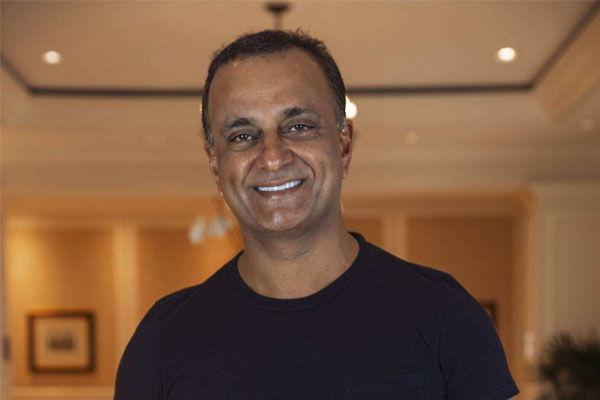
Three may be a crowd, but for Karim Alibhai, founder and principal of Miami-based hotel investment firm Gencom, it’s the perfect number.
In New York, at least.
There, he is banking on The City That Never Sleeps has travelers who will, in three hotels the company acquired all within the last two years.
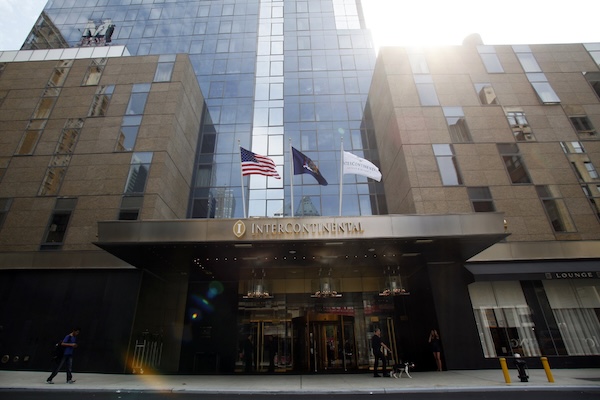
In 2024, Gencom acquired the 587-room Thompson Central Park, the erstwhile Le Parker Méridien, for a reported $380 million or $647,000 per key. A year later, Gencom struck again, dealing for the 607-room, 34-story InterContinental New York Times Square, in a joint venture with Argent Ventures and Highgate, which operates the property. (Alibhai is a longtime friend with brothers Mahmood Khimji and Mehdi Khimji, who founded Highgate in 1988.) Its third, most recent deal was for the 253-room Ritz-Carlton New York, Central Park.
Transacting three times in the span of 16 months is evidence of conviction in a market typified by deep demand combined with pricing power and high barriers of entry. Alibhai’s mantra of “attach and attack,” the idea of acquiring assets, pairing with a strong operator and focusing on improvement and cashflow typifies Gencom’s strong swing into New York. It also never hurts that the city is New York. “It never dies,” Alibhai said.
The supply and demand balance still favors property owners in New York, though CoStar expects 4,852 new room openings this year, the highest of any city in the U.S. Still, Alibhai said deals can be had at below replacement cost.
Beyond real estate fundamentals, Alibhai called attention to the lack of players chasing deals over the last few years, which allowed Gencom to deal-make on its own terms. “None of the foreign capital was really coming in and private equity was noticeably absent, worried about the union contracts that were being renewed this year,” he said. (Hotel unions also played a large hand in effectively dismantling Airbnb’s traditional business model in the city.)
Alibhai believes Gencom got into New York at the right time to ride what he perceives to be a rising tide. He does bemoan the decrease in foreign travel into the city, the result of several factors, including global challenges, stricter federal policies and heightened security concerns. In 2025, international visitation declined 3.2% year-over-year to 12.5 million visitors, according to destination marketing organization NYC Tourism + Conventions. However, it’s expected to be back up this year, rebounding to 2024 levels at 12.9 million visitors and partly due to the 2026 FIFA World Cup.
Gencom has been a voracious buyer of assets in recent times and, whether luck or skill, has picked the right spots. “We might have picked a bottom. Everything that we acquired has been moving up quite significantly,” Alibhai said. Consider the Thompson: In the first year of its acquisition of the property, net operating income more than doubled, Alibhai said. His enthusiasm around New York is coupled with what he described as an office leasing space that is “back on track” after years of doldrums. According to a recent report from real estate advisory firm Avison Young, Manhattan office leasing activity reached 10.5 million square feet in Q2 2026, matching Q1’s pace and keeping the market on track for its strongest year since 2019. Availability fell to 14.1%, its lowest level since 2020. “It all means that people aren’t leaving the city,” Alibhai said.
Further Afield
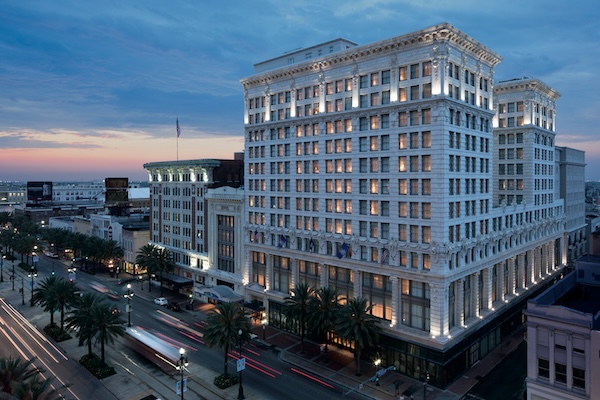
It’s not just New York where Gencom is making a mark. In March of last year, the company acquired The Ritz-Carlton, New Orleans and the Courtyard by Marriott French Quarter Iberville, a combined 758-room hotel portfolio in the city’s French Quarter. At the time of the deal, Alibhai called New Orleans “a compelling market for luxury hospitality.” It also marked Gencom’s 10th project under The Ritz-Carlton brand, following the opening of Nekajui, a Ritz-Carlton Reserve in Costa Rica.
Later in the year, Gencom ended up reacquiring a majority interest in the 115-room The Ritz-Carlton Coconut Grove, Miami. And not far away, Gencom put $100 million toward a renovation of The Ritz-Carlton Key Biscayne, Miami.
Unlike private equity whose deal timelines and horizons are typically shorter, Gencom is a long-term investor—searching out deals below replacement cost and investing capital to upgrade the facilities, which, in turn, allows for higher rate ceilings and better ROI when—or if—it decides to divest. “We don’t have the pressure of three-year IRR goals. We underwrite 10-year goals,” he told an audience at the Hunter Conference in Atlanta earlier this year. In fact, two of Gencom’s hotels—The Ritz-Carlton Key Biscayne, Miami and The Ritz-Carlton, Bachelor Gulch in Colorado—it’s owned for more than 20 years. “They continue to be home runs,” Alibhai said.
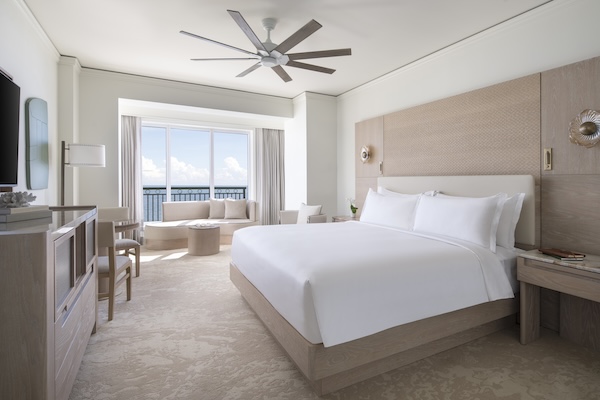
Gencom’s investment strategy isn’t only on the domestic U.S. It owns two hotels in Bermuda—the Rosewood and Fairmont Southampton—and a hotel in Costa Rica within Auberge Collection. Last month, a report surfaced that Gencom is in discussions to acquire the Rosewood London located in the Holborn neighborhood for approximately $400 million. Though Alibhai is reluctant to show his hand, he told HOTELS that Gencom has a “major asset” under agreement that it will announce within the next 30 days.
Beyond London, Alibhai said it bid on an asset in Madrid and is currently working on a small portfolio of assets in Rome.
Investment Ethos
Gencom’s European interest is not an aberration but a logical step via its ownership stake in Pyramid Global Hospitality, which formed in 2021 via a merger between Benchmark and Pyramid Hotel Group. In 2024, Pyramid Global Hospitality merged the company’s European division, Hamilton Pyramid Europe, with Axiom Hospitality, creating a UK and Continental European management company. “We have boots on the ground,” Alibhai said.
Alibhai’s investment thesis in London is strikingly similar to New York. He says that the capital city has the feel of New York two years ago, citing political upheaval and its round robin of prime ministers as having a negative impact. However, like New York, he’s convinced that great cities are never down too long. “We feel like it’s a good time to enter the market,” he said. “London’s not going away.”
While some investment firms may try and position themselves to buy at the bottom of a market, Gencom invests across capital cycles. “We don’t need recessions to find good deals,” Alibhai said. In some instances, sellers, he said, may be warming to the fact that it’s time to transact, not because bid/ask spreads are compressing, but, rather, the asset is underperforming. “You find that the ‘ask’ becomes much more reasonable,” Alibhai said.
Gencom is a low-levered, hospitality-only investment firm. It’s a different model than some of its competitors who are prone to layer on heavier debt loads to buy an asset, which, if it works out, can create a higher return on exit. It competes with large names, from Blackstone to Brookfield.
There is no shortage of buyers lined up to acquire luxury properties, a sentiment backed by JLL’s 2026 Global Hotel Investment Outlook, which is peppered with references to a luxury market that shows no signs of a letup. “Demand,” it wrote, “for luxury and ultra-luxury hotels is very strong and exceeds supply growth. This positions the segment as a long-term winner.” Added Alibhai, “There is a feeding frenzy on luxury.” He cited recent acquisitions of luxury assets from Braemer Hotels as an example of this ravenous appetite. “Luxury is going to further explode,” he said. “It’s a class to own for the next 10 years.”
Gencom, like its peer set, is an earnest bidder, but tactical and not foolhardy. “Hotel real estate is the most volatile business,” Alibhai said, citing other asset classes that are typically tied to long-term leases, such as office and multi-family. “We are very cognizant of that.” It doesn’t mean it shies away from deals. Alibhai said it hopes to announce three significant deals in the next 90 days.
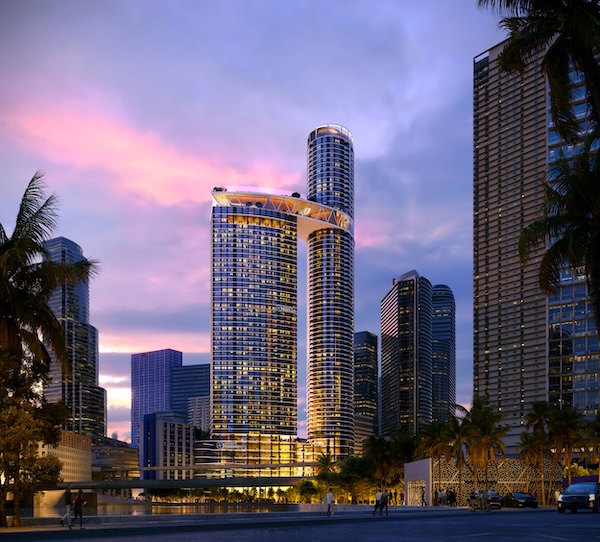
Though Gencom is primarily an asset acquirer, it will do ground-up development as a small portion of its overall portfolio. It’s part of the $1.6-billion Miami Riverbridge project, alongside Hyatt Hotels Corp. and Arquitectonica that will include a new 615-room Hyatt Regency.
Gencom is not in business for the quick buck. It plays the long game. “We don’t have IRR pressure,” Albihai said. “We want to be safe and just do multiples on invested capital.”
