
“As one of the most populous nations in the world, (India has) a long way to go in energy and waste management,” says Nakul Anand, executive director of ITC Hotels parent ITC Limited. With “responsible luxury” as its mantra and more than 100 hotels in India, nine of its luxury hotels meet electrical energy demand through renewable sources. A solar paraboloid concentrator at ITC Maurya in New Delhi is the first in the hospitality industry, the company says. Anand shared his company’s sustainability philosophy and plans with HOTELS recently.
HOTELS: What is ITC’s philosophy on sustainability?
Nakul Anand: ITC Hotels’ commitment to “responsible luxury” permeates from the parent company, ITC Limited’s, triple bottom line (economic, social and environmental) approach to business.
ITC Limited (a 107-year old entity) is the only company in the world, of its dimensions to have accomplished and sustained environmental dimensions of being carbon positive (12 years), water positive (15 years) and solid waste recycling positive (10 years)… Adoption of responsible luxury as an ethos and a brand promise 10 years ago led to renewed commitment from the team to ensure that we visit all our practices from a zero base and ensure that not only are our products eco-embedded but we also enable eco-easy services delivered by eco-sensitized associates.
H: For context, how would you describe where energy and waste management is in India?
NA: As one of the most populous nations in the world, we do have a long way to go in energy and waste management. However, the government of India has conceptualized various initiatives and incentives to encourage energy and waste management practices. Electricity demand in the country has increased rapidly and is expected to rise further in the years to come. In order to meet the increasing demand for electricity in the country, substantial addition to the renewable energy generation is planned… The industrialization, rising population as well as lifestyle changes, make it imperative for cities to embark upon efficient energy and waste management practices.
H: Regarding the five hotels that rely on alternative energy, are they 100% wind-powered? How much of an investment was required?
NA: At present more than 60% of our hotels’ electrical energy demand is met through renewable sources, and efforts are on to achieve our goal of 90% over the next two years. All hotels owned and operated by ITC in southern, western and northwest regions of India are 100% powered by wind turbines through our wind farms. Nine hotels in the luxury category and three hotels in the 5-star category meet their electrical energy demand through renewable sources.
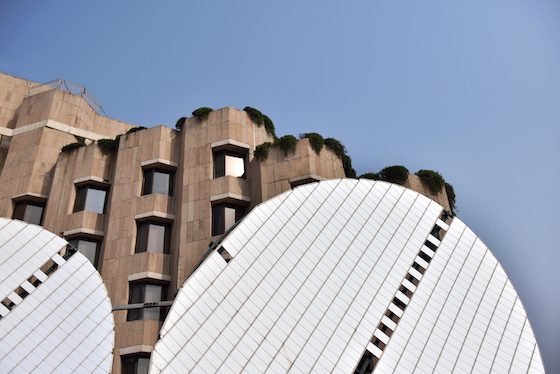
We are also harnessing solar power energy in our hotels. Our on-site solar paraboloid concentrator at ITC Maurya is the largest and first in the global hospitality industry. The 320-square-meter reflective area of the concentrator produces low pressure generation steam that is used in the kitchen and laundry at the hotel. Investments in green building design and sustainable practices underscore a larger guiding philosophy of ensuring that luxury experiences are enriched through responsible practices. (As per corporate governance policies we are unable to share investments in green building. However, we’d like to reiterate that investments are integral to the overall objectives of a positive impact on both the environmental and societal dimensions.)
H: What kind of initiatives are you planning with new hotels in the next year or two?
NA: As a guiding premise all ITC Hotels existing and in the pipeline have adopted LEED Platinum standards. In the next couple of years, the endeavor is to:
- Enhance the renewable energy footprint further to 90% through solar photovoltaic (power)
- 100% solid waste recycling, using bio-methanation
- To reduce water consumption by 20%
- Switch from fossil fuel to bio-diesel and renewable electrical energy
- Indoor air quality enhancement in all our hotels to WHO standards
For the next three to five years, we plan to further expand renewable energy footprint to 100%; introduce chemical-free and waterless laundry system and water treatment; move toward “net zero energy building”; and create benchmarking, best practices and reduction of embodied energy in construction and building material.
H: What do you think is the most urgent sustainability issue in the coming year for the hotel industry?
NA: The most urgent issues remain water availability, clean power and waste management. Ignoring it has led us to where we stand today. The evolution of the human race cannot be at the cost of the planet and its natural resources is evident to us in more ways than one.