
Geopolitical pressure, uncertain inbound travel and a cautious global mood were still not enough to stymie India’s luxury hotel performance in 2025, something that has also carried over through this year.
Consider The Leela Palaces, Hotels and Resorts. It posted strong results in first-quarter 2026, with revenue per available room increasing 6% year over year. Average daily rate increased by 14% and EBITDA rose by 19%. “Our RevPAR outperformance at about 2.3 times the luxury segment continues to deliver market share gains, underscoring our pricing power,” said CEO Anuraag Bhatnagar.
Domestic tourism in India is showing clear signs of a broader resurgence.
Travelers who might have booked overseas summer holidays are instead choosing destinations within India that are helping shore up the country’s economy. Several hospitality operators confirmed the trend, reporting sharp improvement in occupancies and room rates from May 2026 onward.
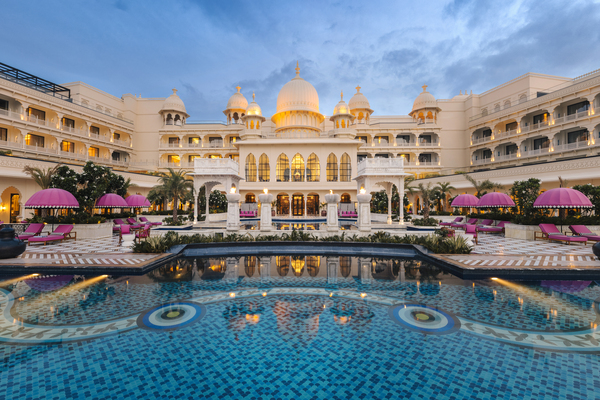
They may have their prime minister to thank. At a public event in Hyderabad on May 10, Prime Minister Narendra Modi made an unusual appeal to ordinary Indians, asking them to put foreign travel plans on hold. It was not a policy announcement or a government directive; rather, a personal appeal, the kind a leader makes when a situation feels genuinely urgent. India’s luxury hotel industry players say the shift in sentiment is already benefiting domestic hotels, resorts, homestays, airlines, spiritual tourism circuits and regional travel destinations.
The government’s backing goes well beyond a plea. India’s Union Budget 2026 to 2027 designates tourism as a high-impact growth sector, with targeted investment flowing into destination development, cultural revitalization and hospitality infrastructure. The government’s Vision@2047 program, which aims to attract 100 million foreign visitors, is directly stimulating hotel development across the country.
Indian policy-driven initiatives, which include Buddhist circuit developments, medical tourism hubs, eco-trail corridors and cultural circuits, are generating consistent room demand in areas that previously saw less hospitality investment. Government-backed airport expansion and improved domestic connectivity have further reinforced demand.
OPENING UP
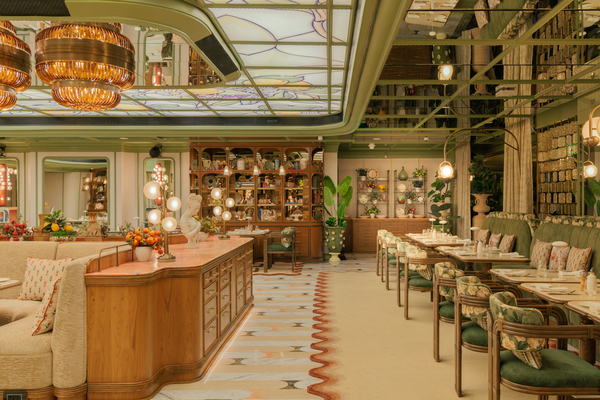
Accor, one of the leading luxury lodging purveyors in India, opened Fairmont Mumbai last spring, a 446-room property featuring five restaurants, a grand ballroom with capacity for more than 2,000 guests and a wellness suite combining cryotherapy and hyperbaric oxygen with Ayurvedic healing. Months later, Fairmont Udaipur Palace opened across 18 acres of lakeside grounds, with 327 rooms and more than 130,000 square feet of event space. Udaipur has since become one of India’s primary addresses for luxury weddings and large-scale destination events. Accor has set a target of 300 hotels in India by 2030.
“India is central to Accor’s long-term growth strategy because it combines three factors that are rarely present at the same scale: a large growing domestic travel base, a fast-expanding affluent consumer segment and a strong demand for more high-quality branded hotels across gateway cities, resort destinations and emerging leisure markets,” said Amitabh Rai, COO, luxury, Accor, South Asia. Rai said that the market size of the country’s hospitality industry is expected to grow from $282 billion in 2025 to $541 billion by 2030. “In terms of luxury, that opportunity is further underscored by encouraging dynamics, including the growth in the number of high- and ultra-high-net-worth individuals.
Accor’s CEO, Sébastien Bazin, is as bullish as his deputy. At a recent investment conference, he said he expected India to be the largest market by 2045, “bigger than China.”
Accor’s luxury pipeline is robust. In Goa, Accor and the Dangayach Group announced Raffles Goa Shiroda and Fairmont Goa Shiroda, planned for 2030. In Rajasthan, Raffles Ranthambore and Sofitel Legend Sukh Bagh Jaipur have been announced. “These projects are aligned with where luxury demand is moving,” Rai said.
Luxury properties in India reflect a cultural touchpoint, representative of the idea that guests are more than just visitors: They are a blessing. The same sentiment has been present for ages in phrases like “Padharo Mhare Desh” and “Atithi Devo Bhava,” the former a greeting with outstretched arms, the latter with holy reverence. The modern Indian luxury traveler, as Accor has assessed, is well travelled, globally aware and no longer impressed by excess for its own sake. At Fairmont Jaipur, that philosophy transforms into village walks through rural Rajasthan, connecting guests with local craft, pottery and home-cooked food. At Fairmont Mumbai, it surfaces through recovery therapies drawn from cutting-edge science and ancient Indian healing traditions.
“We are extremely optimistic about the future of luxury travel in India. Demand is expanding beyond metros and the traditional gateway cities,” said Rai. “It presents a significant opportunity for hospitality brands to develop experiences that are both globally relevant and locally authentic.”
At Leela, properties in the pipeline include hotels in Coorg and Jaisalmer, each designed to reflect its destination’s specific character while meeting global luxury service standards. Considering that India’s millionaire households are projected to grow at a compound annual rate of roughly 17.5%, Leela is building for the guests those households will produce.
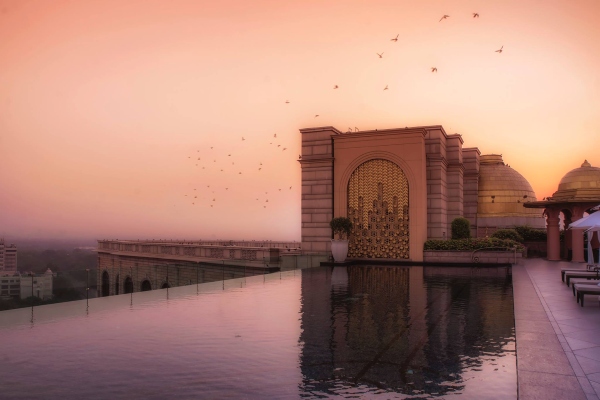
“While global travel sentiment remains dynamic amidst an evolving macro scenario, we see the current environment as a shift in demand mix rather than a slowdown,” said Bhatnagar, citing strong macroeconomic tailwinds, rising wealth and a growing preference for experience-led travel. He said that domestic demand remains resilient, with strong traction from affluent Indian travelers across staycations, celebrations, premium leisure and corporate offsites. “Any near-term moderation in outbound travel is likely to further support domestic demand across key leisure and heritage destinations,” he said.
For travelers planning to take advantage of the moment, timing matters. October through March remains the most comfortable window for most of the country. Diwali and Holi, both of which fall within that range, represent India’s two most popular and most vibrant travel periods. Beyond that peak window, the monsoon season offers lower rates and smaller crowds at Ayurvedic resorts and heritage hotels, while April and May are considered the best months for wildlife viewing as diminishing vegetation concentrates animals around remaining water sources.
Other India-based luxury lodging companies are taking advantage of the upswing, too. Oberoi Hotels opened The Oberoi Vindhyavilas Wildlife Resort, Bandhavgarh last March. The property, which features only 19 luxury tents and two pool villas, is set within a 21-acre forested expanse minutes from Bandhavgarh National Park. Oberoi is slated to open a property in Saudi Arabia later this year in the Wadi Safar development near Diriyah.
