
The following sponsored content was contributed by one of our advertising partners, and not the editorial staff of HOTELS.
You monitor every review site to learn from customer comments. And your staff keeps track of issues that come up time and again. They’re trained well and handle complaints with aplomb. But wouldn’t it be better to prevent those complaints in the first place?
Technology may have the solution. What follows are some common guest complaints and the tools developed to prevent them, not only leading to fewer poor reviews and never-going-backs, but giving staff time to focus on hospitality.
Running hot and cold
One of the most frequent complaints is that the room is too hot or too cold, even though most hotels already let guests control the temperature. Use of digitally connected property management system, however, can enable staff to help adjust temps from the front desk. It also can turn the system off when the room is vacant, track use and notify the hotel when it needs repairs or maintenance. A sophisticated system knows when the guest checks in and out, so it will adjust the temperature automatically.
Some hotels are taking the option to the next level, providing a tablet or voice-activated device in each room that controls the HVAC, lights and television, and connects to housekeeping and room service. For example, the August-opened Universal Aventura Hotel at the Universal Orlando Resort offers a tablet, and Universal has noted it plans to extend the technology to other properties at the resort. And each room at Wynn Las Vegas is equipped with an Amazon Echo.
Hilton’s Connected Room, recently debuted in four Memphis properties, lets guests use their own mobile device and the Hilton Honors app to control their room and even stream their own audio and video content. The company has reported that in the future, the app may let guests upload their own photos to display digitally in their room, or use their voice to control the system.
Noise pollution
Noise is another common guest complaint. Frequent travelers may try to solve the problem themselves with a white noise machine or an app on their mobile device. In some cases, they run the fan on the HVAC, letting it run all night to keep the hum consistent.
Hotels have responded by using acoustic materials in construction and décor, such as thick headboards and laminated windows. Hyatt Place in Nashville added white noise machines in its rooms, and IHG added a white noise option to its loyalty app.
Looking for a “smart” solution, Nightingale Smart Solutions created the Nightingale sleep system. Two small devices plug into opposite walls, creating what the company calls “sound blankets” that mask noise. Launched two years ago, the system is now in about 80 properties including Marriott, W Hotels, Westin, Ritz-Carlton and Hilton.
Bill Shargo, director of engineering at the Sheraton Philadelphia Society Hill Hotel, held that position at the Westin Watham Boston Hotel when the latter installed Nightingale in guestrooms. He says he tried the tool because the company was willing to provide a trial period, and he was happy with the results. “It definitely met our expectations and reduced customer complaints significantly,” Shargo says. “It increased revenue by reducing the number of comps given to guests, and improved guest satisfaction scores.”
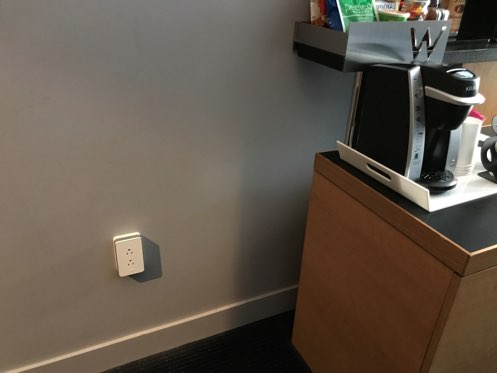
Interestingly, the product was developed for home use and funded through Kickstarter. When hotels started contributing to the fund, and then wanted to test the system in their guestrooms, Nightingale created a product and service for commercial properties. For example, the plug-in device includes a locking mechanism to deter theft. And the smart controls enable all of the devices to be controlled from a central portal.
Controlling from the front desk enables a hotel to turn the system on and off in only rooms that are occupied. Guests may not even notice the devices. “Our guest response was no guest response,” Shargo says. “Most guests didn’t even realize it was there.”
Guests who do notice the sound can request that it be adjusted—there are settings for snorers, infants and people with tinnitus—or simply turned off. Although they may be missing out on a better night sleep: A Harvard Medical School study found that Nightingale helped participants fall asleep 38 percent faster, and a in a study by SleepScore Labs, 76 percent of participants reported improved sleep.
Wi-Fi is still an issue
The growing number of customers’ devices can overwhelm hotels’ wireless networks. Guests consider reliable—and free—Wi-Fi to be a basic requirement, and management will hear about it if they can’t connect quickly.
“Upgrading” a dated or retrofitted system with extra access points might actually increase interference, slowing data. Newer superfast wireless networks are built to be flexible enough to keep up with increased demand. Whether a hotel does the work itself or outsources, the upgrade should start with an in-depth survey of the site to determine where there is poor coverage or interference, perhaps due to construction materials.
One of the major telecom companies is promoting a wireless small cell to hotels that would connect to a local cell site and boost download and upload speeds for the telecom’s customers. The company boasts that it would enable its customers to have better streaming and communication, without even connecting to the hotel’s Wi-Fi.
To learn more about the Nightingale sleep system—and how to reduce noise complaints and save money on room reimbursements—visit Nightingale Smart Solutions.