
Hotel management companies are where the rubber meets the road. Owners hold deeds, and brands have their names on the front door, but it’s the outfit operating the property that makes it go—responsible for generating revenue, containing costs and driving profitability.
Economic challenges—both micro and macro—have made running hotels profitably a thorny exercise. The problem isn’t that hotels aren’t making money; it’s that they’re keeping less of it due to expenses growing faster than revenues and squeezing margins. In 2025, total U.S. hotel operating revenue increased 2.6%, while total hotel expenses increased 3.1%, according to CBRE. As a result, GOP margins fell from 35.1% to 34.8%, and EBITDA margins declined from 23.3% to 22.8%.
Recent data and prognostication don’t paint a rosier picture. AHLA’s “2026 State of the Industry” report points to rising operating expenses as a primary factor keeping gross operating profit per available room (GOPPAR) at roughly 90% of 2019 levels. It further reports that labor costs—a hotel’s largest expense—are projected to approach $131 billion in 2026. At the same time, first-quarter 2026 labor data from Actabl/HotelData show labor cost per occupied room rising 1.8% year-over-year, from $45.96 to $46.79. Meanwhile, hotels reduced hours per occupied room by 2.3%, suggesting productivity improvements are helping offset wage pressure.
The expense crunch isn’t likely to recede any time soon, but the revenue side could see a boost, according to CoStar, which in August made upward adjustments to its 2026 U.S. hotel forecast, which now shows occupancy reaching 63.1% for the year, up eight percentage points from 2025; ADR growth of 3.1% YOY; and RevPAR growth of 4.4% YOY.
“The hotel industry sold a record number of room nights in the first half of the year, an increase of 11.4 million compared with 2025, while room revenue climbed by more than $5.4 billion,” said Amanda Hite, president of STR. “The industry outperformed our expectations.” Its P&L forecast, meanwhile, showed an increase of 4% YOY on GOP after a contraction in 2025.

Never A Dull Moment
This is all to say that things change. And in the current epoch, that’s almost assured. Still, the hotel management companies HOTELS spoke to struck an optimistic chord, mostly based on their ability to adapt and stay nimble to offset challenge.
Some, like Ben Perelmuter, CEO of Remington Hospitality, are confident that the tables will turn on the revenue versus expense math. “The biggest opportunity over the next 12 to 24 months is the potential for ADR growth to outpace expense growth again,” he said. One of the benefits of running hotels is selling what amounts to nightly leases, which allows for the recalibration of rates by the day. “Rate growth has been thin and uneven for the past two years, but the forecasts we’re watching now show revenue growth outpacing expense growth. That’s the environment where discipline pays off.”
To a man amongst management company executives, labor remains the big challenge. “Labor continues to put the most pressure on the middle of the P&L,” said Peter Karpinski, EVP of operations for Pyramid Global Hospitality’s Benchmark Resorts & Hotels Collection. Pyramid turned to technology to help alleviate some of the strain. It recently built and launched a suite of AI-powered labor intelligence tools to help its teams staff smarter and protect property-level profitability. “We’re seeing the most measurable impact across housekeeping and F&B,” Karpinski said.
If labor was the only P&L threat. “The cumulative impact of insurance, utilities, property taxes, technology, distribution costs and other operating expenses has fundamentally changed the profitability equation,” said Paul Sacco, chief growth and development officer at PM Hotel Group.
A shift in operational mentality has become one way PM and its peers are combating expense creep. Management companies in the past leaned heavily on RevPAR: produce high doses of it and everything else takes care of itself. That works fine when revenue consistently outpaces costs. “Historically, we’ve focused heavily on RevPAR—and appropriately so,” Sacco said. “However, we need to pay equal attention to the quality of revenue and how much reaches the bottom line.”
In other words, not all revenue is created equal—particularly revenue generated via intermediaries that comes with heavy commission payouts, which is one reason why hoteliers are more inclined to focus on net RevPAR that considers the cost of customer acquisition. “We prioritize direct-booking channels and profit metrics that maximize bottom-line flow-through,” Remington’s Perelmuter said. Hoteliers, as Sacco pointed out, that put a premium on channel mix and business mix will have better profit outcomes. “Increasingly, the industry will be looking beyond revenue per available room to measures like EBITDA per available room,” Sacco said. “That’s a much clearer indication of how effectively we’re converting demand into value for hotel owners.”

Owner Appeasement
It’s owners that operators answer to. And since the former are remunerated on the bottom line, profitability is king; RevPAR, it’s been said, doesn’t pay the rent. It’s why conversations are frequently geared toward profit optimization rather than revenue management. “RevPAR and market share matter, but ultimately owners want to know how revenue converts to NOI,” said Ernest Lee, chief commercial officer for EOS Hospitality, which owns and manages a portfolio of mainly independent hotels. “We train our teams to think like owners and are comfortable with management agreements that reward GOP performance rather than simply gross revenue.”
Focusing attention beyond room sales is one way to grow profitability. EOS puts considerable attention on total revenue spend that encompasses such profit centers as F&B, spa, meetings and events, golf and more. “We’re focused on the guest’s total spend, not just the room rate,” Lee said. He cited everything from F&B packages to programming and activities that give guests more reasons to stay longer and spend more on property. “A better experience and better capture can go hand in hand,” Lee further said.
At Brittain Resorts & Hotels, another management company that primarily operates independent hotels, a large focus is put on each guest’s total revenue potential, inclusive of strategic pre-arrival upselling, room and view upgrades, resort amenities and experiences, ancillary fee structures and targeted food-and-beverage offerings. Brittain is also working to capture more direct bookings through stronger digital marketing, loyalty initiatives and personalized guest communication, said its COO, Kris Kuball. “The most effective opportunities have been those that improve the guest experience while generating revenue with a healthy flow-through to the bottom line,” he said, citing those pre-arrival upgrades and add-on experiences that, he said, perform particularly well because they provide guests with greater choice and convenience without adding a significant operating expense. “Ultimately, we are focused not only on generating more revenue, but on generating the right revenue: business that strengthens profitability while enhancing the overall guest experience,” he said.
Owners have always had clear expectations for financial performance, so a focus on metrics such as NOI, GOP and EBITDA is not entirely new. What is changing, Kuball argued, is the level of accountability placed on management companies to deliver those results. “Owners increasingly recognize that top-line growth has limited value if it does not translate into improved profitability and investment returns,” he said. Achieving a stronger bottom line has translated into management agreement structures that reward profitability, where performance measures and incentive compensation are increasingly tied to bottom-line results, with greater emphasis on expense management, profit conversion and achievement of budgeted financial targets. “Management companies are being evaluated not only on their ability to grow revenue and maintain the guest experience, but also on how effectively they convert that revenue into sustainable cash flow and long-term asset value,” Kuball said.
Moving forward, many expect management agreements to involve lower base fees and higher incentive fees once clearly defined performance hurdles are met, which, as Remington’s Perelmuter pointed out, “should help align interests and clearly reset performance expectations.”
Different Country, Similar Headwinds
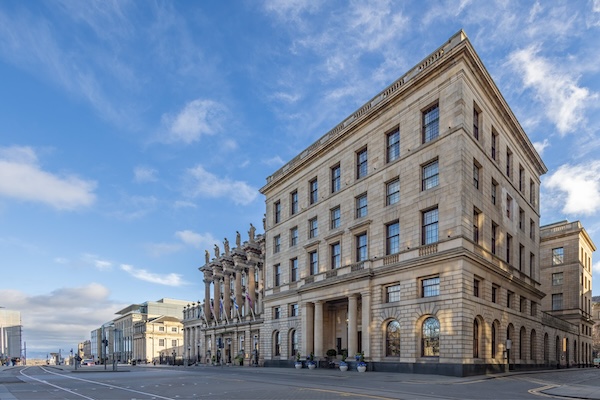
European operators, it turns out, face the same nettlesome issues as their counterparts in the States, with some distinctions predicated on geography and operating culture. “Pressures are rising across the P&L,” noted David Hart, CEO of RBH Hospitality Management, a UK-based hotel management company, adding that payroll has long been under pressure since Covid. And while the fixed costs that operators face—from property taxes to insurance—global conflicts, Hart said, are driving up expenses, including utility costs, which continue to run at high levels. Rising inflation has also had a knock-on impact across procurement lines, he added.
United Hospitality Management, with offices in Lisbon and Dubai, manages hotels across Europe and the Middle East. Payroll pressure in the latter is easier to mitigate than in Europe, said UHM Executive Chairman Carlos Leal. “The one common challenge across all markets is the availability of qualified labor,” he said. “This is a persistent issue globally.”
Some of the ways UHM deals with cost challenge include clustering and complexing certain functions across properties, centralizing selected services, developing strategic purchasing partnerships and strengthening planning and controls at both the corporate and property levels. These are some of the options available to contain costs, but it is not about cutting costs at any cost, Leal explained. “Every efficiency initiative must be aligned with the guest service promise and the expectations of the guest. You can’t improve profitability by compromising the experience you are there to deliver.”
One large distinction between U.K. and U.S. hotels is the use of unionized labor, which is more common in the latter. Union hotels usually have higher payroll costs and more complex operational management. And while union recognition in U.K. hotels is relatively uncommon, it could be changing. In July, housekeepers outsourced to WGC Ltd at Radisson Blu Canary Wharf and Radisson Blu Euston Square, and all members of the United Voices of the World (UVW) union, secured statutory trade union recognition. “This is a historic victory for hospitality workers across the U.K.,” said UVW General Secretary Nelly Ospino. “Trade union recognition in hotels remains far too rare because employers have long relied on outsourcing, high staff turnover and insecure work to keep workers divided.”

The outcome isn’t lost on Hart and accompanies imminent changes to the U.K.’s Employment Rights Act 2025, which will have a significant impact on the hospitality sector’s cost basis, including changes to zero-hours contracts. “The introduction of unionized labor is a big threat,” said Hart.
Looking ahead, hotel management companies are trumpeting technology that they say improves operations and improves the guest experience. “AI and technology are playing a bigger role every quarter, and we’re intentional about applying it where it removes administrative burden without touching the guest-facing experience,” said Pyramid’s Karpinski.
At Brittain, technology is being employed to better anticipate changes in occupancy, arrival patterns and service demand, which, Kuball said, is allowing the company to build variable, flexible staffing models that align labor hours with the actual needs of each property. “This enables us to adjust staffing as demand changes while ensuring the right team members are in place during the moments that matter most to the guest,” he said.
RBH has leaned heavily into AI and automation, but the jury is still out on the benefits versus the drawbacks. “The question,” Hart asked, “is whether this can be harnessed appropriately to drive clear savings.” He said that the company has already seen some success with automation, which has helped drive savings and efficiencies across parts of its portfolio.
UHM is investing in technology to improve workflows and productivity by reducing repetitive tasks; it’s also leveraging it to improve reporting and accessing information, which Leal called critical. “The sooner you identify a problem or recognize an opportunity, the sooner you can act,” he said.
The hotel industry is forging ahead at the beat of technology. While AI, automation and robots may have their place, managing hotels and delivering an exceptional guest experience still comes back to old-fashioned human service. “The experiential economy is going to keep growing,” said Pyramid’s Karpinski. “The better job we do at creating lifelong memories—wowing guests in unexpected and personalized ways—the greater our opportunity.”
