
Today’s travelers aren’t planning to camp out in their suites ordering room service; they want to get out and explore the destination they came to see. This is the central paradox of the hotelier’s task: create interior comfort and amenities that encourage guests to linger, while building in the access points that let them leave just as easily. Today’s travelers are looking for wellness experiences, outdoor adventure, and social connection. The hotels that understand this are designing outward in response, positioning themselves as a curator of place, connecting guests to local culture and community.
Wellness Beyond the Gym
The wellness industry is thriving as consumers look to actively support their wellbeing through travel. Research from Booking.com highlights this trend, noting that as many as 60% of travelers are interested in longevity retreats. For those interested in preserving their fitness routine on vacation, the windowless treadmill room may fall short. As an alternative, hoteliers can develop creative ways of getting their guests to sweat outside the property, whether that’s a partnership with a gym down the street or a curated playlist of running routes around the neighborhood. Setting guests up with a discount at the bike rental across the road solves a mental hurdle, gets them moving, and supports local business.
The Landscape is the Amenity
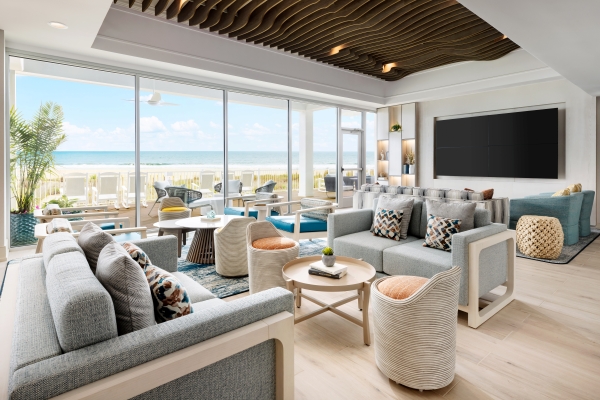
The National Park Service set new records in 2025, recording more than 323 million recreational visits. Whether chasing cherry blossoms or cliff jumping, the great outdoors is still a primary driver of travel, and hotel designers should use every opportunity to immerse guests more fully in the landscapes that define a place. For an oceanside resort, private balconies let visitors soak in the view, and a sprawling porch becomes an outdoor living room, extending an invitation to relax, connect and truly experience the place they came to see. Guests want to feel the breeze on their skin, hear the crashing of the waves, smell the salt in the air. Hotels can feed this motivation further by offering guided beach walks, coordinating shuttle services to nearby hiking trails, or providing gear rentals directly to guests.
The Case for Connection
To be successful, hoteliers need to truly understand the next generation of travelers. Raised on screens, educated during lockdown and ushered into a remote workforce, the latest generation is seeking human connection above all. A 2025 survey found that 69% of Gen Z travelers are more likely to book a hotel if it offers opportunities to meet new people. Part of meeting this need is designing intentional social spaces like pool tables and bars, where guests can naturally mingle and forge new connections. Hoteliers can take this a step further by coordinating offsite activities, workshops and outings, which get guests outside while helping them bond with one another, building a sense of community that ties back to the hotel itself. Other options include a communal bulletin board, where locals and guests can post about upcoming hikes or meet-ups.
Shopping Small
In the age of Amazon domination, shopping from authentic, local businesses has a renewed appeal, and the stats back it up: 73% of global travelers aim to support local small businesses while visiting new destinations. Hoteliers should look for ways to engage the businesses around them. If a hotel sits next door to an award-winning cafe, the smarter move isn’t competing with it, but partnering with it, offering guests 10% off their morning latte. Gift shops can carry locally made products and displays by local artists can point guests toward where to see more of their work, strengthening the connection to place and encouraging further exploration of local businesses.
Visible Sustainability
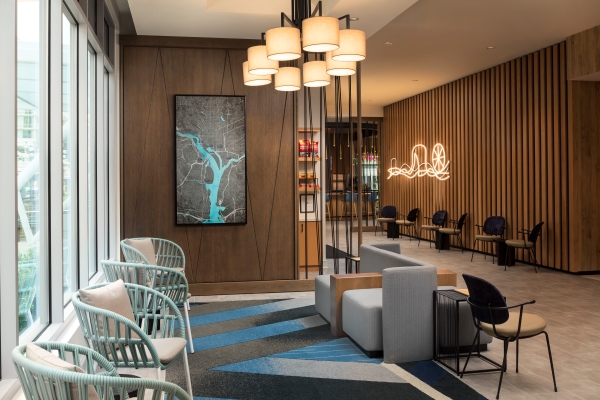
With a renewed appreciation for nature comes a renewed focus on reducing harm. Expedia Group’s 2026 travel study found that 91% of Gen Z travelers factored environmental or social impact into their trip planning this past year. This generation of travelers wants proof that a hotel is doing right by the environment, and a recycling bin won’t cut it. Hoteliers are responding by sharing real data: the output of the solar panels on the roof, the volume processed by an internal composting system, or the gallons saved through a water reclamation system. A map of the surrounding trails becomes an opportunity to show guests how the hotel contributes to their upkeep. Partnerships with local businesses need to be chosen with the same care, aligning culturally and ethically with the hotel’s own values.
Designing for Departure
Hotels today need to carefully balance two seemingly conflicting goals: crafting bespoke spaces that encourage guests to linger and making it easy (and fun) for them to leave. Travelers face decision fatigue when faced with too many options and too little context, leaving a real opportunity to hoteliers to show up as a curator of place. The hotels succeeding today are providing both a place to stay and a place to depart.
Story contributed by David Shove-Brown, co-founder and partner at //3877 Design.