
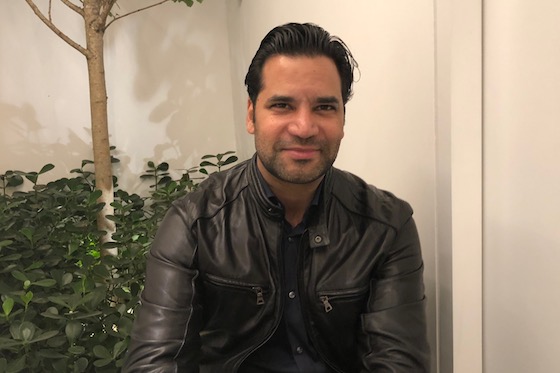
“It really is a big help to understand construction when you are building your own hotel,” says Gustavo Filguerias, who has two hotels open in his native Brazil, in Rio de Janeiro and São Paulo.
One of his São Paulo-based family’s companies had been in construction for years, and his father, Carlos Alberto Filguerias, wanted to showcase its talent. He worked with renowned Brazilian architect Arthur de Mattos Casas (who was later to design the Brazil pavilion for the 2015 Milan World Expo). The 57-key Emiliano São Paulo opened in June 2001 and immediately excited a lot of interest for its double-height main floor, with soaring concrete columns and floor-to-ceiling living walls. Bedrooms have a hint of Japan, with all-wood walls and sliding screens.
“An initial challenge was what to call the hotel. My father liked the Delano, in Miami Beach, and he wanted something similarly easy to say and remember. We put dozens of names up on a wall and eventually settled on Emiliano, the name of my eldest brother, who incidentally has nothing to do with this business. We deliberately launched, by the way, at twice the room rate of any existing hotels. Everyone thought we were suicidal but guests came and very soon it was us laughing. Being part of Leading Hotels of the World gave us a seal of approval, too,” the younger Filguerias explained.
The third of four siblings, Gustavo Filguerias at first merely gave occasional advice. After graduating in architecture and continuing to post-graduate administration, both at Getulio Vargas Foundation in São Paulo, he did executive programs on growing companies, managing talent and international politics at Stanford, and at Fondazione CUOA in Vicenza, Italy.
“In 2005, however, I more or less found I was moving over to be in the hotel operation full time. I was responsible for development and finance, and I picked up operations on the job,” he recalled.
With Americans contributing well over 20% of business in São Paulo, it made sense to expand into the U.S., but the 2008 financial crisis put a stop to that. “I turned my attention to Rio, always such a popular leisure destination, but we needed to be right on Copacabana Beach. The former Austrian Consulate seemed ideal,” he said.
Typically, obtaining planning consent in Brazil is a prolonged process. When it came to financing for Rio he had the support of his equity partner, BTG Pactual Bank, headquartered in São Paulo. “The property was going into a two-part auction, and not wanting to lose the land we made a very good offer in the first phase, and no one intended to increase their bid. That meant we won the auction without the need for the second phase,” Filguerias recalled. That was 2013 and he should have been ready to go, but there were still city, state and federal permits to obtain, and a political hiccup did not help. It was 2014 before construction started.
For the Rio hotel, architect de Mattos Casas has shielded the façade of the 11-floor building in an open white terrace, with some parts pulled back as screens: Bedrooms are white, mirrored and light. The rooftop holds an L-shaped infinity pool, looking down on Copacabana Beach.
“We looked at Autograph Collection or Small Luxury Hotels of the World for Rio, which has 90 keys, but since our near-neighbor, Belmond Copacabana Palace, had come out of Leading that seemed the right portfolio for us,” Filguerias said. Thanks to his knowledge of construction, Emiliano Rio de Janeiro was, just, able to receive guests during the 2016 Olympics.
Today, both hotels’ rooms see about 40% domestic business, with average stay just over two nights. São Paulo is established as predominantly corporate, and Rio is running at about 65% business. “São Paulo has been consistently top of TripAdvisor for the last six years. We are fourth in Rio. As we are new, feedback is smaller than for competitors but we are already the only Rio hotel at grade five and I am determined to be TripAdvisor’s number one there, too, by the end of this October,” Filguerias promised.
The two Emilianos see about 90% of their restaurants’ lunch and dinner business coming from outside. Both Paulistas and Cariocas, as people of São Paulo and Rio de Janeiro are respectively known, care passionately about food. Filguerias has European executive chefs in both venues, serving creative dishes to attract his 35-plus target market.
Since the sudden passing of his father in 2016, Filguerias has singlehandedly directed the hotel business. No, he is not going overseas unless he can find a suitable partner, say in Europe. In Brazil, he has family land at Paraty, and he is assessing at least six other locations around the country (he would not mind a second São Paulo hotel).
“In 10 years’ time I want at least another three hotels open, and yes, they will be superbly designed and built,” Filguerias said.