
The evolution of kitchen design is accelerating faster than ever, presenting opportunities for hotels to lower costs, add new equipment and, yes, even leverage artificial intelligence. HOTELS spoke with Jimi Yui, principal at Yui Design, a boutique studio and hospitality consulting firm, to assess how this change is leaving a culinary impact.
GOING ELECTRIC
One of the most notable changes already underway is the push toward fully electric operations driven by sustainability and carbon footprint concerns. “All-electric kitchens are emerging as the next major shift,” Yui said, adding that states such as California and New York are already in the process of setting new requirements for all-electric buildings, which would include commercial kitchens. “Developers and hoteliers are studying whether to get ahead of the curve and build all-electric properties now,” he said.
Many are choosing to get ahead of regulations now, especially as sustainability. One of the biggest pressures hotels face today is matching or outperforming other hotel restaurants and local restaurants. commitments take on greater importance. But the adjustment isn’t simple. “In the U.S., we’re not accustomed to cooking in all-electric kitchens, with most cooks preferring—and not trained on—gas cooking,” Yui said. Transitioning skills and expectations are becoming part of the conversation.
TECHNOLOGY AS A LIFELINE
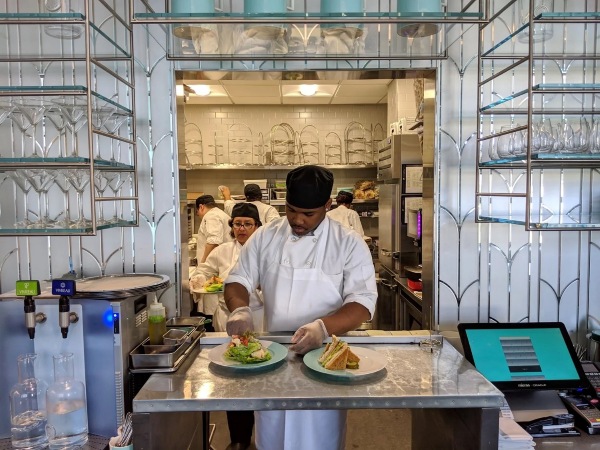
Rising food and labor costs are forcing operators to rethink how they run kitchens. What once felt like upgrades have become operational necessities, which is why, for some, turning to digital integrations to keep operations viable is the preferred way to go. “Integrated POS, inventory and scheduling platforms are absolutely essential in the current and foreseeable economy where the cost of goods and labor are the make-or-break variables,” Yui said.
Hotels are moving away from the era of oversized menus and deep inventories as simpler, more efficient models are proving more resilient. “Large menus needing large inventory and large labor have become extremely difficult to survive,” Yui said.
CLARITY OF POSITIONING
Yui sees a clear pattern in how demand is shifting across the hotel landscape. “Brand strengths are seen in the [midscale] market up to the luxury market,” he said. “Trying to be something for everyone, the middle of the road, appears to be less compelling for the consumer.”
In other words, clarity of positioning— whether value-driven or experience-driven—is sticking more than a broad, in-between approach. Consider this strategy an alignment with a bigger industry trend: the seemingly nonstop emergence of new hotel brands catering to specific market niches, something that can be attributed to changing demographics or the rise of tech-savvy travelers.
BRAND BUILDING
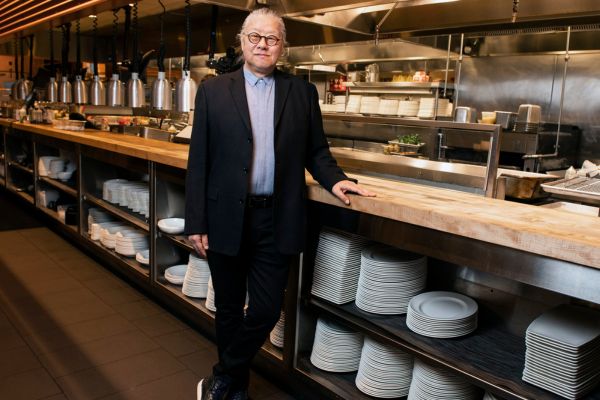
One of the biggest shifts is philosophical: Food and beverage are no longer just an amenity but a core hotel offering. “F&B was traditionally a necessary but undesirable service,” Yui said. “At the luxury end, brand strength comes from offering compelling F&B experiences that embrace the luxury hotel experience. There is no luxury hotel experience without matching luxury F&B.”
Most notably, to achieve a truly outstanding brand-defining F&B concept, hotels are under increasing pressure to meet guest expectations of matching or outperforming neighborhood restaurants. “Consumers expect the hotel’s F&B to match or exceed what independent restaurateurs and chefs offer on the street,” he said. The response? More partnerships between hotels and well-known culinary operators who create concepts that bring both credibility and a competitive edge.
On this quest of becoming more efficient, greener and standing out not only among other hotels but also among local restaurants, all while keeping operational costs at a minimum, one can only hope for hotel kitchens to be well prepared—or at least well advised.