
Visit minorhotels.com, click on Destinations toward the top of the page, scroll down and you come upon a proportional symbol map that denotes the spread of Minor Hotels properties worldwide. There, in Thailand—where Minor keeps its worldwide headquarters, in Bangkok—you’ll find 31 hotels, including six in Phuket, like the Anantara Layan Phuket Resort, where guests can take a Muay Thai class when not lapping in the azure waters of the Andaman Sea. Or, in Italy, where 60 hotels are at a traveler’s disposal, including NH Collection Milano CityLife, which is godlike—literally: The hotel, in the city’s trendy CityLife district, is a converted former 1930s church.
Move the cursor farther west on the map until it lands in the U.S. There, among the 3.5 million square miles of land, is one, solo Minor hotel—the 288-room NH Collection New York Madison Avenue, primely positioned close to the Empire State Building and a Jalen Brunson crossover from Madison Square Garden.
That lone hotel in the U.S.? Not for long; Dillip Rajakarier, CEO of Minor Hotels, makes clear it’s part of a concerted effort by the group to expand its brands throughout the expanses of the Americas.
“The U.S. has always been on our radar,” the Sri Lankan-born Rajakarier said. And it’s not just happenstance: Around 16% of Minor’s inbound business comes from the U.S., visiting its more than 560 hotels worldwide across 12 brands. (As of the end of Q1 2026, Minor had 80 more hotels under committed development, representing more than 11,000 keys.)

GROWTH SPURT
Minor Hotels’ 2018 acquisition of Spain’s NH Hotel Group was transformative. It tripled the size of Minor overnight with the addition of nearly 380 hotels across Europe and Latin America. Doing so opened up its hotels to a traveling population that likely never experienced the brand before. With NH, U.S. travelers were now seven hours from one of its European destinations.
To hear it from Rajakarier, the deal turned Minor from a regional player into a transcontinental force. “It was all about becoming a global company,” he said. (Minor had to fend off Hyatt Hotels Corp., for one, which, though it never made a formal bid, expressed interest in NH Hotels, but ultimately backed off.)
NH Hotels was the Tetris piece Minor was in search of. At the time of the deal, not one NH hotel overlapped with a hotel already in the Minor portfolio. “We were strong in Asia, the Middle East, Africa and Australasia; they were strong in Europe and South America,” Rajakarier said. “The whole acquisition was quite accretive in creating a global platform.”
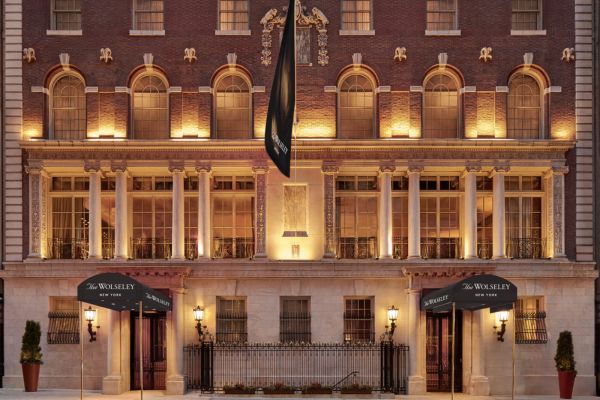
The advance forward is in full swing, propelled, in part, by the launch of new brands. Early 2027 will see the inauguration of The Wolseley Hotels brand in the U.S. with the scheduled opening of the 76-room The Wolseley Hotel New York in Manhattan, a conversion of The Chatwal. The Wolseley’s roots are culinary: The Wolseley is—and remains—a restaurant located in London’s Piccadilly, next to The Ritz London. The New York property will pay homage to its London namesake. The London restaurant was opened in 2003 by British restaurateurs Chris Corbin and Jeremy King. In 2022, Minor Hotels acquired Corbin & King, now rebranded as The Wolseley Hospitality Group and inclusive of other restaurants in the UK, all keeping with a British flair.
The idea behind the brand, Rajakarier shared, is to inject some of that British style into a hotel, yet without forcing it. “It’s highly curated and elegant, and that elegance is built into the rooms, into the facilities, into the services,” he said. “It’s quite important because, otherwise, it becomes a cookie-cutter brand.
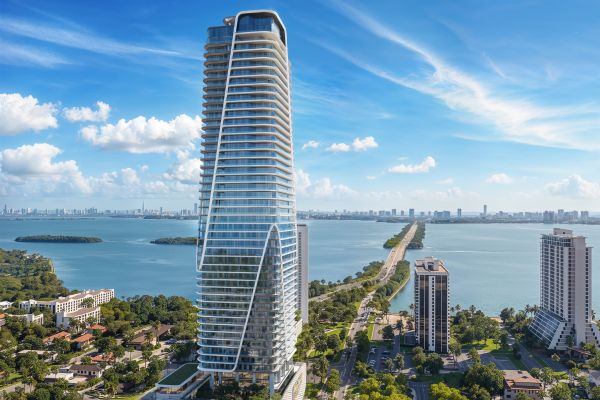
Outside New York, one of Minor’s most anticipated debuts is in Miami. In April, Minor announced Anantara Miami Resort & Residences, the luxury brand’s first property in the U.S. The planned 50-story tower will feature 100 private branded residences and 100 resort residences with a slated opening date in 2030. Around the same time as the Miami announcement, Minor unveiled plans for the debut of Anantara again, this time in the Caribbean, with the development of Anantara Turks and Caicos Resort & Residences, scheduled to open in 2029.
MINDING THE GAPS
Anantara is stationed at the tip of Minor Hotels’ luxury offerings. The bulk of the hotels are in Thailand, where the brand was started in 2001. It’s now blossomed into more than 50 properties in an array of settings, from beaches to countryside retreats, desert locales and city centers. Consider and contrast Anantara New York Palace in Budapest, along Erzsébet Körút Boulevard, to the jungle setting of Anantara Golden Triangle, where elephants are the backdrop, not Belle Époque architecture.
In 2025, Anantara was ranked number eight by Travel & Leisure in its list of “25 Favorite Hotel Brands,” besting the likes of Belmond and Six Senses. The overwhelming excitement over introducing Anantara on U.S. soil and in the Caribbean is readily evident on the face of Rajakarier, even if his comment is poised in its restraint. “Bringing Anantara into the U.S. now allows more people to connect to the brand,” he said.
It’s been a frenzied past 12 months for Minor Hotels. Launching four new brands will have that effect. Beyond The Wolseley Hotels, Minor introduced two new soft brands—Minor Reserve Collection in the luxury segment and Colbert Collection, a soft brand in the premium segment—along with the select-service brand iStay Hotels.
In May, Porta Rossa Hotel Firenze, Colbert Collection, opened, marking the first hotel to open under the new brand worldwide.
These brand additions have fortified Minor and made it a more cohesive company, according to Rajakarier. The soft brand launches are evidence of owners turning to Minor as a formidable network. “They want distribution; they want logistics—and everything coming through that,” he said.
Growth is paramount for Minor, but unlike most U.S.-based companies, it comes in a more versatile way. While franchising has become customary in the States, favored by the likes of Marriott and Hilton to more speedily add hotels and rooms, Minor deals are more bespoke, a necessity of geography. “Our strategy is asset right and not asset light or asset heavy,” Rajakarier said. “In certain markets, it’s harder going asset light, especially in key locations and with iconic assets.” In countries like Europe, for example, leases remain a popular deal type. (About 65% of Minor’s portfolio is owned and leased.) Rajakarier said that as Minor’s brands gain more recognition, shifting to a more balanced asset strategy, one that embraces franchising, is the logical outcome. Of the group’s extended pipeline opportunities, 87% are asset light, up from 70% last year. The franchise model will be deployed primarily across mature markets and via conversion opportunities, particularly in Europe and the U.S. Five years from now, Rajakarier said, 1,000-plus hotels would not be unexpected.
MAN FOR THE JOB
Rajakarier’s tenure with Minor Hotels has been less fluid than the company’s maturation. He joined the company in 2007 as chief finance and investment officer, one year later was appointed COO and in 2011 was promoted to CEO. (He is also Group CEO of Minor International, of which Minor Hotels is a subsidiary.) He’s basically been a hospitality lifer, having completed his studies in the UK and taking a position at a young age at what was then the White House Hotel next to Regent’s Park in central London. His passion is not unlike others bit by the hospitality bug. “No two days are the same,” he said.
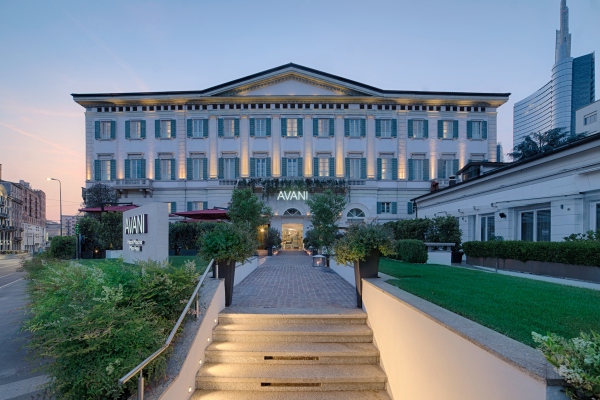
Minor Hotels had only 12 hotels when Rajakarier joined the company. And while Minor is based in Thailand, it was founded by an American, William Heinecke, in 1978, with the opening of the Royal Garden Resort Pattaya, now the Avani Pattaya Resort. “There is a great sense of achievement taking an Asian company into one of the top global hotel companies in the world,” Rajakarier said.
Becoming bigger means facing stiffer competition. Minor Hotels has exponentially grown its footprint under Rajakarier, but it is not yet among the largest hotel companies in the world by room count. It’s not always an arms race, but one of the largest drivers of the behemoth lodging companies is their omnipotent loyalty programs, which keep customers within their spheres of travel. It is something Rajakarier understands well. “Loyalty today is a must,” he said.
Loyalty programs are also expensive to run. In 2007, Minor joined Global Hotel Alliance—a unified loyalty program for independent hotel brands—with its Anantara brand. It has since added more brands and in 2018 took a 10% stake in GHA as a shareholder. In 2025, Minor coalesced its rewards framework under the single Minor DISCOVERY program linked to the wider GHA network. The biggest plus of GHA, Rajakarier points out, is that, unlike a single-platform program, travelers have an array of different brands and hotels to choose from. “With Hilton Honors, you only stay with Hilton. With IHG Rewards, you only stay with IHG. With us, you have more than 50 different brands,” he said. At the same time, lodging companies are folding in independent brands without changing dollars, such as Yotel’s March tie-in with Hilton that allows it to take advantage of Hilton’s expansive network. As Minor grows, Rajakarier sees a similar partnership path through quasi-marketing alliances. “We are looking to see how we can get hotels to join us,” he said.
Down another, though parallel path, is technology: harnessing it and using it to gain an edge throughout the portfolio of hotels. Here’s the good thing: Rajakarier, prior to his life as a full-blown hotelier, was a programmer back in the eighties. Sure, technology has changed by leaps and bounds, but one thing is certain: Rajakarier is earnest about the space. “In every industry, every company is a tech company, whether they like it or not,” he said. Functions like AI are irreversibly altering how guests travel and their experience; it’s giving back something invaluable and scarce, Rajakarier said: time. “Technology makes for seamless travel,” he said.
In April, Minor put it to the test, unveiling plans to build a new global data and AI platform in partnership with tech heavies Google Cloud and Salesforce. Minor calls it one of the most significant technology investments in its history, and that might be an understatement. It marks a deliberate and determined lean into AI to create a single digital platform connecting global guest data, marketing and service operations. The new platform is set for full deployment this year.
Like most hotel executives, Rajakarier is loath to say that technology will replace humans. Far from it; but unlike mortals, technology doesn’t need sleep, which comes in handy at 3 a.m. when AI recognizes a demand anomaly and can shift rates accordingly. “Human touch is always going to be there still,” Rajakarier said. “That’s what hospitality is about.”
