
My first Independent Hotel Show Miami left me with one word that came up more often than any other: revenue.
Not the vague kind. New revenue, the kind an independent hotel has to go out and build because there’s no brand machine doing it for them. The conversations were about finding new sources of income, turning existing hotel assets into businesses of their own and, ultimately, figuring out which revenue opportunities actually contribute to the bottom line. These three themes stood out:
1. Every session was a revenue session
Even when the conversation wasn’t explicitly about money, it usually came back to money.
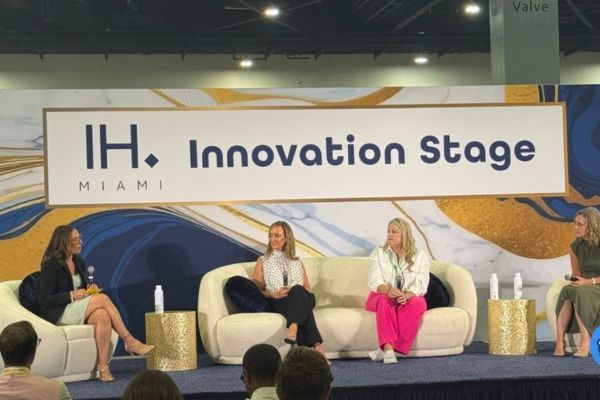
On the Innovation Stage, Emily Goldfischer of hertelier moderated “How the Tables Have Turned: F&B Is What Puts Your Hotel on the Map” with Amber Asher and Florence Quinn. The discussion reflected a broader shift in hospitality: food and beverage is increasingly being treated as a reason to choose a hotel, rather than simply another department attached to the rooms business.
In the Business Center, the session titles said it plainly: what every guest is really worth beyond the room rate, and why response speed now decides who gets the booking. For independents, that is exactly the right conversation.
2. Wellness is not a spa menu
Wellness offered another example of how hotels are moving beyond traditional definitions of ancillary revenue.
I had the opportunity to moderate “From Treatment Rooms to Wellness Ecosystems: The Total Revenue Strategy for 2026.” The panel brought together three very different perspectives: a retreat founder, a destination wellness operator and a hotel spa leader. That variety made the conversation particularly useful because each represents a different way of thinking about what guests want from wellness—and what they are willing to pay for.
We started the session in an unexpected way: not with slides or a presentation, but with a meditation led by Soul Cole, a former New Orleans Saints player who discovered mindfulness after his NFL career and now helps others incorporate those practices into their mental health and wellness routines.
The opportunity is no longer limited to a massage, facial or treatment. Hotels can build broader wellness experiences around programming, food, fitness, mindfulness, nature and recovery. The challenge is turning that expanded experience into a sustainable business model.
That means thinking about wellness not simply as a spa department, but as an ecosystem—one capable of generating revenue across the guest journey.
3. The real product is the room
For me, the most important part was the networking: Independent hoteliers, designers, operators and vendors were all in the same place, looking at products and services that could help them differentiate their properties and create new business opportunities.
That is where IHS has an advantage. The show deliberately creates opportunities for relationships to develop, including through its network of brand ambassadors, who help connect attendees with people and companies relevant to their businesses.
And because IHS also stages annual events in London, Munich and Amsterdam and keeps attendance free for hoteliers, its model is built around making those connections accessible. The result felt less like a traditional trade show and more like a concentrated meeting point for independent hospitality.
The next conversation is about profit
Having recently joined Duetto, I heard these conversations through a particular lens. Everyone is looking for new revenue, but the sharper question is new profit. That will be a continuing trend across the industry: not just looking at top-line data, but analyzing how we move the entire P&L, NOI and GOPPAR in the right direction. The independents who get there first will set the pace for everyone else.
