
Artificial intelligence may dominate hospitality technology conversations today, but hotel executives say the industry’s biggest challenge is far less glamorous: getting its data in order.
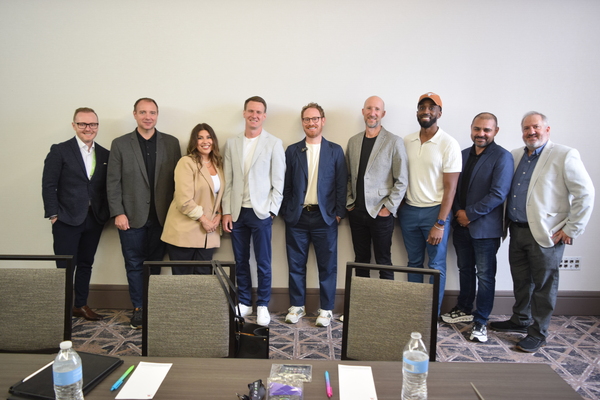
During a roundtable discussion—entitled “How Data Powers the Future of Hotel Operations”—hosted by HOTELS Magazine in partnership with hotel management software provider Otelier, hoteliers recognized the enormous potential of AI, in particular its ability to improve hotel profitability by impacting everything from revenue management and labor scheduling to food-and-beverage operations and asset planning. Still, one sentiment was shared universally among participants of the roundtable: AI is only as effective as the quality and accessibility of the data behind it. You can watch the full webinar below.
Data Deluge
Hotels have never had more data at their disposal—guest reviews, service calls, maintenance logs, loyalty profiles, point-of-sale transactions, labor schedules and procurement invoices. The challenge is turning it into meaningful insights. “We’ve got more [data] now than we’ve ever had,” said Nick Clark, SVP of operations at Remington Hospitality. “Hopefully, with AI, the future is going to be the data pulling through better so we can make better decisions, rather than having all this data we can’t go through in a reasonable time. AI narrows it down so we can act on it.”
Rather than embracing AI as a silver bullet, the roundtable repeatedly returned to a more fundamental question: Do hotels have the foundation in place to make AI work?
Matthew Bright, SVP and head of IT at Davidson Hospitality Group, put it plainly: “AI is only as good as the data. Having a really strong foundation in your data and understanding the processes around it is critical,” he said. “You can’t just throw AI on top of data and expect it to come back with some kind of revolutionary information.”
Early Days
Consensus among the hoteliers was that AI in hospitality—at least the in-house, build-it-yourself variety—remains in its infancy. Though third-party technology providers have moved faster, operators building their own capabilities are still laying out the groundwork.
Dana Cariss, SVP of revenue strategy at CoralTree Hospitality, was forthright about where things stand. “Some third-party partners have moved quicker and are making things available, but doing things in-house is still pretty early,” he said.
Where Cariss does see promise is in AI’s ability to make data more accessible. “That’s been one of the biggest hurdles in making smarter decisions. It’ll cut out the noise, sift through the data and hopefully get us quicker to action,” he noted.
James Wilson, corporate director of business intelligence and distribution at OUTRIGGER Resorts & Hotels, pointed to a deeper structural issue: organizational silos. “There’s a lot of siloed work occurring,” he said. “Data sits in different buckets that don’t correlate across departments. The challenge is taking that data, assimilating it and communicating it across the organization.”

Connecting the Dots
Remington’s Clark offered an example of how AI is already adding value—not by replacing human judgment, but by connecting information people rarely have time to analyze together. “If we were to drop a CSV file of a thousand guest reviews into AI and then layer in service calls, out-of-order rooms, elevator issues and facilities data, it starts to tell us a story of why we might see a change,” he said.
Combining guest sentiment with maintenance records, staffing information and operational metrics is precisely the type of analysis that has historically fallen through the cracks because each department monitors its own data. AI, when properly connected, can bridge those gaps.
Fragmented Systems
Before that can happen at scale, however, the industry must contend with fragmented technology systems.
Many hotels, the participants posited, still operate on aging property management systems that were never designed to communicate with one another. Valuable data remains trapped in departmental databases, inaccessible to the people who need it.
“Our approach is to be as scrappy as we can. We’ll get it from a PDF, from a text document, from a system with an API. We’ll get it,” said Russ Meek, senior director of product at Otelier. “That’s us living in the ecosystem that exists.”
The discussion also surfaced an uncomfortable question around accountability. Brands establish technology standards but don’t pay for implementation. Owners fund investments but often lack operational expertise. Management companies operate multiple brands with competing requirements, while software vendors must navigate all those stakeholders.
“I’m still trying to find who that champion is,” said Tim Thilleman, director of strategic hospitality technology and consulting at MIS Computer Corp. “An owner has an impetus, but they don’t really understand. A management company wants something that benefits its portfolio, while the general manager is focused on their own property. Ten years later we’re having the same conversation. We’re looking at AI to solve it. It’s not. If they can’t do Power BI, how are they going to do AI?”
Where AI Can Help—Now
Despite the cautious tone, participants identified several areas where AI is already delivering value or appears closest to doing so. Revenue management topped the list.
Chris Cheney, EVP of commercial strategy at Stonebridge Companies, described a future where revenue leaders spend less time adjusting daily rates and more time overseeing broader strategy. “You’ll still have to monitor the strategy and make sure it aligns with the hotel’s value proposition, the owner’s goals and competitive positioning,” he said. “But what you probably won’t have to do is analyze whether your price for next Tuesday is correct.”
Labor management also emerged as a promising opportunity. “Imagine scheduling based not just on forecasts and pace, but on demand signals before people even book—what’s likely to happen next week before it shows up in your data,” Cheney added.
He also proposed using guestroom key-lock data to inform hotel design. “I can see that room 207 used its key to access all these different areas of the hotel and when they used them,” he said. “When helping an owner develop a new hotel, you could determine that, based on the expected customer mix, you don’t need a fitness center that large—you need a bigger executive lounge.”

On Loyalty
One of the discussion’s more animated moments centered on loyalty programs—and who controls the data they generate.
Panelists argued that hotel brands possess enormous amounts of guest behavioral data through their loyalty ecosystems, yet much of that information remains inaccessible to management companies and operators.
“That’s what they’ve got that’s most powerful,” Clark said. “That’s the Willy Wonka factory right there. Brands can sell that because they have the recognition through loyalty and distribution.”
AI-powered personalization could dramatically improve the guest experience, but only if operators gain greater access to the behavioral data currently locked inside brand loyalty platforms.

F&B: The Quiet Data Revolution
Though much of the AI conversation in hospitality focuses on rooms, panelists pointed to food and beverage as another area undergoing significant change.
Clark described using AI to benchmark procurement costs across a portfolio by feeding six months of invoices into a cloud-based analysis tool. “We took invoices from the last six months for these hotels and dumped them into a massive cloud project,” he said. “Then we benchmarked them to see who’s getting what and where we should be buying.”
Others discussed integrating kitchen display systems with point-of-sale platforms to analyze ticket times, optimize workflows and improve menu engineering—decisions that have traditionally relied on intuition.
Cariss highlighted the level of detail now available. “Every day we have it by server, by hour, by meal period, by meal item. You know who’s serving what, when they served it, how often they served it and, in some cases, to whom it went.”

The Pragmatic Outlook
Asked whether AI-driven transformation could arrive within three to five years, Cariss pushed back. The obstacle, he argued, is not the technology itself but the industry’s ability to adopt it. “I genuinely don’t think we will move quickly enough as management groups or ownership groups. I just don’t think we’ll have the time or the resources,” he said.
Cost also emerged as a major consideration. “There’s a cost here,” Meek warned, sharing a recent anecdote where a couple of big companies used all their AI tokens and burned through their entire budget. (AI token pricing is a consumption-based model where customers pay for AI services based on the number of tokens processed. In LLMs, a token typically is a unit of text, roughly 3/4 of a word in English.)
“We need to build this in a way that’s cost-effective for hospitality. Companies are willing to write checks—but not unlimited checks,” Meek continued.
Bright offered a more nuanced perspective. While his company’s development cycle has accelerated dramatically, he acknowledged that industrywide adoption will likely take longer. “We’ve gone from planning in two-week sprints to daily sprints,” he said. “But I also know we’re hospitality. We’re a mature industry, and change tends to be slower.”

Human Touch
For all the discussion about data and algorithms, hoteliers repeatedly returned to hospitality’s defining advantage: people.
Clark said AI has already changed how he spends his time. “Over the last six months I’ve spent more time doing what I love—visiting hotels and being on the floor with the team—than I ever had before.”
Asked what AI had replaced, his answer was immediate. “Reports, phone calls, trying to go through things, getting prepared for presentations.” The point, he said, is not that AI replaces people. It removes administrative work so employees can focus on guests and teams.
Wilson echoed that sentiment, emphasizing that AI still requires human context. “It takes human intelligence to understand what actually happened on property that produced the data in the first place,” he said. “You need that human intelligence to understand how the data even makes it into the report.”

Looking Ahead
The roundtable concluded with a question about wish-list data—the one piece of information each executive would most like to have.
The answers reflected the industry’s focus on improving decision-making. Cariss pointed to marketing attribution and better understanding return on marketing spend. Wilson wanted greater access to airline data. Cheney again highlighted key-lock information, arguing that understanding how guests actually use hotel amenities could help hotels differentiate themselves beyond price and location.
“One of my biggest fears is that our hotels become commodities and everything is based on price and location,” Cheney said. “Lock system data tells us whether guests are actually engaging with the experiences we’ve created. It helps us understand how different traveler types use the hotel so we can build products guests genuinely want. That gives us pricing power.”
AI will eventually transform hospitality, but the revolution will not be powered by algorithms alone. It will require clean, connected data, integrated technology systems, clear accountability and organizations willing to change.
