
Accor is making a €1.6-billion bet on the future of lifestyle hospitality, announcing an agreement to acquire the remaining minority interests in Ennismore, the lifestyle hotel platform behind brands including The Hoxton, SLS, Mondrian and Mama Shelter. The deal will give the French hospitality giant greater control over one of its fastest-growing and most profitable businesses, while potentially setting the stage for an eventual public listing that appears to be on hold for now.
Under the agreement, announced Tuesday, Accor will acquire stakes held by Ennismore founder Sharan Pasricha, Q Lifestyle Company Ltd. and other minority shareholders in three tranches extending through January 2028. The transaction values Ennismore’s equity at approximately €3.7 billion, representing an enterprise value-to-EBITDA multiple of roughly 18 times projected 2027 earnings.
The significance of the deal extends beyond ownership consolidation into revelation of where one of the world’s largest hotel companies sees the greatest potential for growth and shareholder returns.
The transaction underscores the outsized profitability of lifestyle hospitality: Ennismore represents approximately 5% of Accor’s room portfolio but generates about 20% of the group’s recurring EBITDA. The lifestyle business has accounted for roughly 40% of Accor’s EBITDA growth over the past three years.
Those figures help explain why Accor is willing to commit substantial capital to take greater control of the platform.
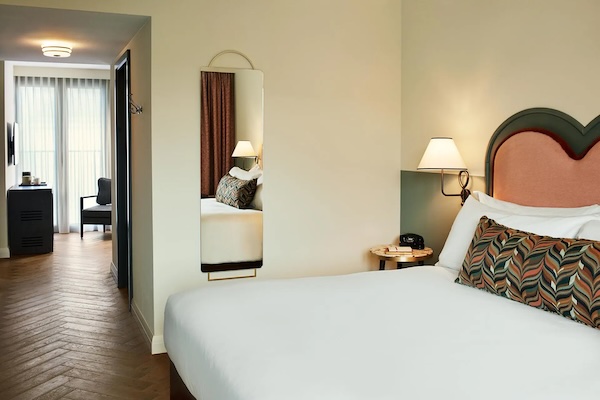
Lifestyle’s Financial Muscle
For years, lifestyle hotels have been positioned as an attractive alternative to traditional lodging, emphasizing design, food and beverage, entertainment and locally inspired experiences. The business case, however, has increasingly shifted from brand differentiation to financial performance.
Ennismore illustrates that evolution. In less than five years under Accor’s umbrella, Ennismore has grown into a collection of nearly 200 hotels and more than 800 restaurants and bars across 40 countries. Its brands also include Rixos, Faena and Paris Society, giving it exposure to everything from luxury resorts and nightlife-driven hotels to standalone food-and-beverage businesses.
That diversification matters. Unlike conventional hotel brands that rely heavily on room revenue and franchise fees, lifestyle platforms can build value through restaurants, bars, branded experiences and other hospitality concepts that extend beyond the guest room.
Ennismore’s financial contribution suggests that these businesses can be particularly attractive within a global hotel portfolio, although Accor did not disclose the individual contributions of its hotel and food-and-beverage operations.
The company’s development pipeline is equally significant. With approximately 150 additional hotels planned, representing nearly 70% of its existing hotel portfolio, Ennismore has considerable room to expand. Accor expects the business to continue delivering double-digit EBITDA growth in the coming years.
“In five years, we have built a global leader in lifestyle hospitality driven through experiences, strong creative brands and an entrepreneurial culture, which we have proven can be scaled globally,” said Sébastien Bazin, chairman and CEO of Accor.

Greater Control, Greater Flexibility
Accor plans to acquire 25.4% of Ennismore’s fully diluted share capital by the end of January 2027, another 6.3% by July 2027 and a final 12.6% by January 2028.
The staggered acquisition will simplify Ennismore’s ownership structure and give Accor greater freedom to determine the platform’s future.
Importantly, Accor said it intends to preserve Ennismore’s autonomous operating culture and management team, characteristics that have helped distinguish the business from more conventional hotel brand organizations.
Pasricha, who founded Ennismore 15 years ago with a single hotel in East London, will remain on the company’s board. Gaurav Bhushan will continue as group CEO.
For Accor, the challenge will be maintaining that entrepreneurial identity while exercising greater financial and strategic control.
The financing structure is also notable. Accor intends to fund the acquisitions partly through at least €500 million in nonstrategic asset disposals, an additional credit facility and the possibility of paying a portion of the consideration in Accor shares.
The company said the arrangement would preserve its investment-grade credit status and existing financial commitments, including a separate €500 million share buyback program linked to the anticipated disposal of its stake in Essendi.
The approach reinforces Accor’s broader strategy of recycling capital from noncore assets into businesses it believes can deliver stronger long-term returns.
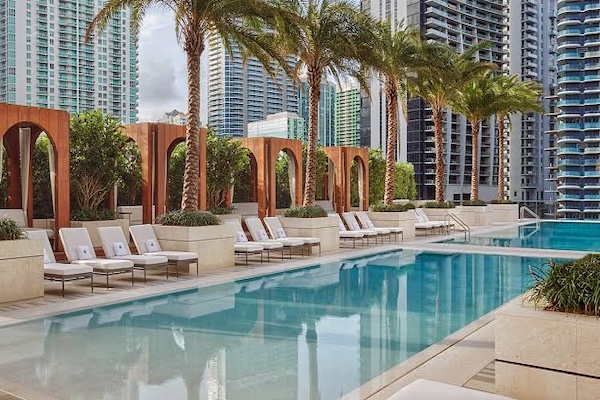
IPO Bound?
Perhaps the most intriguing element of the announcement is what Accor might do next.
Despite moving to consolidate ownership, Accor explicitly left open the possibility of bringing strategic partners into Ennismore or pursuing a public listing.
Buying out minority shareholders only to potentially introduce new investors might appear contradictory, but the moves could strategically complement one another.
By consolidating ownership now, Accor gains greater control over the timing, structure and terms of any future transaction. That could allow it to pursue an IPO or strategic investment when market conditions and Ennismore’s valuation are most favorable.
A separate listing could also provide investors with a more direct way to value Ennismore’s lifestyle business rather than treating it as one component of Accor’s much larger global hotel portfolio.
There is no announced timetable for such a move, and Accor has made no commitment to pursue a listing.
Still, the possibility underscores the scale of the opportunity Accor sees in lifestyle hospitality.
For hotel owners and investors, the transaction sends a broader message: Lifestyle hotels are no longer simply a fashionable segment of the lodging business. They are becoming an increasingly important engine of profitability, development and corporate value.
And with Accor preparing to spend €1.6 billion to strengthen its position, the competition to build and control the next generation of lifestyle hospitality platforms could intensify.
