
About an hour-and-a-half west of Florence, S.C., the headquarters of Raines, which manages, develops and invests in hotels, is the state capitol of Columbia, home to the state’s university and renowned for synchronous fireflies, or fireflies that light up all at the same time. They are found in only six places in the entire world; one of them is in Congaree National Park, right outside Columbia. The fireflies put on their show in late May and early June.
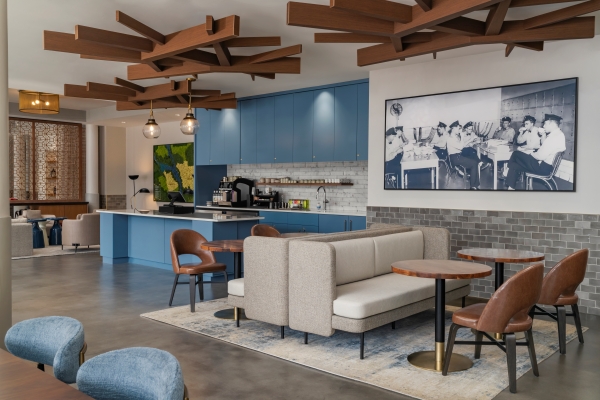
In January, Raines lit its own light, opening The Lantern Columbia, a 59-key upscale boutique hotel in Columbia’s Vista neighborhood that is an adaptive reuse of the historic Columbia Central Fire Station. Built between 1949 and 1951, it served as the city’s fire department headquarters for 45 years. The lobby of the hotel pays respect to its location and predecessors: It is filled with historic photos of the heroes who served in the firehouse, while a moss wall outlines the city and the convergence of its three rivers, the Saluda River, the Broad River and the Congaree River.
For Raines, the redevelopment project was somewhat of an anomaly: Of Raines’ more than 50 hotels under management, only one other can be defined as a true independent. The Lantern is number two, with the company’s other properties branded under the likes of flags from Marriott International, Hilton, Hyatt Hotels Corp., Choice Hotels and IHG. As David Tart, managing partner at Raines, explained, the choice to develop an independent hotel was not a difficult one.
“We’ve spent many years developing and operating branded hotels and believe strongly in the value these brands bring,” he said. “But, every once in a while, a project comes along that’s different.”
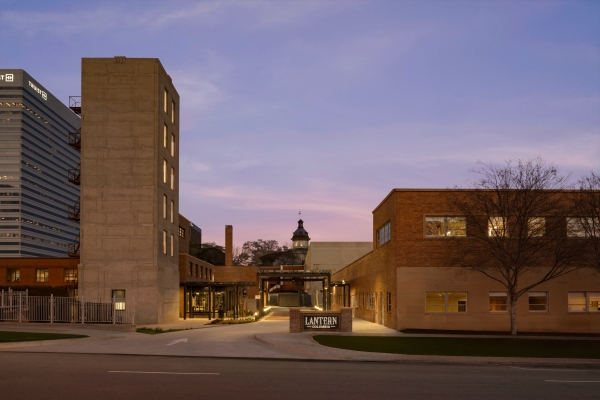
The Lantern was one such—a project that couldn’t be corralled by stringent brand standards. “Maintaining the flexibility to tell our own story, design our own guest experience and build our culture was more valuable than fitting into an existing brand framework,” Tart continued. The Lantern is part of a newly established vertical within Raines called Woven, which specializes in the development and management of soft branded and independent properties. The Lantern is the first and will soon be joined by The Lantern Rock Hill, about an hour north of Columbia, which is already under development.
The Lantern Columbia’s architecture was headed by Garvin Design Group with construction by Mashburn Construction. The design brief was clear: honor the building’s legacy as a firehouse while introducing modern, boutique luxury. Adaptive reuse projects can be tricky and The Lantern was no exception. Programmatically, adapting into a hotel provided many challenges throughout design and construction,” Tart said. “One of the biggest is maintaining the authenticity of the structure and not producing something that feels manufactured or overly renovated.”
There are inevitably surprises when redeveloping a prior, older structure. “Once walls are opened, you often discover structural conditions, utilities or simply some construction methods not documented,” Tart said. “The reality is these types of projects can’t be replicated, and this is what can truly differentiate the guest experience.”
Beyond the building’s bones sits something even more important: those delivering the differentiated guest experience Tart alluded to. That is where The Lantern is unique. Through a strategic partnership with the University of South Carolina’s College of Hospitality, Retail and Sport Management and the CarolinaLIFE program, the hotel provides meaningful career pathways and gainful employment for individuals with intellectual and developmental disabilities.
The Lantern Columbia represents the future of what Raines refers to as “intentional hospitality,” as Managing Partner Grey Raines explained. “This project is personal proof that high-end hospitality and meaningful community impact are not mutually exclusive,” he said.
The hotel’s GM, Rick Hayduk, is duly passionate about the mission of the hotel, where more than 30% of staff have an intellectual or developmental disability. “The chemistry that exists with the other team members is really magical,” Hayduk said. “We are intentional on who we hire; we are intentional in our processes that encourage as much interaction with our team as possible, and this creates a really special guest experience.”
Hayduk is a 35-year hospitality veteran with a specialized background in mission-driven leadership. He previously served as the opening GM for The Shepherd Hotel in Clemson, S.C., where he worked with the ClemsonLIFE program to create an innovative employment model in which just about 30% of the staff were comprised of individuals with disabilities.
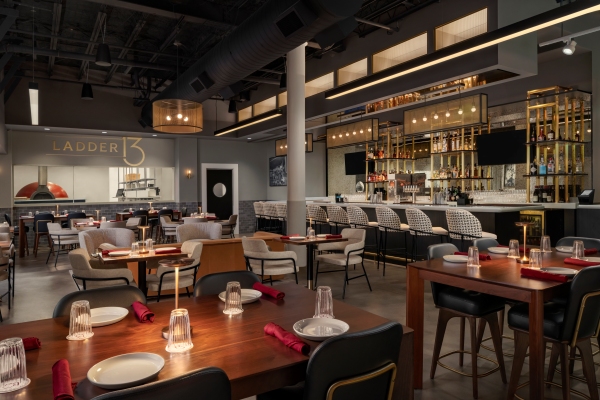
The Lantern brand is still in its infancy and remains a work in progress. Both the Columbia hotel and the Rock Hill project are heavily food-and-beverage driven with programming that encourages the local community to engage with the hotel. At the heart of The Lantern Columbia is Ladder 13, located in the historic fire station’s original engine bay. The signature restaurant combines Mediterranean-inspired fare with Lowcountry spirit and occupies most of the ground-floor lobby. The F&B program is helmed by Kevin Johnson, a James Beard Award nominee, who has strong ties to the University of South Carolina. “It’s a big part of The Lantern’s ambition to engage with the community,” said Hayduk. The hotel does this through its culinary and beverage pursuits. “When the firehouse bay doors are up and the fire pits on the outdoor terrace are lit; the vibe is electric,” he said.
Ultimately, the opening of The Lantern is a milestone that goes far beyond adding just another property to the Raines portfolio. “This project is personal proof that high-end hospitality and meaningful community impact are not mutually exclusive,” said Raines. “Seeing the historic Central Fire Station revitalized is incredible, but seeing our team, working side-by-side, is the true achievement.”