
Nothing much happens in Reston, Va., without a plan. It makes sense: The town, a Jayden Daniels Hail Mary heave away from Dulles Airport, is itself a planned community. Built up and into a present-day technology hub, with offices for the likes of Microsoft, Google and Amazon Web Services, it was birthed in 1964 by Robert E. Simon. In fact, take his initials, add a “ton” and, voila, Reston. More business, more people, means more opportunities for hotel development. Reston has it. Its newest is one of the best in the DMV, carrying one of the most venerable flags in the industry. JW Marriott Reston Station opened in September 2025, another addition to the community that saw the opening of the dual-branded AC Hotel & Residence Inn by Marriott earlier in the year.
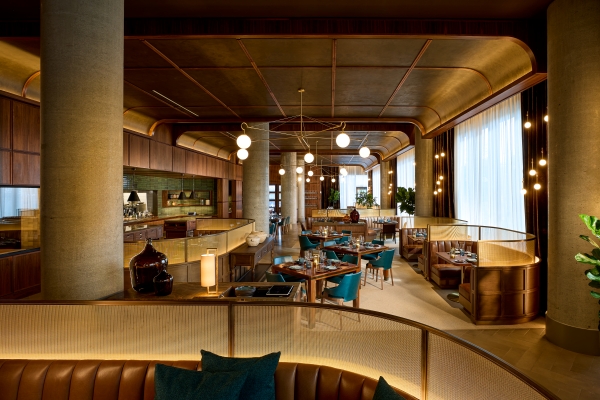
The 248-room JW Marriott Reston Station is an indication that Reston is more than just a techie corridor; it demonstrates how the town continues to become a high-end destination through its living, retail and F&B offerings. Consider the hotel: On the ground floor, The Simon was called out by Eater as a restaurant to know and where one of the standout dishes is the dry-aged duck a la presse—pour deux. (The building’s first 12 floors are hotel and the remaining 16 are JW Marriott residences.)
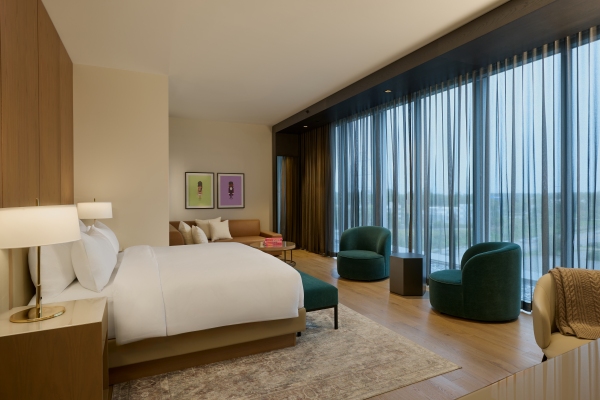
The hotel’s clean, modern look, with interior design by Michael Graves, is counterbalanced by whimsical touches throughout, like Le Duo artwork in guestrooms, selected by the hotel’s owner, Comstock, a D.C.-area developer and asset manager that focuses solely on real estate in the region. (Comstock’s office is across the street from the hotel in Google’s office complex.) The hotel is managed by local operator Crescent Hotels & Resorts, which selected Dewayne Wright as managing director of the property. Wright has both local knowledge and luxury know-how: his previous position was general manager of Riggs Washington DC, and before that, he did time at The Watergate Hotel. For Wright, locals matter, which is why, even before the property opened, he was quick to focus marketing initiatives on the surrounding public, telling HOTELS that he didn’t even want to reach out to anyone past 30 square miles.
HOTELS caught up with Wright to discuss that and more, including the type of car he compares a JW Marriott to and why room service is not, in fact, dead.
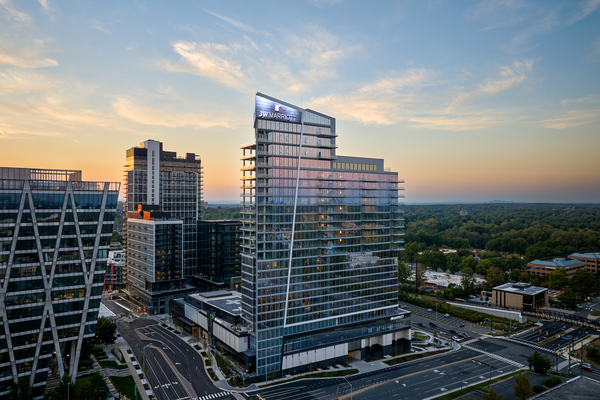
HOTELS: JW Marriott Reston Station is around 20 miles west of Washington, D.C. How is Reston able to support a luxury hotel and why did ownership choose to affiliate with the Marriott brand?
Wright: Who has been the luxury offering prior to us? The Ritz-Carlton, Tysons Corner. There was a great opportunity closer to the airport and there was room for another luxury property to come into this market outside the Ritz-Carlton name. We are for people who don’t really want to go into D.C., but want a true luxury product. The other component is Reston Station and Town Center and potential in retail and restaurants and with customers and guests that have a healthy income per household. JW Marriott is a strong brand. If you break it down, it’s the BMW of the hotel industry. Marriott’s Bulgari brand would be a Bugatti, while St. Regis and Ritz Carlton are the Rolls-Royce.
HOTELS: Opening a new hotel is a strenuous process. What stood out?
Wright: I did my due diligence prior to opening and became good friends with the GMs at the hotels considered our competitors. My goal was to ensure that we’re not here to really be an enemy to anyone, but to really lift everyone up. At opening, we had 175 jobs available and had more than 1,800 applicants. We had the ability to be selective with our team as opposed to just doing a mass hiring. We’ve been able to mirror the level of service with the aesthetics of the hotel. We are a luxury brand and people really want to be able to take pride in where they work.
HOTELS: The property has a healthy mix of transient and group business and demand generators that include the myriad tech companies in the vicinity. How has that all dictated the guest composite?
Wright: Midweek, our guests are business travelers, people doing business with Google, with Rolls-Royce North America, all the different companies that are in this immediate and walking distance area. We also have quite a few business travelers who are going into the city, but don’t want to deal with the hustle and bustle of it during their stay. It’s weekends where it’s families and we’ve already had several weddings and other large events that require 100-plus room blocks.
HOTELS: Let’s talk about the design of the hotel. Ample meeting space, F&B—talk us through the build-out.
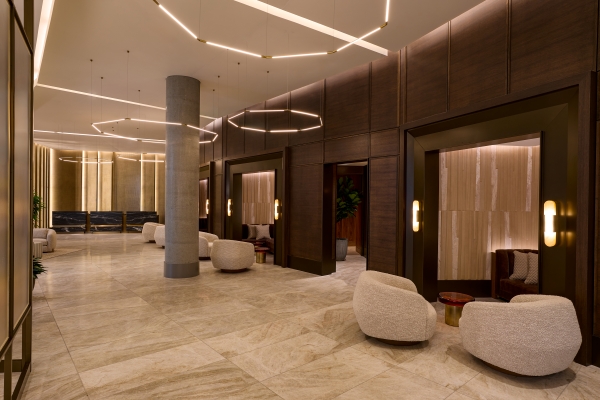
Wright: The architectural firm was Nunzio Marc DeSantis Architects, with Michael Graves as interior designer. We have a legitimate presidential suite that is over 3,000 square feet and can be broken up into three bedrooms, four executive suites and then also we have 14 junior suites. In addition to that, JW Marriott started a new program around wellness and mindfulness, so we are the first JW to offer what are referred to as mindful rooms, which are larger than our normal rooms and come with a dedicated space for yoga and meditation and amenities like Theraguns and weighted eye masks. They’re all on the same floor as our fitness center. The hotel also has the largest executive lounge in North America. We also offer 24/7, in-room delivery, meaning we have a chef overnight cooking.
HOTELS: Isn’t room service becoming obsolete?
Wright: Not for us. We are close to the airport, so 20% of our guests check in outside the normal check-in time—as late as 11 p.m. It’s either keep the restaurant open with more labor or give an offering. We also make the menu more inviting than using Uber Eats. If you’re going to be a true luxury property, you’re offering an experience. How did it make me feel when I checked in late and was able to get a great meal.
HOTELS: A hotel’s tech stack is central. How does JW Marriott Reston Station put it all together?
Wright: Two of the most underappreciated things are the infrastructure and technology inside a new building. We didn’t hold out. Thirty percent of our guests use mobile check-in. Once checked in, whether via mobile key or at the front desk, by the time a guest makes it up to the room, the connection between the PMS and the POS is set and the HVAC or heater will kick in. We also have mobile in-room dining, which allows guests to order directly online. [Marriott hotels use a system called GXP, an all-encompassing centralized guest satisfaction system to track in-person guest activities in various departments.]
HOTELS: Are you using AI in any fashion?
Wright: The only thing that we encourage our teams to use is ChatGPT for certain things. For example, if a guest were to come in and say, ‘I’m looking for the top three places to go in terms of a specific type of show.’ We encourage our team to get a quick response from ChatGPT.
HOTELS: There’s a sculpture outside the hotel called “Building Bridges.” What does it mean to you?
Wright: It’s a bronze sculpture of five pairs of hands that ties in with the hotel. Our goal is to make sure that our service and experience match the overall aesthetics of the hotel. And it’s not just about the hotel—it’s about what’s around the hotel.