
Japan’s economy might be contracting, but tourism is booming. Favorable currency exchange rates and supportive government policies have enabled Japan to become a top-tier travel destination: A record more than 40 million people visited in 2025 alone and the hospitality industry is capitalizing on the moment.
The surge comes as Japanese culture undergoes something of a renaissance, with travel becoming an ideal way to explore the country’s culture, history and geography. Embodied by omotenashi—the Japanese spirit of wholehearted, holistic hospitality that is as much about aesthetic as operational philosophy—a new wave of hotels and resorts is redefining what it means to experience the island nation.
“A weaker yen, growing interest in Japanese culture and strategic marketing initiatives have contributed to record-breaking visitor numbers,” said Tomo Ichikawa, executive director, head of hotel investment, hotels, capital markets at CBRE K.K. “In parallel, the government is actively promoting sustainable tourism, regional revitalization and high-value travel experiences through targeted campaigns and infrastructure investment, creating attractive opportunities for hotel investment.”
From pastoral retreats in the Japanese highlands to urban oases amid bustling cities, all facets of the hospitality experience have been reconfigured for maximum authenticity and tranquility. The 200-room JW Marriott Hotel Tokyo, which opened in October within the Takanawa Gateway City development, a new innovative hub for culture and business, turned to design firm Yabu Pushelberg for a Zen-inspired arrival sequence on the upper floors of the high-rise tower it occupies that taps into natural elements and abstract ceramic art by Tomonari Hashimoto. It also created the world’s first JW Mindful Floor, featuring The SPA by JW, a skyline-overlooking indoor pool, personal mindfulness rooms and curated programming designed to promote holistic well-being.

It’s something one of the most iconic hotels in Japan, if not the world, knows all too well. Bill Murray and Scarlett Johansson starred in the hit 2003 film “Lost In Translation,” but the leading role was played by the Park Hyatt Tokyo and its seductive New York Bar, which served up libations to the mopey Murray and introspective Johansson. The hotel’s hushed corridors and serene indoor pool casted the hotel as refuge. In December 2025, the hotel reopened after a year-long, comprehensive “refinement” process that introduced newly designed suites and guestrooms, restored public spaces and new dining options, such as Girandole by Alain Ducasse, the Michelin-starred chef. Despite the changes, the hotel remains tethered to its Japanese endowments, which Fredrik Harfors, general manager of the hotel, explained.
“Japanese omotenashi is not something that can be designed or held in one’s hands—it’s an expression of selfless hospitality deeply rooted in Japan’s service culture,” he said. “We embody [that] spirit through unwavering commitment to timeless design and understated refinement. Each element of our guest experience reflects this philosophy, from the meticulous details of our amenities to the harmony of comfort and sophistication.”
Led by Studio Jouin Manku, the update expanded sightlines and added new layouts, softer lighting and warmer colors for a refreshed new atmosphere. While Kenzō Tange’s original architecture remains intact, seamless new details allow the hotel to reflect changes in travel, as well as re-anchor its personality.
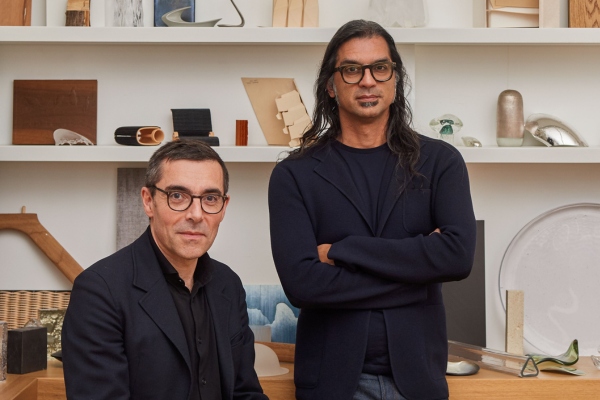
“The idea was never to change what made Park Hyatt Tokyo so special, but to let it evolve with grace and remain true to its essence,” said Studio Jouin Manku Founders Patrick Jouin and Sanjit Manku in a joint statement. “From the beginning, it was conceived with a strong international vision, a refined modernity that still feels timeless today. We wanted the renewal to build on that universality, while allowing the place to engage more naturally with its surroundings, with Tokyo’s light, its materials and its atmosphere.”
The design studio left no proverbial stone unturned in transforming the hotel for future generations. From designing and developing bespoke furniture in the suites that responds to their space and proportions, to opening The Peak Lounge up for more social interaction, their goal was to create a seamless coexistence between tradition and modernity.
Bathrooms were redesigned in homage to traditional Japanese wet rooms, where baths and showers are one continuous space, leading to updating smaller details like the ubiquitous “black cabinet” that are central to each suite.
The New York Grill & Bar was restored to its original black-and-chrome aesthetic with panoramic skyline views, signature artworks by Valerio Adami and Minoru Nomata and refreshed menus under Chef Ben Wheeler.
“We wanted to create an atmosphere that guests would recognize instantly, yet sense that it has quietly evolved. The spirit remains calm and cinematic, but there is a softness, a generosity in the spaces,” said Jouin Manku. “The materials speak more openly, the light wraps around the architecture with greater warmth, and everything feels more alive.”

ANCIENT AUTHENTICITY
While Park Hyatt Tokyo suggests an evolution, the ryokan, traditional Japanese inns, dates back more than 1,300 years, with more modern companies keeping the heritage alive. Consider The Ryokan Collection, which was founded in 2004. Its now 53 properties combine tranquility and curated luxury in some of the country’s most breathtaking locations, providing the kind of bespoke cultural authenticity and desirable experiential travel.
“Ryokan owners have been born and raised in the very regions where their properties stand. They do not choose their location—they inherit it,” said Hiroki Fukunaga, founder and CEO of The Ryokan Collection. “While many of these ryokans are situated in remote areas with limited access, they are often surrounded by breathtaking landscapes and rich cultural heritage. Precisely because these places are less traveled, they offer an untouched, authentic experience.”
Three new properties were recently added to the collection, each showcasing their unique destinations through specialized cuisine and multi day itineraries. Hakone Kairi is a secluded 20,000-square-foot villa just outside Tokyo with a rustic exterior concealing modern amenities. FUFU Tokyo Ginza, in a Tokyo shopping district, features guestrooms with private natural hot spring baths. Gora Kadan Fuji offers sweeping, unobstructed views of Mount Fuji in architecture inspired by classic highland designs.
CBRE’s Ichikawa says Japan’s tourism industry is uniquely positioned to capitalize on the global rise of sustainability and wellness tourism, thanks to its natural assets, such as hot springs, forest bathing experiences and traditional healing practices, which, he said, “align with the growing demand for holistic and health-focused travel.” The Ryokan Collection is expanding its enhancements at other properties, too, some geared toward travelers for whom inhabiting a historic space is not enough. Ryokan Shinsen (Takachiho, Kyushu) introduced “The Swordsmith Experience” where guests will visit the forge of swordsmith Matsbua Kagemasa to participate in the sword-making process, demonstrations and hands-on forging.
Other excursion opportunities offered at other ryokans include folk pottery making, green tea picking, geisha performances, cormorant fishing and ninja experiences.
“We place great value on offering experiences uniquely tied to individual properties— moments that can only be encountered by staying at that specific ryokan,” said Fukunaga. “Our members curate extraordinary experiences that reflect the spirit and richness of their region, allowing guests to engage with Japan in a truly personal and memorable way.”

FUTURE VISION
IHG Hotels & Resorts has its gaze set firmly on the future. The company added 20 new properties across 10 brands to its Japan pipeline, in addition to its current 57-hotel footprint, part of an ambitious development strategy— including a partnership with ANA, Japan’s largest airline— focused on booming domestic as well as international tourism.
“As the inbound arrivals have grown from eight million in 2012 to an estimated 40 million this year, we are seeing a very strong luxury market [for] around 150 million domestic travelers per quarter,” said Abhijay Sandilya, CEO, IHG ANA Hotels Group Japan, and managing director, IHG Hotels & Resorts Japan & Micronesia. “Across the wider portfolio, we are seeing the growth of conversions as independent hotels and operators look to benefit from the strength of our brands and enterprise.”
Relying on a multitude of new brands—seven introduced since 2020—IHG is banking on a variety of accommodations to satisfy the expectations of luxury travelers.
Only weeks after the debut of Six Senses Kyoto, an 81-room retreat with décor inspired by Japanese folklore and classic literature, a Six Senses expansion was announced for Myoko Kogen, one of Japan’s oldest and most accessible ski regions.
IHG recently launched two hotels from the luxury and lifestyle brand Vignette Collection—RIGHA Royal Hotel Osaka and The Windsor Hotel TOYA Resort & Spa—as well as three Osaka hotels from midscale brand Garner by IHG that tap into Japan’s famous “business hotel” model.
“We’re proud that Japan was one of the first destinations globally to launch Garner, with three hotels opening in Osaka ahead of World Expo [and] the fourth Garner just opening in Kyoto,” said Sandilya. “There’s a huge opportunity in the midscale space, [and] Garner is a wonderful fit for this segment.”
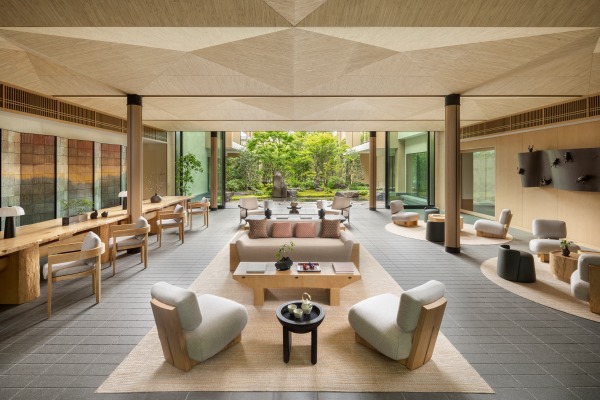
Regent Kyoto broke ground in May and is slated to open in 2028 in the affluent Okazaki neighborhood, famed for its dining venues, just as IHG signed Regent Karuizawa, a new-build luxury onsen retreat in the mountains.
In 2025, IHG opened the ANA Crowne Plaza in Okinawa and the InterContinental Sapporo in Hokkaido.
“Japan is currently going through what I’d call an all-segment growth play,” said Sandilya. “There’s a strong opportunity for growth within the luxury and lifestyle segment given affluent domestic and international travelers are looking for one-of-a-kind experiences, thoughtful service and the opportunity to discover new destinations.”
Despite the spike in construction costs, which is a worldwide phenomenon and one not isolated to Japan, investor interest in Japan’s hospitality sector should remain robust, argued CBRE’s Ichikawa. “It reflects the sustained confidence in the market’s long-term growth potential,” he said.