
When will digital agents replace the human touchpoints that create poignant memories in hospitality? Spoiler alert: never.
Hotel leaders must mandate the use of AI to attract a new generation of workers and create careers aligned with their changing values. This is essential because global growth in hospitality job demand is real, and competition for a limited supply of workers will intensify. Over at least the next five years, AI will create more hospitality careers than it will eliminate.
Robots and artificial intelligence are about to take over the world, according to almost every self-anointed expert. Yet last time we looked, hotels still need to attract guests, buy food, prepare meals, wash dishes, make beds and create returnees. Is having an Optimus robot and lines of computer code everywhere really tourism’s future? If so, why pursue a career—let alone one in hospitality? The answer is simple: hospitality remains a high-growth, people-centered industry.
Get on the growth ride
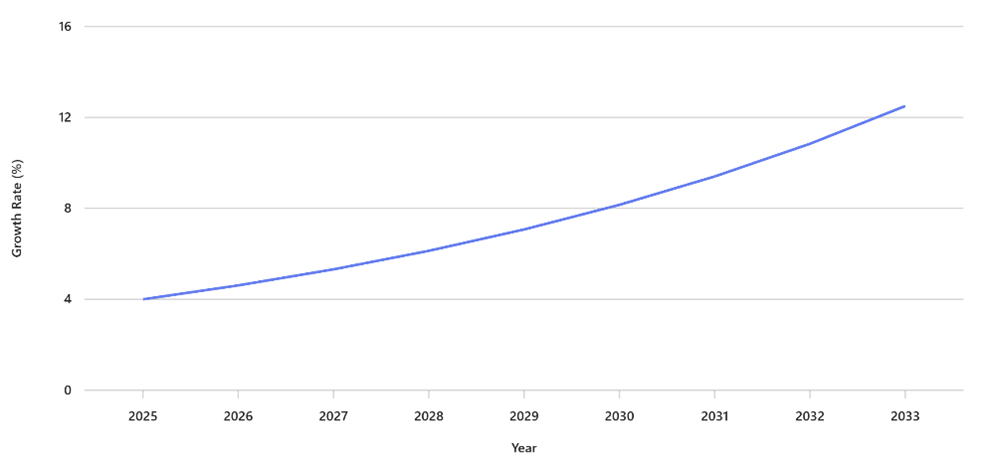
Let’s use the U.S. to envision future hospitality jobs. The federal government estimates that by 2033, one in every eight jobs will be in the hospitality and leisure sector—a significant increase from today’s one in every 25 jobs. This represents roughly 15% compound annual growth over an eight-year period.
Most of these jobs will carry an annual salary in 2026 clustered around $40,000, which means employers must compete on more than wages. They must compete on purpose, flexibility and personal growth.
Most of these jobs will have an annual salary in 2026 in a narrow range around $40,000[1] which means employers must compete on more than wages-they must compete on purpose, flexibility and personal growth.
How hoteliers will realistically benefit from AI
It’s red pill or blue pill time—but we only have the reality option. Hoteliers will use AI to:
- Drive demand: Get heads in beds using digital agents to attract guests, automate bookings and digitize the guest experience to the extent each guest chooses.
- Improve working environments for humans
- Reframe the value proposition of hospitality careers to recruit and retain employees.Reframe the value proposition of work with AI
Reframing the value proposition of work with AI
Hospitality operations require humans, and sustained 15% annual industry growth means inevitable competition for workers. Can AI help? Yes—but only if it achieves targeted objectives aligned with the values of a new generation seeking meaningful careers.
NYU’s Stern School of Business recently published findings from a values assessment tool used to survey Gen Z respondents. Hospitality leaders must realign their messaging and culture to reflect what this generation truly values, and AI can be the catalyst.
1. Position hospitality as a tech-enhanced career
- AI-powered tools such as agents and predictive analytics can reduce repetitive tasks for front-of-house teams, allowing them to focus on high-value, guest-facing interactions that require creativity and empathy. This elevates roles from service delivery to experience ambassadorship.
- Promote the idea that workers will learn to use advanced technologies, making them more competitive in the broader job market.
- Validation of this approach can be found a study of talent management strategies in 3, 4, and 5-star hotels in the UK, Greece and Hong Kong.
-
Use data-driven insights to showcase career growth
- AI enables skills mapping and personalized learning paths, turning entry-level roles into stepping stones for leadership positions.
- Highlight partnerships. Cornell University, for example, is pioneering AI tools for hospitality and workforce policy.
-
Make recruitment more engaging
- AI-driven recruitment tools offer instant feedback, chatbots for Q&A, and predictive matching, improving candidate experience and reducing bias. Consider the success of IHG’s conversational AI tool to convey its value proposition.
- Use generative AI to craft compelling job descriptions that highlight tech integration, career growth and purpose-driven work. Hilton uses AI to screen candidates, shortlist applicants and streamline recruitment.
-
Reframe hospitality as purpose-driven work
- AI frees staff from mundane tasks, enabling them to focus on creating memorable guest experiences, which can appeal to candidates seeking meaningful work.
- Position roles as human-AI partnerships, where technology amplifies empathy and creativity rather than replacing them.
Conclusion
Tell your story. The competition to attract hospitality workers will only intensify as the industry grows at double-digit rates. AI is not a threat to hospitality careers; it is a tool to attract new associates and generate demand. In 2026, hoteliers can either maintain the status quo or strategically implement AI solutions to protect their investments and enhance hospitality. The challenge is clear: develop a strategy, allocate resources and focus relentlessly on implementation and continuous improvement.
Story contributed by Larry Kimball, co-founder and CEO of Vivify Hotels & Resorts, a luxury boutique management company. Kimball leads a global private equity platform focused on opportunistic luxury hotel real estate investments across the U.S., Asia and Europe.