
The hotel industry isn’t supposed to be pugilistic, but 2025 presented challenges as formidable as a peak Mike Tyson uppercut.
“Every day was a fight,” said Steven Nicholas, head of asset management for hotel investor Noble Investment Group. It’s a sentiment shared by many in the hotel industry HOTELS spoke with to gain an understanding of what was then, what is now and what could be just around the corner.
There is an upside, Nicholas offered, which pivoted on a continuing return to office, strong group business, stabilized leisure and increasing international inbound travel. In fact, he said, leisure did stabilize in the latter half of 2025, while business travel has come back slower.
Michael Bellisario, managing director, senior research analyst, hotels, global brands and real estate for Baird Equity Research, does not own or operate hotels, but from his vantage point, he witnessed a year that could only be described as choppy. “A lot of things went wrong,” he bluntly put it. “Many small-to-medium-sized headwinds pushed RevPAR lower.” He’s more sanguine on 2026. “This year should be better,” he said, noting powerful upcoming demand drivers, such as the World Cup, June 11 to July 19, in various North American destinations, tax cuts and other factors.
At BWH Hotels, President & CEO Larry Cuculic is approaching 2026 with unfettered optimism. Even with ongoing pressures, he said, “We continue to see strong direct-booking behavior, record brand.com share and 15% year-over-year growth in our Best Western To Go app production.”
Cuculic’s optimism is shared by Jolyon Bulley, CEO, Americas, IHG Hotels & Resorts. “This past year certainly had its challenges,” he said. “While we don’t publicly share specific guidance updates, our confidence in hospitality’s fundamentals and long-term growth drivers gives us optimism for the new year.”
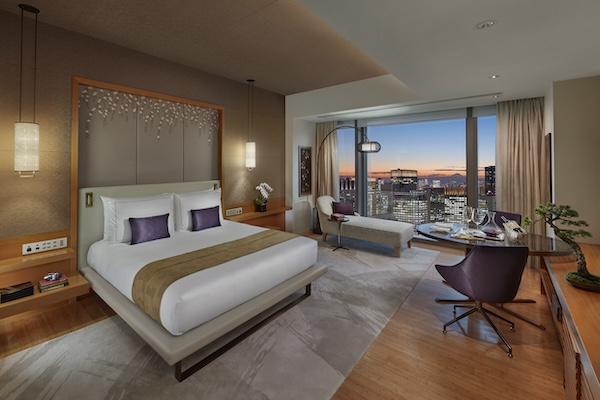
There is continued optimism on the pure luxury side of the hotel ledger. And why not? Luxury hotels had a banner year as affluent travelers saw their stock portfolios rise and wealth increase, giving them no reason to eschew travel, especially at high-end hotels, like at Mandarin Oriental Hotel Group, where COO Amanda Hyndman sees encouraging dynamics shaping the year ahead. “Leisure demand remains robust, particularly in destinations where guests can slow down, reconnect and really experience the essence of the destination.”
Mandarin Oriental is on track to double its portfolio within the decade, said Hyndman, supported by strong owner demand and rising interest in branded residences.
Cory Chambers, chief commercial officer for third-party hotel operator Remington Hospitality, believes there will be some hangover carrying into 2026, including flattish occupancy and continued margin pressure, but visibility should improve as group pace strengthens, he said. “We expect steadier demand and an improved operating environment by mid-year.”
Inbound international travel suffered in 2025 due to a combination of factors, such as stricter visa rules, travel bans and White House rhetoric, which conspired to create a less-welcoming U.S. perception. According to the U.S. Travel Association, inbound international visits are projected to decrease 6.3% from 72.4 million in 2024 to 67.9 million in 2025. The good news, as Chambers sees it, is that the bottom is in sight if not already here.
At the same time, group and business events continue to build momentum, said Chambers. Sports, social and luxury leisure remain strong, and extended stay remains at the top of the performance curve.
CHALLENGING TIMES UNABATED
Despite a relentless focus in the news on immigration and tariffs, operators and analysts have so far seen relatively small impact. “Immigration has not affected us as much as I would have thought,” said Nicholas. There was anticipation, he said, that there might be ICE raids on resorts, but that has not happened. Contract labor companies have not seen a huge impact either.
As for tariffs, said Nicholas, as much as they were talked about – especially when it comes to products like coffee, eggs and cheese and FF&E, “nothing dramatic has emerged.”
Bellisario agreed that there has been no significant impact from immigration policies, partly because of softer occupancy that calls for fewer employees. Tariffs, he said, have not had a substantial effect on operations; the bigger impact, he said, is on CapEx. “With costs up so much and profitability hurt, projects were deferred in the spring,” he said. However, he added, some real estate investment trusts have now resumed projects.

SHIFTING FOCUS
Asset transactions lagged in 2025, but 2026 should see better deal flow due to a stronger capital markets environment, marked by falling interest rates, significant ready capital from investors and maturing debt forcing recapitalizations. Global hotel transaction volume reached $24.5 billion in the first half of 2025, down 17.5% compared to the same time period a year ago, according to data from JLL Research Hotels & Hospitality.
Hotel development, said Bellisario, is below historic levels because “the math just doesn’t pencil like it used to,” especially for urban, full-service or big-box convention center hotels. Instead, he said, the big brands have moved into the lower-cost extended-stay segment, where margins are higher and where operators might need only 10 full-time employees and weekly cleaning.
While new supply growth in 2025 hovered around 1%, the “white space,” Bellisario said, is in Asia where 8% to 12% growth offsets U.S. sluggishness. International in general, he said, “is growing like a weed” at four to five times the rate in the U.S.
Hyatt Studios, Hyatt Select and Unscripted by Hyatt are brands, said Dan Hansen, head of Americas development for Hyatt Hotels Corp., “built for this environment” with lower build costs, faster ramp-up and the ability to grow in markets where Hyatt hasn’t historically had a presence. Right now, he said, more than half of the opportunities for those brands are in markets without an existing Hyatt flag.
Rafael Nader, area director of sales and marketing, New York for Starwood Hotels, which operates 1 Hotels, Baccarat Hotels and Treehouse Hotels, is focused on increasing “share of wallet” in several high-potential international regions. While most of the company’s business is in the U.S., he said, New York luxury hotels rely on a few key international markets, particularly Europe, the Middle East and Brazil. Strengthening performance in these targeted feeder markets remains a priority.
Supply growth will remain modest, said Chambers, driven more by conversions than by new builds. Lower interest rates will help transactions pick up as bid-ask spreads narrow, he said, and the industry should see a boost to transaction volume in the second half of 2026.
Shawn Hill, EVP & CDO for Marriott International, said that the company anticipates several key development trends that will shape the year’s hospitality landscape: continued luxury and midscale development, locally designed and curated collection brands and nature-focused travel and resorts.
One of Marriott’s most powerful growth engines is conversions, “which continue to enable incredible expansion across brand tiers and segments,” Hill said. The company, he said, is seeing this momentum most notably in its midscale and collection brand portfolios.
Luxury development, said Hill, remains a cornerstone of Marriott’s growth strategy, with momentum expected to continue this year, especially in the Asia-Pacific and EMEA regions.
WHAT’S UP? WHAT’S DOWN?
As is typical, the outlook varies depending on the chain scale. Luxury and ultra-luxury travel are holding up, said Nicholas. Some corporate segments are traveling more and there is optimism for business travel next year with the traditional Tuesday/Wednesday stay coming back.
“Everyone is trying to group up,” said Bellisario, “whatever the size of the event.” He added there are more promotions, more discounts, more use of OTAs and more Costco and Chase travel. “Everyone is trying to cast a wider net,” he said.
“We have momentum on a number of fronts,” said Hansen. Meeting and events demand, he said, is a clear bright spot with the booking pace for U.S. full-service hotels seeing an increase in the high single digits and more than 60% of business for the year already on the books.
AI TAKES CENTER STAGE
AI is already reshaping the guest journey in meaningful and measurable ways, said BWH Hotels’ Cuculic. Over the summer, he said, AI-powered tools contributed to a 6% increase in brand.com revenue and a 16% rise in mobile app revenue, reflecting stronger engagement with BWH’s direct channels.
While IHG is still in the early stages of understanding the full potential of AI, said Bulley, “we’re encouraged by the positive results we’ve seen so far.” A forthcoming AI-powered content platform, he said, will ensure the right hotel information shows up in the right channels at the right time and in the right language.
Forward-thinking companies, said Nader, will reinvest freed-up human capital into elevating the guest experience. He said AI is already influencing the consumer pre-travel journey, especially in the planning and decision-making stages. This is already having an impact on travel traffic patterns, demand flows and how guests discover and interact with destinations and suppliers, according to Nader.
Summing it up, Chambers said, “Our overall outlook is optimistic.” Early 2026 may be soft, he said, but visibility should improve as group strengthens, inbound travel stabilizes and supply growth stays modest. With better digital reach, tighter cost control and rapid AI gains in personalization and revenue management, concluded Chambers, “the back half of 2026 sets up well.”